Should Dogs Be Permitted in Bookstores?

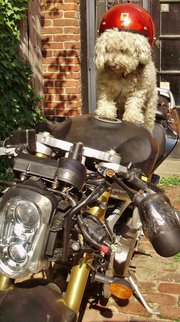
This afternoon, my dogs and I visited Barnes & Noble, the one that is closing in Georgetown, that I wrote about, begging for support a couple of days ago. A little girl approached Little River, cute bichon, and when he barked, she emitted a piercing, high-pitched scream, that reverberated in  near- empty store. The manager came over to us, and told them that we would have to leave immediately, because dogs were menaces to children. My shy little pup barks — that’s what dogs do — bark –, but he has never bitten or even snapped at a person or thing, in his life. It does not follow, that a bark means that a bite is coming. At this bookstore, where the store clerks know the dog-regulars’ names, I have been told that customers who bring their dogs, are among the store’s most-buying and most regular buying big book spenders. . When the little girl screamed when River barked at her, because she invaded his space, her parents loudly said that the dog should be better controlled.  I gathered that the incident of River barking that caused the girl’s screaming, has resulted in the banning of all dogs from this Barnes & Noble. The bookstore is closing, so this fight is not worth it… This does, however, broach the larger issue: should or should not our pets be more integrated into our everyday lives and spaces, as they are in Paris, and other European cities, and Chicago, judged to be one of the most dog-friendly US cities? Our dogs are our family members. 2010 US Census Bureau Stats confirm that more than 50% of American households have at least one dog and or cat…. When my son was little, and had temper-tantrums in public places, like this very Barnes & Noble (when he wasn’t called on first, during story hour in kids’ book section), it was not demanded that he leave. It seems that dogs should be permitted in bookstores, and place of commerce, not restaurants. More importantly, given the numbers of dogs in the US, it seems imperative that parents teach their children to respect and not fear animals, to ask first if they can be petted, and respect that people talk and dogs bark…

Posted in Uncategorized | Leave a comment

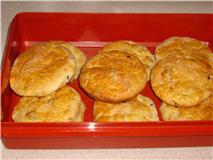
John’s Cranberry-Orange Scones Recipe

Because I’m not much of a cook, I frequently SOS John to send me recipes, and he always comes through with easy recipes that impress.  Some time ago, I had to bring dessert to a dinner party. Because store-bought wouldn’t do, a friend made a chocolate brownie cake for me, and I passed it off as my own.

John’s scones recipe below is easy enough for me, that I didn’t mess up on it. Further, if I do say so myself, this recipe makes much better scones than Whole Foods.  — Annie

John’s Cranberry-Orange Scones

Ingredients:

  • 4 cups plus 1 tablespoon all-purpose flour
  • 2 tablespoons sugar, plus additional for sprinkling
  • 2 tablespoons baking powder
  • 2 teaspoons salt
  • 3/4 pound cold unsalted butter, diced
  • 4 extra-large eggs, lightly beaten
  • 1 cup cold heavy cream
  • 3/4 cup small-diced dried cranberries
  • two tablespoons of orange zest
  • 1/2 cup chopped walnuts 
  • 1 egg beaten with 2 tablespoons water or milk, for egg wash and then sprinkle a little sugar on top of each before baking.
Preheat the oven to 400 degrees F.

In the bowl of an electric mixer fitted with a paddle attachment, combine 4 cups of flour, 2 tablespoons sugar, baking powder, and salt. Blend in the cold butter at the lowest speed and mix until the butter is in pea-sized pieces. If you don’t have a paddle attachment for mixer, you can beat by hand, until pea-size texture is achieved.
Combine the eggs and heavy cream and quickly add them to the flour and butter mixture. Combine until just blended. Toss the cranberries with 1 tablespoon of flour, walnuts, orange zest and add them to the dough, and mix quickly. The dough may be a bit sticky.
Dump the well-combined dough out onto a well-floured surface. Flour your hands and a rolling pin and roll the dough 3/4-inch thick. You should see lumps of butter in the dough. Cut into squares with a 4-inch plain or fluted cutter, and then cut them in half diagonally to make triangles. Place on a baking sheet lined with parchment paper.
Brush the tops with egg wash. Sprinkle with sugar and bake for 20 to 25 minutes, until the outsides are crisp and the insides are fully baked.

Posted in Uncategorized | Leave a comment

Advice to New Teachers, by John Bolinger

Before John retired from teaching, and moved to Colorado, not too many years ago, a new teacher queried John re: advice…. As the new school year is settling, John’s answers seem insightful, and timely today. — Annie

Questions about teaching high school posed by Kevin Cline, a Munster, Indiana teacher, to John Bolinger:

1. How has teaching changed since you started teaching?
Teaching has changed over the past thirty-five years, because the world has changed.  Attention spans are shorter (thank you, MTV) and diversity continues to increase in every classroom.  Yet, behind the masks we all wear are the same basic needs that have always existed…the desire to succeed and to be accepted as a part of one’s world.  Technology has certainly made its mark through computers and more sophisticated communications…but in a recent survey, high school students across the country were asked what they liked best about their schools.  Virtually no one mentioned computers, movie equipment or any other forms of technology.   In the responses PEOPLE were always the focus of what was meaningful.  Even computers have not changed that. 

2. As a future teacher what should I be doing to best prepare myself for a teaching career?
Develop your people skills and observe the growing diversity of the populace.  Suspend judgments about appearances and try to understand and tolerate what is new and different from what you’re used to.  Read everything you can about new approaches, but don’t be taken in by the trendy obsessions of the academic world.  Its terminology changes every few minutes so that the public at large never quite catches up.  Be yourself and decide why you want to be a teacher.  Have a passion for it and devote yourself to the craft with all your energy.  If it is done well, it will be a way of life, not just an occupation.  Know your strengths and weaknesses and be honest with yourself about what you expect to derive from teaching.

3. What is the biggest challenge facing any first year teacher? How can I best prepare myself to face that challenge?
 Keeping order and an environment of keen interest are very important.
All the techniques for conveying information are useless unless the classroom is a safe and orderly place in which to think and to exchange ideas.
Learn to provide an anchor of expectations, but also give the chance for some surprises and excitement daily.  Be consistent and deal with “whining,” which seems to have become our national pastime.  Know that students will test you to see if you REALLY care.  In a little while when they know that you do care, they will accept you and the challenges you give them.

4. How do you motivate students? How do you keep them interested in what you are teaching?
This question is worth an entire book.  Individualization is, of course, important, but the most important thing to arouse interest is your own passion for learning.  The excitement you generate comes from deep within YOU first, not from some text book.  Your love of a story…or even a lesson on punctuation will be infectious.  If you hate THE SCARLET LETTER, students will pick up on this, and you will not motivate them to love it either.  Humor used in small doses breaks the ice for many things.  You are not a stand-up comic or a night club act or a substitue for MTV, but you will  succeed more if there is a sense that you do not take yourself too seriously.  Sometimes students can learn much more from Bart Simpson than from Ernest Hemingway.  Cajoling has its place. (i.e.  “Do your homework.  I know where you live.”).  I took my French students to France in 1999.  Talk about motivation!

5. What is your approach to classroom management? How do you handle individual discipline problems?
Classroom rules revolve around mutual respect.  The golden rule is of prime importance, and every behavior precept comes from it.  Positive reinforcement and rewards (i.e. writing a wonderful letter of praise home to parents when there is appreciable improvement) work wonders.   In general, taking a student into the hall for a one to one talk is more valuable than scolding and embarrassing in front of peers.  I do not believe in the whip and the chair method for classroom management.  Treating students like grown ups tends to yield grown up behavior, at least in my experience.  Listen to their sincere concerns.  Tune in to their angst.  Try to find out why students are angry.  It is usually not because of your class but rather because of some outside conflicts.  Listen to them whenever you can.  Let them know that you believe in them and that you want them to succeed.  They will behave.

6. How do you go about planning your daily lessons? How much time do you spend on planning any one lesson? What lesson material sources are available to you?
I plan daily lessons according to the “chemistry” of the class.  There are times when some things seem like drudgery to some students.  A spelling lesson or one on punctuation may prove to be anesthetizing.  There can’t be dancing bears everyday, and you won’t be able to use your top hat and tap shoes every minute either, but that’s the way the world will be too.  The workplace is not Disney World either.  Engaging students is a given.  They need to find solutions and to think critically about the world in which they live.  That world is the body of my resources.  Anything and everything that relates to lesson material is fair game for reinforcement. I spend an hour a day planning lessons.  Remember that with a hundred and fifty students, there will be a great deal of other paper work if you are teaching academic subjects.  You will need to allow yourself some moments for sleeping, bathing and eating from time to time. 

7. How do you assess your students’ progress? What do you consider to be the most effective ways of evaluating student performance at this grade level and/or in this subject area? What is your opinion of ISTEP+? (Indiana State testing for public schools)

 Students often appreciate concrete evaluations in terms of points.  I keep a “bank account” of them for each student.  At the end of a grading period, the student can buy the grade he needs or wants based upon the points he has earned.  Beyond that I like to see students enjoy learning for its own sake, but the reality is somewhat different on a daily basis.  Progress is individual.  I am opposed to regimentation on the basis of scores alone.  If a student is trying and showing improvement on any level of his ability, his efforts are valid.  We rarely measure creativity or enthusiasm.  Everything public education espouses suggests a huge conveyor belt leading to some employment office somewhere.  It is right out of something Rod Serling could have written.  I know that ISTEP was designed to particularize skills and to measure them.  Politicians have used the tests as PR for their own political agendas, and we have come to think that these tests show the only success of teaching and learning in classrooms across the state.  Nonsense!

8. What types of activities are you involved in to keep yourself current with changes in teaching and learning? What educational publications do you suggest that I read? I read AMERICAN EDUCATOR and PHI DELTA KAPPAN (professional journal from my fraternity).  I attend workshops and talk to teachers from other schools and ones at Morton to exchange ideas. 

9. What words of wisdom can you give to a future teacher?
Always find the colleagues on your staff with whom you share ideals and convictions.  Share your concerns, hopes and ideas.  Never isolate yourself.  Be open to new ways of seeing.  Such interest in life is fundamental to all learning and teaching.  Personalize your style and develop your greatest gifts.  Accept that everyone is different and celebrate that diversity, knowing that you will not reach everyone everyday in ways you would like, but that in the wider view you will be doing work that in its own way is changing the world.  You will be planting seeds that will yield wondrous things later on that you may never even see. The domino effects of teaching are cosmic.

JB

The photo at left is an example of John’s advice to personalize your style, develop your greatest gifts, and celebrate diversity. — Annie
Posted in Uncategorized | Leave a comment

Barnes & Noble, in Georgetown, is biting the dust! Another bookstore gone!

Store ImageWas disappointed to learn today that the Barnes & Noble Bookstore, on Thomas Jefferson and M Streets, NW, in the heart of Washington, DC, is closing, December 31. An H & M superstore will be taking over the space. Just what Washington, DC needs — another H & M.                          Since April, it seems that most DC bookstores have closed: all Borders Books & Music, before that, Olsens Books & Music, Bartlesby Books… After the Barnes & Noble Bookstores (including the downtown Bethesda store) close, we will have the downtown B & N, good old Kramerbooks, and Bridge Street Books, next to the Four Seasons. Bridge Street’s owner owns his little federalist period building, so Bridge Street Books won’t close…. We will also have Georgetown U’s and George Washington U’s bookstores, and that’s all…for this big city… There is nothing more pleasurable for me, than to browse the Barnes & Noble shelves, with my dogs (known by name, by most of the bookstore staff), and discovering wonderful books and authors, that I might not have otherwise found, browsing on line… And what a joy it is to smell and touch, and read, a brand new book. … Both eBooks and paper books have places in our lives; one does not preclude the other… If you write to Barnes & Noble, or the Washington Post, about the closing of almost the last big bookstore in DC, it might save your bookstores, where you live, dear reader.  Please write to:  editor@washpost.com.
Save Barnes & Noble, bricks and mortar stores!!!!
Annie
Posted in Uncategorized | Leave a comment

Proverbs 12:10 No-Kill Animal Rescue Needs Urgent Help

Got an email last night from Lavonne, at Proverbs 12:10 No-Kill Animal Rescue, in Nashville, begging for urgent help. This is the shelter that took in John’s sister’s 2 dogs, when she died. Lavonne’s email message:

Wed morning, one of Proverbs 12:10’s foster -mothers (Jill) was driving home on Highway 100 near Kroger in West Nashville, when she saw a boy on the side of the road. She stopped; the boy was with a severely injured, profusely bleeding Heeler mix whose faithful friend, a female Beagle was sitting by his side. The little girl dog was sitting with the injured dog and wouldn’t leave it. The boy told Jill that no one else would stop to help him. She scooped them up and took them to the nearest animal clinic, Bellevue Animal Clinic (615-646-4545); she was afraid he would bleed out.

X-rays and blood work were done to determine the extent of his injuries – a broken pelvis that should heal on its own, bruised liver and chest. His leg was shattered and while the vets performed surgery to attempt to place a plate and pins, it was too severely damaged to save. Bellevue Animal Hospital estimates cost of x-rays, bloodwork, surgery, plus all follow up care and rehab. will probably be about $2500.

                                                                  Meet Billy Joe (BJ)

                                                                                     the day after surgery
The little girl (Bobbie Sue) got her shots, checked for spay scar (it is there), and was heart worm tested. (Additional money) and is now in temporary foster care with Jill.

All of this comes on the heels of the two senior dogs

(Buster a Westie mix   and Teddy a Maltese)

whom we pulled from Murray County Animal Control, after their owner died and the family took them there. 🙁 No one else offered to save them.) They are in bad shape and the estimated cost of the necessary vet services is over 800.00.
  That is added to the tiny Pom, Goldie, found abandoned who required over 900.00 in vet care (she is now thriving and available for adoption)

             
javascript:viewFullsize('http://d1ihe8iurr5ss7.cloudfront.net/animals/fullsize/s2736a3634832m8896598.jpg', '520', '404');                                                                                                         Goldie Now (such the little Diva)

We also just had a litter of parvo pups who were treated and all but – sweet little Bryna survived.


 Lastly, we have been contacted about a standard Poodle in a kill shelter who is near death from starvation and who needs extensive dental care. We simply cannot pull the poor thing if funds aren’t in place and God bless him, he deserves that chance.


These are just the large cases we have had in a few weeks. Add to that the normal expenses we incur,boarding, and I have to say, we need your help. Please forward this far and wide and help us “help the helpless” who are suffering. We always welcome payments made directly to the vets with specifics as to whose bill it is applied. You can also give via paypal on our website or mail to the address below. All donations are tax deductible and no amount is too small.
 Cornerstone Animal Hospital 615-446-9071
 Bellevue Animal Clinic           615-646-4545

Helping “His” Helpless,
Lavonne Redferrin – Director/Founder

P.O. Box 279

Burns, TN 37029
Proverbs 12:10 Animal Rescue
www.proverbs1210rescue.org
Posted in Uncategorized | Leave a comment

How to Survive, with Equanimity, a Dog’s Puppyhood, by John Bolinger

There comes a time during the first few weeks of having a puppy that the owner may consider calling an exorcist instead of a vet. The energy of the pup seems infinitely wild, and wearing him out in hopes of a quiet nap (mostly for yourself) often seems futile. My West Highland White Terrorist (Oops! Terrier) pup Dudley was eleven weeks old, and my ego sometimes suffered from not always being able to keep one step ahead of him. It hurt to be outsmarted by a puppy, who seemed during his rare quiet moments always to be plotting his next campaign. It was almost as though I could hear the voice in his little head saying, “Well now, I haven’t tried chewing on that leather chair. Nor Have I chewed up any more paperback books since I began teething on John’s copy of GOOD DOG, BAD DOG. Let’s see. How about that feather pillow on the sofa? Yum!”

Of course, terriers (i.e. Westies, Scotties, Cairns, etc.) are generally more highly strung than other dogs, and their “attitude” is something that provides hard work for the owner during training but rewards him later when the dog is more mature. You see, I’ve been through this before, but my memory failed to retain the fact that my last Westie pup experience (with Cody) was in 1995 when I was almost fifteen years younger.

To all those of you who are training a pup, I have some advice. The puppy needs lots of exercise as well as lots of rest, but you can decrease your own part in the exertion of running around the back yard like a chicken with its head cut off. There are two methods, which I discovered by accident only this past week. First, if you have a ceramic, linoleum, or tile floor with lots of space, give your pup an ice cube. He will, with some difficulty, chase it around the room until he or the ice cube simply melts or until the dog is exhausted. Again, this should in no way be considered a dirty trick on your part (well, OK, maybe a little one), but rather a way to conserve your energy while giving your pup his much needed exercise.

The other method of helping your pup to expend more of his own energy instead of the last remnants of yours is to give him a tennis ball. This one seems obvious, and I’m a little embarrassed to admit that I had not even thought of it until Duds was eleven weeks old, when I bought two tennis balls. You veteran dog trainers are probably snickering at my lack of know-how in this area, but I was completely thrilled to see that Duds went crazy with pleasure in chasing the balls around the sun room for almost half an hour. He never figured out that the balls didn’t actually have wills of their own, but the fact the they didn’t stay in place meant that he had to dash around the room trying to out-maneuver them, because they refused to stand still. Was that perfect or WHAT?

All this I observed from the comfort of my favorite chair until, at last, Duds went to his preferred nap spot and used a stack of New York Times crossword books as his pillow. I’ll include a photo of that very pleasant aftermath and remembering those active puppy days, plan a little nap for myself.

Posted in Uncategorized | Leave a comment

What to do if your dog swallows a squeaker, and other dog stories

 My story first, then John’s:

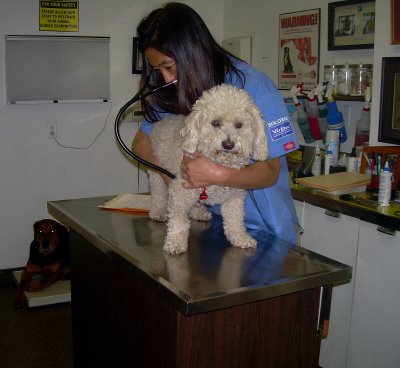
   A few weeks ago, my dog Scout, an 8 year old 20-pound bichon poodle, (a politically-correct rescue, I might add) swallowed a dog toy squeaker. I’m an overprotective, hysterical type…anxiously called Friendship, Washington, DC’s vet ER….The only thing that kept me from rushing him to animal hospital was that it was late at night, I have no car, and would have had to call a taxi that would take pets; in a stormy night, getting the taxi would have taken hours. The Vet ER doc instructed to be calm, not bring him in, stop crying, and watch Scout for same symptoms that one would watch for in a human, for a G-I Tract obstruction: nausea, vomit, no stools, abdominal discomfort, loss of appetite, less active… Nevertheless, the next day, I took the frisky, happy Scout to our regular vet. Even though he was fine, our vet xrayed Scout 4 times, in 3 days, for more than $450…


  For a 20-pound dog, it can take about 3 days, for a squeaker to pass through the G-I Tract. I learned to be patient, observant, and yes, gross, paw through his stools. Scout had passed the squeaker, and I missed it, despite my vigilance in scooping his poop. I also learned from the Vet ER that every dog will swallow something he shouldn’t at least once, despite how vigilant the dog’s human companions are… What to do next time: observe, and wait.


  Annie…. , on to John’s story. His dog is the white dog, at right…

Remembering When Dudley Was a Pup

Only a dog lover, who has endured the sleepless nights of a puppy in his crate whining into the wee hours, as though he were trapped on Alcatraz (the puppy that is), can appreciate the rigors of turning an uncouth little canine into a civilized adult.

My Westie pup Dudley was nine weeks old, fast as lightning, and smart enough to handle the honors curriculum of most elementary schools. He figured everything out almost instantly and resided for a while in the heated sun room, where his crate was and where he was free to roam the ceramic floored space when I was with him during the day, making sure that he didn’t chew on electrical cords, wood items (splinters) or anything else the ingestion of which would harm him.

In fact,  Duds flew around the room, flinging toys so that he could chase them and arrange them into a pile, and I had already left my computer chair many times to monitor his cute savagery regarding the morning newspaper, a paperback book, a basket of logs for the fireplace, and the corner of a wicker table. He was a white blur of energy that seemed impossibly housed by a three-pound creature. There were times when he appeared to be going in more than one direction at the same time.

Using inkless newsprint paper, I taught Dudley to transfer his use of the paper to the dog run next to the sun room. When he did his business correctly, I praised him generously, even if it meant waiting in the cold morning air until it felt as though Christmas must be near.

The first morning he actually made a solid deposit and then a liquid one outside, I felt like Annie Sullivan having taught Helen Keller the key to language. It was a stellar moment worthy of a journal entry and a photo! I was so excited that I could even imagine that little Tootsie Roll-shaped item on the cover of a triumphant book. I’m fairly certain that my neighbor, seeing me over her fence gesticulate my joy, thought that any remnants of my sanity had flown completely away. This, however, is the stuff of dog training, and it separates us puppy owners from saner folk, though new parents come to mind with their myriad photos of tiny children doing things for which Mom and Dad believe Merit Scholarships are in order.

When Dudley arrived here that day two years ago (after my having driven over sixteen hundred miles to Tipton, Iowa and back to get him), I was willing to retrieve toys for him to make sure he was properly occupied, chewing on stuffed monkeys instead of my books. I then sank to a lower level, one that entailed a bit of guilt. Having reached a state of semi- exhaustion, I began sitting in the sun room rocker and throwing a pile of stuffed toys one at a time, some of them on strings, so that Duds had to do all the work, enough at least to wear him out to the point that he needed a nap, which in turn allowed me one too. Anyone who believes this is a dirty trick on my part has never owned a puppy and trained it with any seriousness.

To all those wonderful, dedicated, and slightly batty people out there who are training pups, have done it, or who are considering the surrender of a good part of their reason in order to do it, I say God bless you! My thoughts are with you on your journey to whatever sense of fulfillment comes from this endeavor. But I ask you also to look at your puppy when he’s asleep, peaceful and quietly content, and remember again why having a wonderful dog is such an amazing gift. It is all worth it.

Posted in Uncategorized | Leave a comment

An Indiana Math Teacher’s Homage to Edward Gorey

John’s friend Karen, a multi-talented northwest Indiana math teacher — high school by day, university-level math by night, loves Edward Gorey’s art so much, that she created Gorey-esque garden decorations. 
A few years ago, Karen, never one for less-is-more, decided to make Gorey-inspired Halloween decorations. The results, at left, are life-size Gorey-inspired figures, gorgeous, inspiring, sought-after, appreciated, that she puts up in her gardens and her yards, for any celebratory occasions.
Karen drew life-size figures on 3/4 inch plywood, cut them out with a jigsaw herself, and then painted them with acrylic paints, covered with water-resistant enamel.  Both sides are painted; they are held up, with ordinary garden stakes. Karen is skilled at dry wall, plumbing, and carpentry.  Karen even designed and built a fireplace mantel and wainscoting for her dining room!
John describes Chicago born and raised Gorey, who died in 2000, as an artist who did bizarre drawings of Victorian and Edwardian people in luxurious if decaying settings like drawing rooms, where children might be swallowed up by elaborately stuffed settees or potted ferns, that sort of thing.  His drawings are generally part sinister and part charming drawings, that depict worlds of afternoon tea and formal occasions among aristocratic and aloof people. Gorey’s children’s books were my son’s favorite, even though, it is widely known, that Gorey disliked children.
John’s in the photo at top left… The Gorey figures are kind of Tim Burton-ish, no?

Annie….

Posted in Uncategorized | Leave a comment

A Letter to New Teachers by John Bolinger

I was just remembering in some detail about the autumn that I decided to retire.  The decision came all at once, it seemed.

I taught in a junior college for several years at night but also taught full time for thirty-five years in a local high school.  I taught English and French.  Those years were rich in the experience of being with people, and having taught over seven thousand students, I can now say that they were very wonderful years, years that kept me young in spirit.  I helped to write the curriculum for freshmen and for seniors in language arts, designed the Creative Writing program and took my students of French to France.  That part of my life is filled with hundreds of stories that are beautiful, sad, humorous and quite touching.  I was in room 242 most of those years, a room on the second floor facing the football field to the south.  It was like a big terrarium, hot in spring and fall and frigid in winter…but a good portion of my heart will always remain there.  My identity during all that time was that of a teacher.  That was who I was when people asked what I did.  I have stayed in contact with many of the students I had over all those years and had many whose parents I also had taught.  The sense of community that afforded gave me a feeling of continuity and stablility in a career in which most people don’t last more than five years anymore.  I had excellent classes for the most part.  The fall of 2003 I tackled a special English class of problem students.  It was a freshman class with people who had behavioral problems, including past expulsions.  This is the one story I must tell to help new teachers understand the meaning of all those years to me.  It is a kind of microcosm that speaks of my love and respect for the profession.  It will help to know me better and perhaps to undertand better what teaching gives back.

It was a remarkable day in late September.  Every day is remarkable in its own way, but I was touched by something unexpected during my last class of the day.  Because it was Friday afternoon and the end of the school day with my most difficult class (the leather-jacket juvenile delinquent crowd I have already mentioned), I was feeling sorry for myself, thinking as I watched them taking their Friday vocabulary test that I was not really reaching them as I had hoped to do.  I saw my refelction in a big mirror that I used to keep tabs on everything that went on in the room even when my back was turned. My face looked sad. Though the rest of the day had been very successful and most enjoyable in my other classes, I was focusing once again on what I felt was a failure on my part to inspire everyone in the room and have them excited about what we were going to be doing after the test.  Then there was a knock on the door, and a messenger from the main office delivered a package to me that had just arrived.  My students were distracted by the interruption (always an arduous task to get them back on track after ANY distraction, even a sneeze).  One bold kid in the front row (the one who was proud that his brother was in prison for armed robbery) asked who it was from and what it was. 

I read the return address and said that the package was from a former Morton student from many years ago (thirty-four to be exact).  One kid joked that it might be a bomb, but I replied that I was going to open it anyway and that we would all go up together…like bottle rockets.

Their curiosity was aroused by now, and excuses for distraction aside, they were genuinely interested to know the contents.  I opened the box to find a five-page letter from that former student , who was a trucker for twenty-five years before opening his own mortuary near Stanford University.  He had been in a “problem” class just like the one I was teaching that hour…a “basic skills” English class.  We corresponded over all those intervening years, and he continued to send me news about his life, including, at last, pictures of his grand children.

He wrote a book about his travels as a trucker across America.  He worked for several months after 9/11 at Ground Zero clearing debris and corpses. He worked with the New York city Fire Department and Police Department as head coroner. In the box was the cap he wore during his work there.  It was covered with dirt and badges for his valor.  it was the thing of which he was most proud.  The letter said that I had always been his favorite teacher and that he still thought of the ways I had inspired him to be his best even though he was now fifty-one years old.  He wanted me to have the cap, because he was proud of it, and I was his hero in a time when the world was calling him a hero.

My eyes filled up as I looked at it and explained to the class what it was.  They were absolutely silent (perhaps the first time they had ever seen a teacher cry).  The bell rang and they left quietly (as they had never done before).  Maybe they too were touched by what had occurred.  I don’t know.  It may be that they were simply shocked by my reaction.  It didn’t matter.  I had not been so moved in a long time by a gesture like that gift.  It came at just the right time to let me know that teaching had indeed made a difference and that there were influences that continued long after students were gone.  I felt quite blessed.

I’ll post a photo of the cap later.  The smudges of dirt probably won’t show up, but it will be added to my collection of teaching memorabilia.  By the way, Jim had heart surgery two weeks after he sent me the cap and died October 23, 2003.  I retired the following spring.

Posted in Uncategorized | Leave a comment

Aunt Reba’s Red Cucumber Pickle Recipe

This recipe is much easier, than it sounds.  Most pickling ingredients, including jars, can be found in grocery stores.

Large cucumbers, peeled, sliced into rings and cored.  They may also be sliced into spears if you prefer.

Soak 24 hours in the following mixture:

2 cups lime or Ball Picle Crisp Granules in maker’s proportion to lime
8 1/2 quarts water

This recipe will do about 2 gallons of sliced cukes.

Drain and wash well, being careful not to break the pieces.

Simmer two hours in the following mixture:

1 cup vinegar (apple cider works)
2 oz. red food coloring
1 tbsp. alum
enough water to cover the cukes

Drain well and throw away the liquid.  Rinse the cukes.

While the cukes are simmering, make the following syrup:

2 cups vinegar
2 cups water
10 cups sugar
6 broken cinnamon sticks (cinnamon bark)
1 pkg red hot cinnamon candy

Cook until the sugar and candy are melted and mixture is boiling.  Pour over the drained cukes.  Let set overnight.

Drain – reserving syrup.  Reheat the liquid, pack cukes into jars and fill with hot liquid.

Seal and process 10 minutes in hot water bath.

Posted in Uncategorized | Leave a comment