Mum’s the Word

My dad was a drinker.  I don’t mean that he was a social drinker, someone who has cocktails at seven just before dinner, one of those special Christmas punch, occasional imbibers, or a man who enjoys Friday evening, slap-on-the-back beers with the guys down at the Shamrock Tap.  No, I mean that he was a studied, rye whiskey, Chivas Regal, Bombay Sapphire Dry Gin, hidden-behind-wall-panels consumer of alcohol in magnum proportions, and for whom every hour was an occasion to celebrate even life’s tiniest victories, or to soothe its many wounds, real or imagined.  His thirst was unending, because his search for that equilibrium of mind we call peace remained unquenchable.  I’m not sure if our family has a crest or coat of arms, but if we do, I imagine it to be a bottle of Johnny Walker on top of a hospital gurney, both entwined by a tasteful swirl of poison ivy.

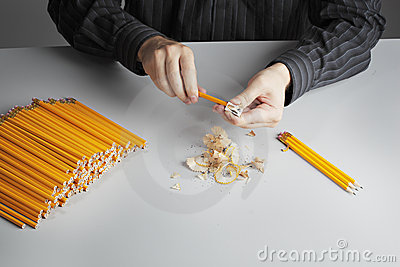
The level of codependency between my parents was of such extraordinary color and depth, that any expert on psychology would have given anything to study it before turning it into an award-winning, best-selling book and then receiving big money for rights to a Hollywood movie version starring Tommy Lee Jones and Susan Sarandon.  Mom was a martyr whose closed eyes and flared nostrils were most often evident during or after Dad’s many drinking episodes, which on occasion would become binges over a weekend or even the better part of a month, after which Dad would appear suddenly at dinner, suitcase in-hand, wearing a deceptively cheerful smile suggesting that no one would be so crass as to pose any questions about his whereabouts over the previous days or weeks.  He would then attempt to buy us off with presents from wherever he had been.  Over the years I accumulated a stash of records, leather belts, pen knives, sweaters, and mechanical pencils with my initials engraved in gold, all from places everywhere from Tacoma to Baltimore.  My sister Connie usually got dolls, Mom would get jewelry, and my brother David the plastic shrunken heads he needed for his vast and grisly collection.

While Dad was away on one of his jaunts, newspaper headlines like, “Drunk Man Climbs High Voltage Wires” would haunt us at home, because we were all familiar with the Twilight Zone world Dad inhabited while he was drinking.  Nothing phased him, and he knew no fear or sense of decorum when he was looped.  Once home, Dad would ease back into his habit of eating his dinner from a TV tray in the living room while watching Hogan’s Heroes and Family Feud, as the rest of us listened from the dining room to his hearty laughter and trumpeting farts through paisley boxer shorts, his favorite attire for the dinner hour.

Sometimes Dad would have dry heaves at night or react irrationally to something, as in his getting up at four in the morning to shoot his pistol at the chimney, where he claimed a crow that sounded like Phyllis Diller was laughing at him. Or, he’d wander downstairs in his boxers during other wee hours to sit with some cheddar cheese and a bottle of port in front of the TV to watch infomercials and programs like Bowling for Dollars until dawn.

Mom’s release valve came in talking daily on the phone to our Aunt Florence to relate my father’s most recent, grotesque encounters with his inner world through liquor. The most amazing thing about those years was the miracle that Dad never lost his job, which made me think his employers at Krall Electric were either extremely liberal or unbelievably unobservant.  At any rate, Aunt Flo’s shrill voice could always be heard piercing the air from our phone, even from the next room, saying, “Fer Chrissake! Is that a fact? Did he really?  You don’t mean it!” She provided Mom with a soundboard off which to bounce her dreary life of laundry, cooking, cleaning, and creating stories to cover the fact that Dad was an inebriate of colossal proportions.  Lies flew around like a plague of locusts so that people wouldn’t drop by to visit our home. At one time or another, we all had brain tumors, asthma, and a host of communicable diseases to ward off any possible guests.  I remember Mom telling Judd, my brother’s best friend, that David was just getting over rickets and couldn’t have company yet.

This was the worst part of having an alcoholic father.  Lying required too much collective energy to keep it a secret.  Having our friends over was a tricky business in the sense that it was almost impossible  to plan visits around my father’s unpredictable drinking fests, and it was too terrifying to imagine a friend coming over for an algebra study session that might end with my dad stumbling into the room wearing his boxer shorts and farting like a bilge pump, followed by his dissertation on how Eskimos were really onto something in their practice of putting their elderly onto ice floes and sending them out permanently to sea.  His slurred speech was a huge signal that he was “shnockered,” and it would take only one loose-tongued, even if well-meaning buddy to have the story in every house in town by the next morning.

Dad didn’t join Alcoholics Anonymous until after the night during the time I was a senior in high school, when we received a phone call from the police telling us that Dad had been in an auto accident, and that Sergeant Murphy would be bringing him home in a squad car.  Of course, that flashing red light in our neighborhood at ten in the evening was probably a catalyst for the story being slapped into a nationwide hookup within hours. It seems that Dad had sideswiped a Wonder Bread delivery truck, finally mashing the truck’s back end message of HELPS YOUR BODY GROW TWELVE WAYS into the colorfully ballooned, accordion-pleated, remaining letters, HELPS YOUR BODY GROW ELVES.

After that night, I began to wonder if we were the only family in town with a tipsy father.  I looked above my bed at the shelves filled with gifts that had been my dad’s bribes not to stand up to him about his drinking. The gifts all looked like those boxes of chocolates that lie on drugstore shelves with expiration dates from when some of us were toddlers, and I resolved not to ignore the problem anymore, but to talk about it during whatever lucid moments Dad was willing to share.  As it turned out, we weren’t alone.  Any number of kids at school had parents whose drinking was out of control. There was a community of people I could actually talk to with problems we could carry collectively on more than a couple of shoulders.  None of this, however, had any effect on my dad’s penchant for boxer shorts, his farting, or my brother’s obsession with shrunken heads, but life did improve for my family over time.  JB


Posted in Uncategorized | Leave a comment

Recognizing Your Calling

This is an excerpt from my third book, COME SEPTEMBER, Journey of a High School Teacher (available as Kindle or paperback on Amazon.com). The experiences described in this piece show the importance of considering one’s career choices carefully.

**************************************

One annoyance that at the time can seem unbearable, but that later on can become a blessing, is having a job when you’re young that you truly hate, even if just for a little while. That detested employment can make one appreciate his true calling even more when it comes along, and can inspire anyone to keep looking for that occupational niche that fits him or her best, simply by making him want to escape whatever job is dull, meaningless, laborious, or just tedious.

My very worst days in teaching were all far better than even my best days at Inland Steel in Gary, Indiana. The summer of 1968 I worked on the Cold Strip Number Three in Gary for a couple of months, but my time on that job would forever after make me grateful that it had not become my life’s work. Being there even for that short time helped me to comprehend and esteem the profession of teaching high school.

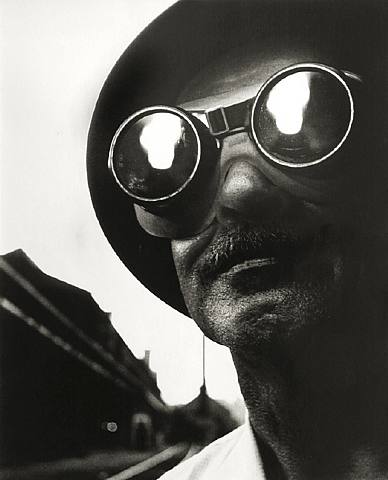
My most representative recollection of that summer at Inland was the first day, when I was an obvious green horn, wearing my brand new stiff, heavy work boots, clothes, and hard hat. Add to those the bug-eyed goggles, and you’ve conjured up the picture of a deep-sea diver. Our foreman, Joe Flint, was a sadistic, beer-bellied brute, about forty years old, who seemed to enjoy making everyone around him as uncomfortable as he could. He loved showing off his authority in ways that would embarrass anyone over whom he thought he had power. The fact that he never uttered a sentence without a double negative and at least three curse words made him less colorful than just plain mean and hopelessly stupid. One of those people who enjoyed looking down on others, Flint was also an open racist and made himself feel superior at the expense of those round him. Their pain and humiliation seemed to lift his spirit (if he had one).

The first day, Flint announced that he needed the college students for a special job. Sam, Frank, and I stepped forward to be informed by the smirking Flint that we would be spending the day cleaning dead rats, and maybe a few live ones, out of the grease pits. I’ll never forget the three of us up to our ankles in oil and grease, shoveling dead rats, Flint looking down on us from above, laughing as we three slipped around the pit, wiping our sweaty brows with our greasy gloves and sleeves.

It became increasingly clear over the summer how much Flint hated us, despite our humility and obedience. Perhaps all of his animosity was based upon the fact that he was keenly aware of our temporary presence there, and that we three would be moving on to other jobs, where we could find a sense of fulfillment and happiness that Flint had never found and probably never would. There was, according to Frank, a terrible jealousy in Flint’s nature that always surfaced whenever any of us three college students, whom Flint called “college stooges,” did something right, which admittedly wasn’t all that often. Those times he would simply scoff at us, never encouraging us in any way that we were on the right track. When, however, we did something wrong, he would laugh gleefully, as when Sam slipped on a patch of grease and badly cut his left arm on the razor edges of a giant steel coil one morning and was rushed to the infirmary, where he had thirty-seven stitches. Afterward, Flint laughed himself breathless in repeating the story of the “dumb-ass college twerp” to anyone who would listen.

My contempt for Flint was always clear to me, but my pity for him didn’t materialize until near the end of the summer, when I began to find that everyone else at the plant hated him too, even more than we three lowly students did. He was reviled by everyone else but continued to believe that his cruel and contemptible behavior was somehow humorous, entertaining, and admired. I found this rather sad, but at the end of the summer, Frank, Sam, and I joyfully left Inland Steel, none of us saying goodbye to Flint, who had never offered even one word of hope or kindness to any of us. As our bus pulled away from the plant, and Cold Strip #3 grew smaller behind us, I pictured Flint remaining a wretched and empty man into old age, vilified by all who knew him. That thought softened the disgust and loathing that I needed to leave behind.

Despite the awful experiences of that summer, I had learned at least one valuable lesson, that whatever authority I was to be given as a school teacher, I would never use it to scorn, embarrass, or hurt anyone. Flint would remain the standard for everything I abhorred about our weaknesses as a species. Whenever I felt myself becoming the least bit mean-spirited, cruel, overbearing, or arrogant, I would remember Joe Flint and be instantly horrified by the mere possibility of being anything like him. In that respect, maybe Frank, Sam, and I, along with countless others, owe Flint our gratitude for helping to make us all, even if unintentionally, better people. Flint would remain forever our most vivid model of what not to become as human beings.

The painful experiences we have, especially when we’re young, can scar us, harden us, or give us a different kind of understanding and strength to face other things later on. Each one of us can probably think of a nemesis from his or her past, someone who seemed to enjoy making us miserable, but who could also make us appreciate others in our lives who had inspired us with their kindness or encouragement. The unhappy jobs we endured as stock boys in grocery stores serving thoughtless and rude customers, laborers in hot, uncomfortable factories, newspaper delivery boys, baby sitters for monster kids, or work at any other jobs we found to be all but unbearable, serve to give us the desire to do something else, something with creative satisfaction and meaning that goes right to the core of who we are and who we want to become. That need to look “elsewhere” stops perhaps when we discover our callings, that overwhelming and all consuming realization that in our work, we’re doing what we were meant to do as our principal occupation or career in life. As a kid I had enjoyed playing school and pretending to be a teacher or principal, so the desire had always been there, but there are probably many who stumble upon their choices for work much later and by pure accident, but that doesn’t diminish the power of finding one’s own calling, whenever it happens.

Some kids know as early as middle school what their callings are. Others don’t know until after high school, and still others never really know what they were meant to do, which is why I believe strongly in high schools having “career” days, where many choices are presented interestingly with large amounts of information and the chance for kids to ask questions. Options are needed so they can be matched with preferences and inclinations that may otherwise remain untapped or unrecognized, allowing some students to drift aimlessly toward conveyor belt jobs, where those people may or may not find their callings but stay just to get by. That isn’t to say that kids are mere fodder for the work place, though it often seems that way, but finding what they like and do best seems vastly important to individuals and to society. Not everyone has to attend college, but the essential thing is to help kids know what’s out there for them in the way of employment in which they can find some measure of significance, security, and pride.  JB
Posted in Uncategorized | Leave a comment

A Few Words on Popular Music

My thoughts today on current pop music would probably insult the teenagers whose tastes lean heavily in the direction of songs that are now heard almost everywhere we go.  My concern, however, over offending the young is minimized by the fact that it will be highly unlikely that any teens would be reading this blog.  Also, I believe strongly that anyone who listens regularly to such music is probably devoid of the tenderness of spirit to feel or even recognize an insult when it’s hurled at him. Yes, I’m horribly intolerant in this matter, especially when I’m forced to listen to rubbish that so many call “music” in our public places.

Last Wednesday while bowling at a local place for two hours, I listened, however unwillingly, to song after song at volumes strong enough to shatter steel beams, every one of the songs in common time with the same mind-numbing tempo and repetitively mindless lyrics, to the point that my brain began to feel immobilized by the utter dullness of the listening experience.  I’d like to blame my bad bowling scores on the music, but that would be going too far, I suppose.  Without earplugs I felt at the mercy of the dreadful music and being forced to hear what was surely more a phenomenon of electronic sound enhancement and technology than of actual musical talent or originality of performance. The term “performing artist” is way overused nowadays.

Maybe we’ve reached the point where we really don’t want to be stimulated mentally by background music but rather deadened by it as robotic accompaniment to whatever else we’re doing.  I guess we’ve all become multi-taskers anyway.  That kind of pop music seems paralyzed by a sameness that desensitizes life in a way that texting and cellphones do.  Primitively inarticulate, the music becomes as pervasive as a stupefying companion uttering the same word over and over again until it loses all meaning.

I’m old enough to remember that our pop music of the 1950’s through the 1980’s could certainly be dumb too, but at least it didn’t all sound exactly the same.  I’ve come to that juncture in life, where I can hear several pop songs in a row and not be able to tell they weren’t all done by the same performer.  Part of that is due to the aging process and my remembering fondly the music and lyrics by people like the Gershwins, Jerome Kern, Harold Arlen, Cole Porter, Oscar Hammerstein, Jules Stein, Stephen Sondheim, and Irving Berlin, but a big part of it too is that much of the pop music of today is just inane. From a sense, however, of compassion, pity, or condolence, I won’t mention any of its specific names.  JB
 

Posted in Uncategorized | 3 Comments

Remembering My Grandparents

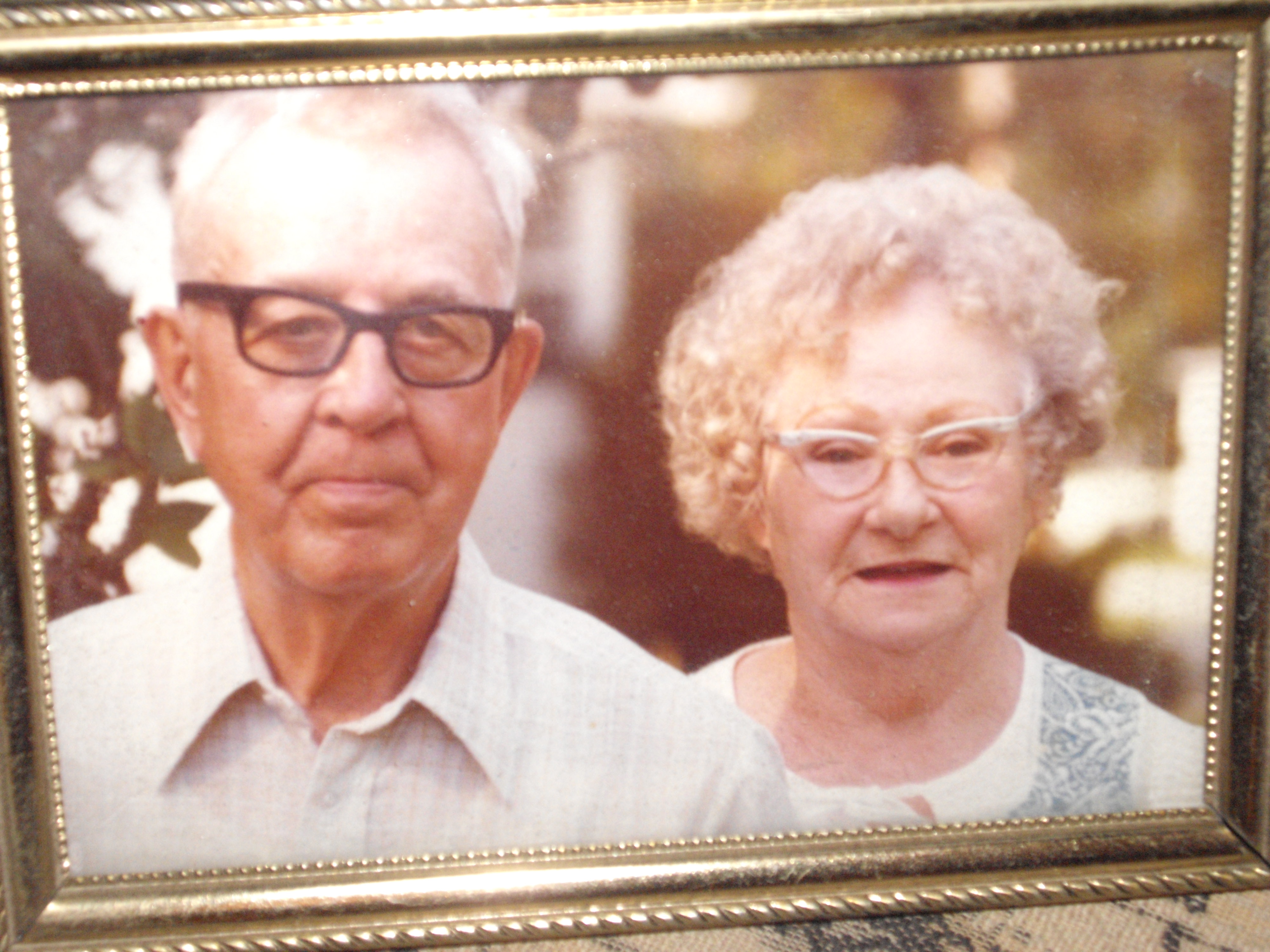
As I age, I feel the need from time to time to write about my maternal grandparents, Charles Edgar and Vivian Veronica Starks.

For those fortunate enough to remember their grandparents, it’s a wonderful thing as the years roll by to recall the unconditional love that enveloped them during childhood years and beyond in that phenomenon of idolizing those grandparents as much as they idolized their grandchildren.

The experience of hero worship often begins with one’s own parents or grandparents, but today I’d like to take a look back at how my grandparents deserved the adulation that may have come their way.

My first memories of Grandpa and Grandma Starks are almost purely sensory ones, the aroma of Grandpa’s pipe tobacco with that of the peppermint candy in the white dish next to his pipe rack on the coffee table in the living room.  Then there was the fragrance of fresh flowers from Grandma’s garden, the lavender she dried to make sachets for linens, and the aroma of her Shalimar Perfume mixed with those of freshly baked pies, cakes, or breads from an oven that was rarely turned off.

There was also the sound of laughter from both my grandparents, a partially muffled chuckle from Grandpa, and the room-filling, unbridled guffaw of Grandma, who seemed always in a state of rejoicing at just being alive.

The good nature of my grandparents was further evident in their sense of charity.  My mother told me often of repeated trips my grandparents made to front porches of people out of work or otherwise down on their luck, where Grandpa and Grandma would leave bags of groceries anonymously, so as not to embarrass the recipients into feeling beholding in any way.  Those incidents were related to my mother, not by her parents, but by their neighbors, who were well aware of the generosity of my grandparents.

Grandma was a gifted mimic, who loved imitating eccentric relatives from her own childhood.  Her instincts for comedy and acute sense of timing resulted in Grandma’s owning the space of any room she entered, not by upstaging others deliberately, but by always being the most interesting and engaging personality within any group.  I used to think that Grandma should have appeared on the Tonight Show.  She and Johnny Carson would have had a marvelous time together regaling America with their anecdotes and mimicry.

Grandpa and Grandma were also good listeners, always completely captivated by the current expoits of their grandchildren, showing loving interest in even our most trivial activities.  Only such a bond of love could have accomplished the miracle of making fifteen grandchildren feel adored all at the same time in the same room.


The gentle sound of Grandpa’s guitar comes back to me often and the laughter that came from his pretending to snatch my nose between his knuckles before putting it back in place, followed by his footsteps down the basement stairs to get ice cream for us from their freezer.

Grandpa died when I was in my early forties and Grandma when I was almost fifty, birthday cards arriving yearly with a dollar bill in each and handwriting a little less distinct each time until her passing.

Even the squirrels and birds in her garden loved and trusted her, as she talked to and fed them daily, witnessing generations of them, because they seemed to want to remain near her.

The wisdom, beauty, and kindness of those two people are what I’m celebrating today.  Were Grandma still with us, she would be 108 years old, and Grandpa, 114.  In spirit though, they will always be with us.  JB

Posted in Uncategorized | 1 Comment

Skin Allgergies for Dogs

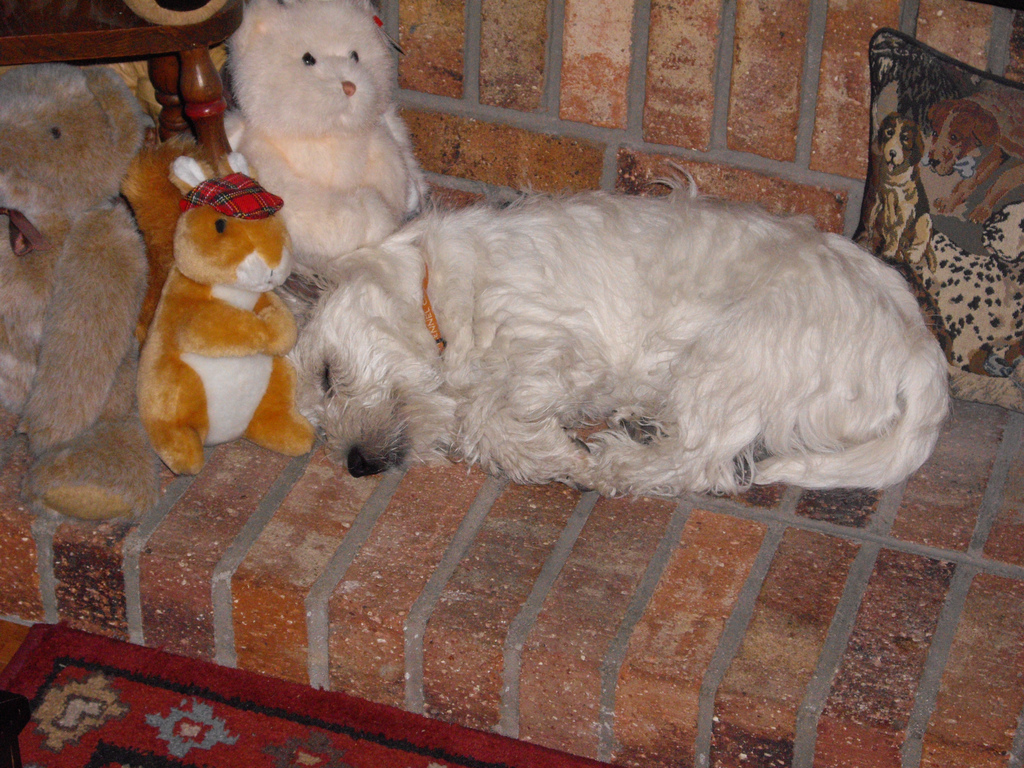
I’m not an expert on dog allergies, but I do know that some breeds, like West Highland White Terriers are prone to have skin issues.  Dudley is my second Westie, a cheerful dog of keen intelligence and loyalty, and one that is as happy on a farm as in a suburban apartment, as long as he is with his master.

The problem is sometimes that most dog foods contain additives and other ingredients that can act as irritants in some dog digestive systems, resulting in itchy skin and major bouts with scratching.

In Dudley’s case, chicken bi-products, wheat, some meat proteins, and certain preservatives must be avoided in order to stave off the unpleasant experience of itching that leads to scratching and possible infection.  I’ve discovered through trial and error and help from Dudley’s vet that Natural Balance sweet potato/white fish formula in dry and canned form is effective in protecting Duds from skin issues, even though he needs to take a Benadryl before bed each night to keep him comfortable.  Dog treats often contain wheat, but there are a few that do not, such as Blue Buffalo and Zeke’s Chew Sticks.

Paying attention to the effects of your dog’s reactions to various foods makes a huge difference in his comfort level, making him a much happier pet.  The extra money necessary for better quality food is well spent, because every dog should be a member of the family and deserving of as much love and affection as that family can give.  JB

Posted in Uncategorized | Leave a comment

Stylish Kitchen Storage

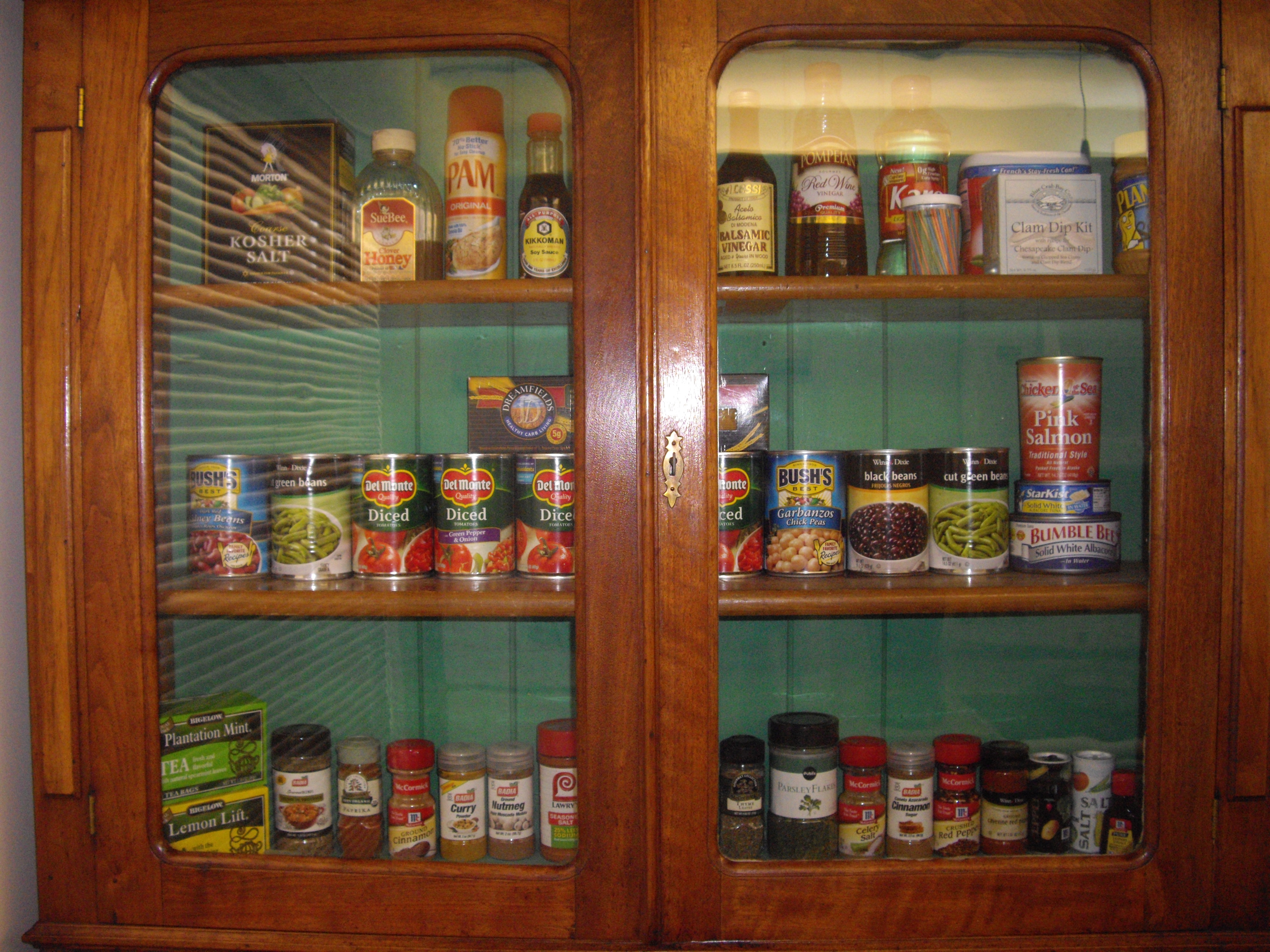
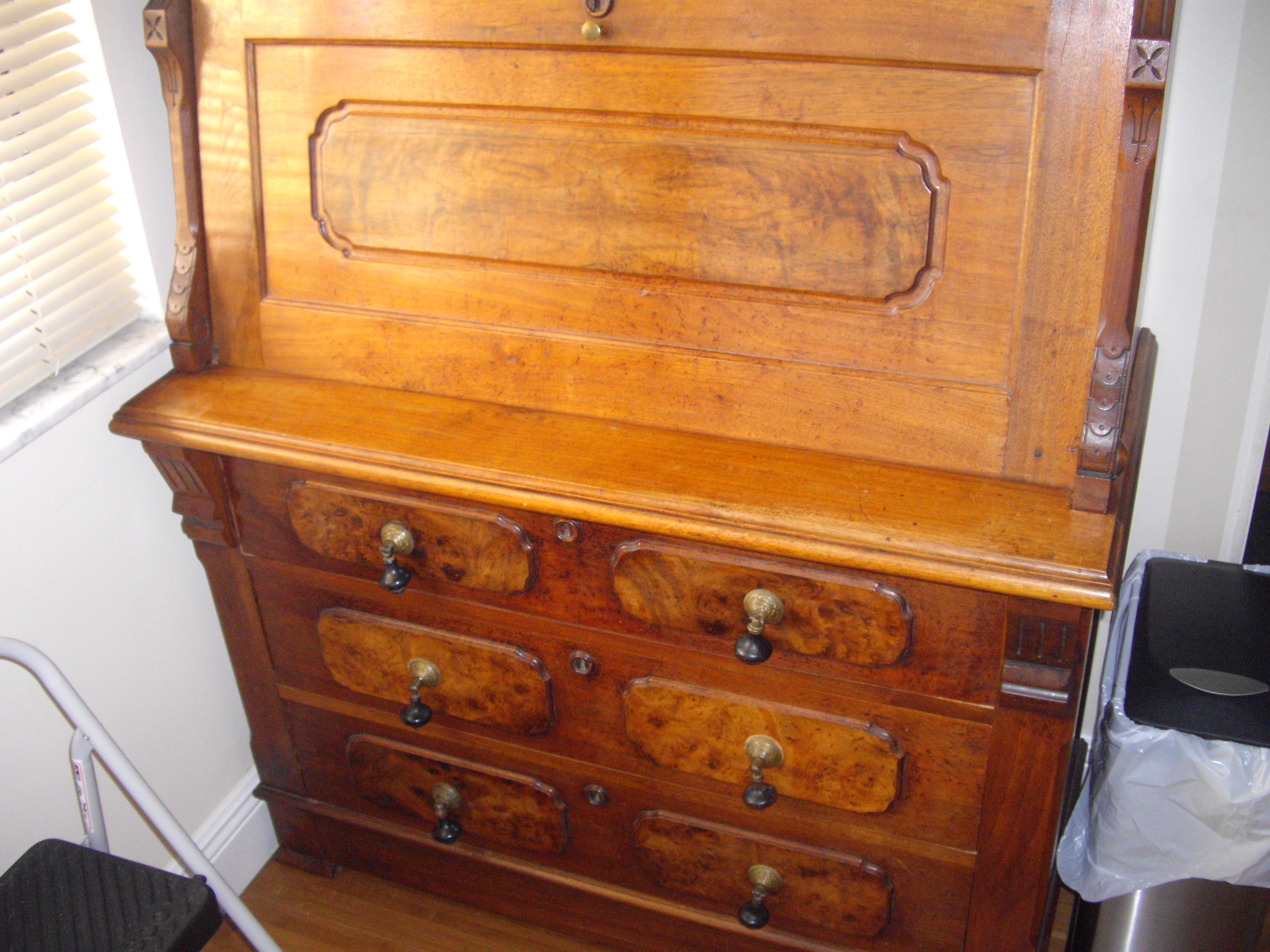
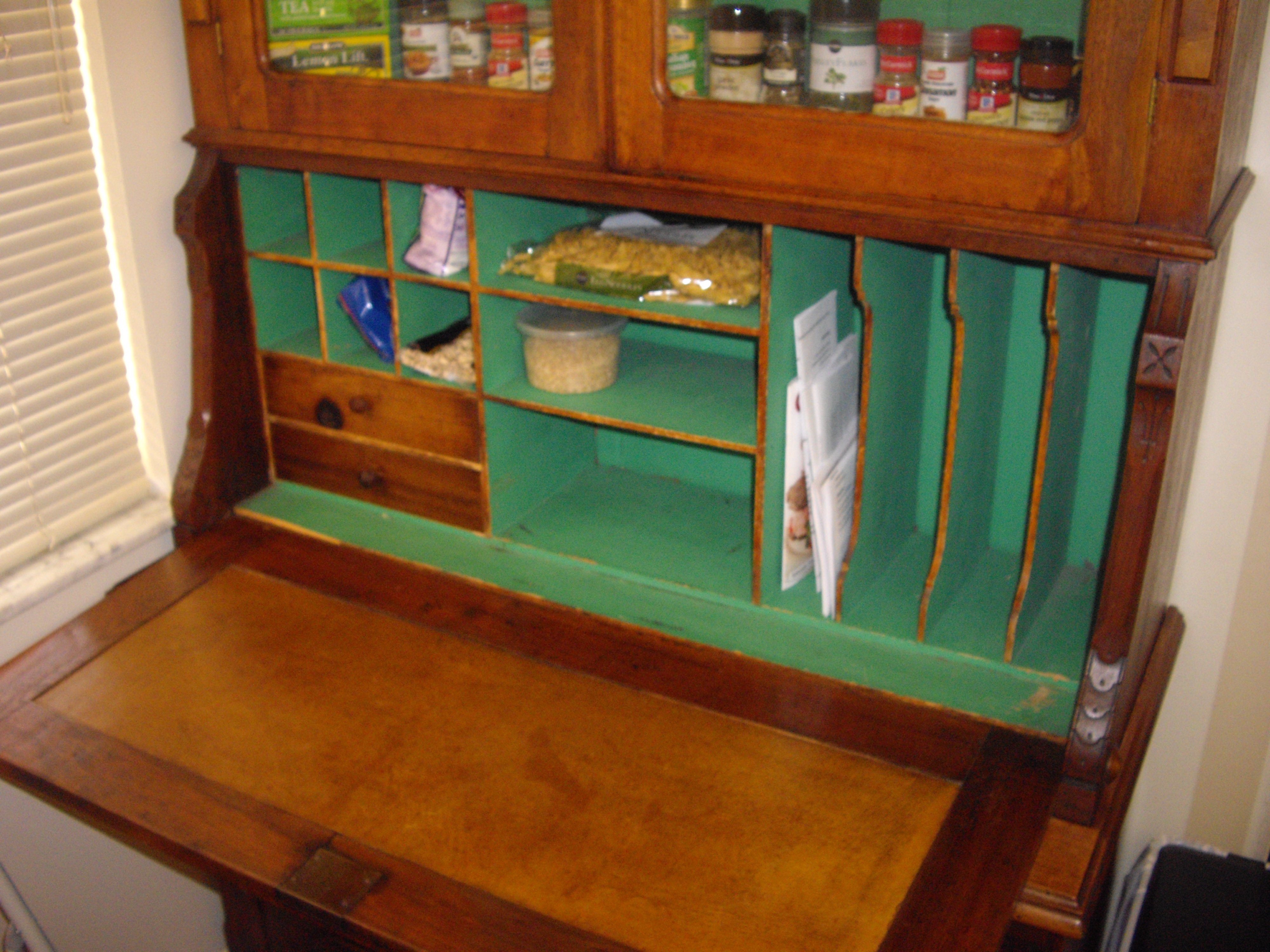
My partner and I found a 19th Century secretary desk the aged wood of which glows in every kind of light.  It occurred to Jim that such a desk had a country character that could be used in a kitchen setting for storage of canned goods, kitchen towels, books, and recipes for an informal but colorful style that is also practical in terms of all that the shelves and drawers can hold, freeing up other cabinet space in the kitchen and pantry.

The result, of course, is an unusual and attractive addition to standard kitchen cabinet usage through a rustic old piece of furniture that gives an organic feel to the room.

I recommend consignment shops as places to look for old country pieces of furniture that seem to go with every other style and can provide not only charm, but effective, utilitarian spaces for storing any number of culinary items.  JB

Posted in Uncategorized | Leave a comment

Boredom…Our National Phobia

Our greatest fear in this country is not hunger, physical pain, taxes, or injustice, but that of being bored or unoccupied at any moment by some external stimulus. We seem to be terrified by the prospect of actual introspection of any kind.  The need to be “doing something” every moment of the day does not generally include meditation, musing, pondering, or reflection.

Amusement is what we worship more than anything else.  Everything from television to computer games keeps us occupied and safe from the contemplation that may be too deep.  Being busy or entertained at every moment is how we measure the value of life.  Part of this ethos may go back to the Puritans and later to Ben Franklin, the Puritans having believed that constructive activity kept us at a distance from sin, and Franklin having put his trust in busyness as a means to improve life through experimentation and invention in order to make living better for everyone. Those precepts have, however, deteriorated to turn most of us into passive creatures through our enduring need for diversion.  Our inner resources have diminished to the point that without an electronic device in hand or some other “outside” diversion, we feel lost.  Most of us are used to being able to suppress thoughts that are too profound or demanding by the unending distractions of media and the loudness of life around us.

I am amazed at how many people leave their television sets on almost all the time, even when there are guests. Some with better material means have sets everywhere in the house, even the bathroom.  The mere thought of not being “connected” while walking from one room to another is anathema.  Is there a fear of silence for some?  If so, why is that fear so powerful, and upon what is it based?

As someone who taught high school for thirty-five years and was a teenager myself sometime during the Mesozoic Period, I’m more than familiar with the adolescent curse of being bored.  Inner resources have to be nurtured over time so that one can discover his or her personal ingenuity at dealing with relative quiet and lack of external stimulation.  Our culture is becoming louder, more aggressive, and faster-paced than ever before.  The inner self that each of us has is being shrunk daily by the overstimulation of a world that cannot be turned off, even for a moment.  Whatever means of meditation we have, like yoga or prayer is of enormous value in keeping us grounded and in touch with something more cosmic than our being permanently amused. I wonder often too why we tend to measure quality and fullness of life by speed, complexity, and unceasing activity.  Convenience and entertainment are wonderful things, as long as we see their limitations and that they are not the only needs we have.  JB

Posted in Uncategorized | Leave a comment

The Downside of Texting

Texting is a phenomenon that continues to fascinate me.  On a daily basis I observe people with their little keypads furiously typing messages one would think were essential to the continuation of our species.  Generally, thumbs are used while the senders squint at the miniscule letters on those Barbie and Ken doll-sized keys and seem to derive some profound satisfaction at finally pushing the send button.

Even some of my older friends (ones over fifty) are hooked on texting.  For some it’s the only means to regular communication with their children, who so often these days have no skills for conversation.  For others, it gives a chance to say something (anything) while away from the computer when they aren’t in the mood actually to chat on a cellphone.  The annoying part for me is that when I’m with friends, the texting bell, whistle, buzz, or other signal on someone’s device goes off during conversation or a visit.  I find it appalling that people are slaves to those signals and often stop whatever they’re doing to find out what message has been sent. I have not yet been witness to any message more earth-shattering than “Hey, dude!  What’s up?”  The whole dynamic of texting has somewhat replaced the one for cellphones, my other nemesis.  Both modes of communication are surrogates for real communication among human beings and have at least partly obliterated social skills as we know them (used to know them).

The people who pretend to whine about the interruptions texting and cellphone calls present, are the same folks whose faces light up at being contacted, for any reason at all, no matter where.  I don’t understand the necessity to be shackled to a cellphone or texting device every minute of the day.  Does it provide a false sense of security, the illusion that we cannot be connected to others without this technology?  Popularity is sometimes measured among high school students by how many text messages they receive on an hourly basis.  Getting a text message during a meeting with friends that reads, “Hey!  What ya doin’?  I’m at Aldi in frozen foods” is for most people not important news, but it is a means of control that some find enticing, either for the fantasy that they are essential to the lives of other “texters”, or that they appear to be sought after in some way while in the company of other friends, who must tolerate such rudeness with equanimity just because it has become so very common.

Making oneself constantly available by cellphone and texting smacks of a kind of shallowness that frightens as well as irritates me.  People who are on cellphones or texting devices a good deal of the time are the same people who are oblivious to what’s going on around them.  We have all seen them in restaurants with family or friends, completely disengaged from those around them by that little phone or text keyboard.  Those who use either device while driving are beneath contempt, because they are forever endangering the lives of other drivers and pedestrians.  Of course, the cellphone and texting devices will eventually be replaced by other inventions that will make us believe that we human beings are more “connected” than ever, while the irony of separation continues to grow at an astronomical rate as communication becomes more and more superficial, and human beings feel increasingly alone.  JB

Posted in Uncategorized | 1 Comment

Writing as a Refuge

When I was in school, writing was one of my favorite activities.  That made me nerd of the universe, but I always looked forward to reading a teacher’s comments in red ink on what I thought or believed and how I could improve my style. As a teenager I grew to love writing just for myself, even if no one else ever read what I wrote in my journals.  Now I have a blog on which I can express my hopes, fears, convictions, anger, and taste any time I wish, my ego enjoying the bonus that someone out there may be reading and sharing my thoughts, applauding or reviling them, but reading them just the same.

In some ways writing is a release, probably a selfish one, an escape from the inevitable confinements of conversation, that can become a kind of tightrope walk in its need to balance one’s opinions and those of others, not in the sense of a contest, but in a shared quest for information or entertainment.  Because there is so often at least one person who, fascinating or not, monopolizes conversation, rendering others his audience, willing or not, writing can become a little asylum of reflection, without the unsolicited theories and judgments of various and sundry pompous windbags, whose agendas are tossed about so indiscriminately.  I do believe that in order to be a “whole” person, one needs some level of equilibrium between shared thoughts of conversation and the quiet introspection of his own take on the world around him.  It takes both to give us a wide and healthy view.

We live in a time when most of us are bombarded daily by commercial and political messages shouting what is good, what is bad, who is beautiful or important and who is not, regarding everything from what we drive to what we wear and what we eat.  This has become increasingly true over the past century to the point at which we have become victims of over-choice, despite some good information that may help to make our lives safer or more “comfortable.”  Even in cities with large populations, each man and woman lives, to some extent, in his or her own, private world with individual takes on what is going on in the wider environment from minute to minute.

Marketing from Madison Avenue has become expert at beguiling people into believing they want or need things, that in just a little while seem dusty and surprising remnants of half-remembered desires.  Years ago a cracker company discovered that by printing the word, “SEX” on the image of a cracker for only one frame in a 16mm filmed commercial, the subliminal message was that the viewer experienced a powerful but unconscious association between the cracker and the pleasure aroused by the word, “SEX.”  Sales increased exponentially with housewives, their hair still in curlers, astonished that at checkout lines their shopping carts were filled with boxes of crackers.  After that, subliminal advertising became illegal, but imagine its implications during a political campaign.  It brings up the question about where influences around us stop and where our own thoughts make decisions for us.  Creative writing helps us find our way.

As human beings, we sometimes become lazy in our willingness to go along with the crowd, abdicating our natural inclination to look at the world based upon our own needs, knowledge, and experience.  Modern life makes it increasingly difficult to make informed decisions without Google, doesn’t it?  Generating thought and opinions without many outside influences makes originality of thought more and more valuable.

That’s why writing can be such a wonderful sanctuary, where we can record our impressions and thoughts on an infinite number of topics, going back later to the same writing to see if or how we’ve changed our views.  That kind of writing provides a chance to make our own pronouncements, clarify our own insights as we put them along side those that surround us the rest of the time, so that we can say, at least sometimes, “Yes, this is what I think and believe.”  JB

Posted in Uncategorized | 1 Comment

Problems with Modern Packaging

It seems that many common products that in the past we bought in stores and opened easily at home now require tool kits, which may include hammers, screw drivers, and possible explosives.

I suppose the changes in all current packaging began with the horrible random murders committed in the early 1980’s by the as yet not apprehended psychopath, who tampered with bottles of Tylenol by inserting enough poison to kill innocent people. I can’t imagine the twisted rage that would turn someone into that kind of demonic human being, but the mark left by those murders is still evident in almost every consumable product that needs ingestion after manual opening.

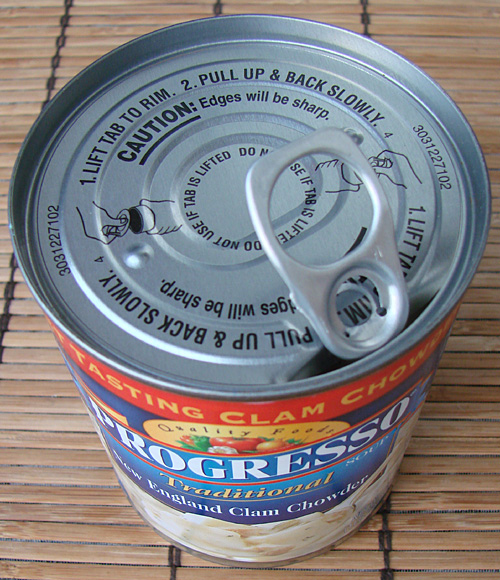
Everything from aspirin to orange juice requires some kind of dexterous hand maneuver in order to get at the product, let alone actually use it.  Some are more annoying than others, like the little plastic circle with a ring handle that opens sealed containers of orange juice, and cartons of soup or broth. I suspect I am not alone in my having broken off the circle pull, so that a sharp knife became necessary in order to get at the contents of whatever product I naively believed was easily accessible.  Several canned goods use a similar pull made of metal.  The pull has to be bent back and then tugged in just the right way in order to dislodge the can’s lid slowly and rather dangerously.  Yesterday, as I was trying to open a can of black bean soup, the design of which undoubtedly came from Fort Knox, the lid jammed near the end of my attempt, splattering black beans on the kitchen wall and dark soup on the counter tops and floor.  If the tab breaks off before you’ve opened the container, calling a professional may be your only option, as continued struggles with sharp, partially removed lids from cans may inflict nasty cuts.  I speak of this from experience but will say no more about the grislier details of those encounters.

We need to sympathize especially with disabled and elderly people for whom the daunting task of opening even a can of tuna can demand more stamina than they have left.  Think of someone suffering from arthritis or rheumatism. Just trying to open a bottle of aspirin or a carton of milk can be discouraging for them.  And that reminds me.  Has anyone ever really been able to open a carton of dairy cream, not using scissors or other tools, and without tearing the top to shreds?  As soon as I see the words, “EASY OPEN,” I simply buy the product, no matter what it is.  For products like scissors and butane lighters, manufacturers seal them in heavy cardboard and plastic, so that getting at the contents requires scissors or blow torches.  Ironic, isn’t it?

Plastic “peanuts” are my pet peeve in packaging larger items.  In Tennessee last year, I purchased two antique chairs that had to be shipped to my house in Colorado.  The huge boxes were stuffed with the plastic peanuts so that when I opened the boxes, the white peanuts gushed out onto the driveway and were carried by the wind like a snow storm all over my neighborhood.  The remnants of the peanuts are still there, and probably will be for a couple more geological eras.  The chairs themselves were wrapped tightly in many layers of heavy plastic requiring special cutting tools for over an hour before I reached the final contents of the boxes.  Counting the time I was chasing plastic peanuts all over Centennial, I spent almost three hours getting to the two chairs inside, which by that time seemed only a dim memory of what I had fallen in love with in Tennessee a month before, due in part to my exhaustion.

The result of all this is a kind of nostalgia I experience in remembering the days when opening common and necessary products didn’t yet pose challenges more horrific than those of a Rubik’s Cube.


Posted in Uncategorized | Leave a comment