Aging Cycles

My Partner just endured a back surgery last week that involved vertebrae fusions and Stenosis treatment. The aftermath of pain from this is probably unimaginable to most of us, who have been fortunate not to have suffered back issues.  There is now enough titanium inside Jim to render him practically bionic.  Any other metal would pick up FM radio stations.  Having seen his previous X-rays, I would have given the diagnosis that Jim had swallowed an entire Erector Set, based upon the hardware that was placed there before.  His subsequent surgery was apparently part medical and part architectural.

I had to fill several prescriptions at Walgreens for medications, and as I sat in the pleasant little waiting area, my anxieties over what Jim was undergoing gradually but temporarily subsided, as the only sound in the place was a recording of Mary Travers of “Peter, Paul, and Mary,” singing “Leavin’ on a Jet Plane.”  There were others in chairs waiting for their prescriptions to be filled, people with gray hair.  I smiled as I thought of our all being from the same generation, and I was able to read on their faces a kind of nostalgia as we all listened to that music from almost fifty years before, music that was perhaps taking us all back for a few moments to the days of our youth, when we were in high school or college. Without having to speak, we were sharing a collective history together.

“I’m leavin’ on a jet plane.

I don’t know when I’ll be back again…”

As my name was called to pick up the prescriptions, a recording of The Mamas and the Papas played, “California Dreamer.”  It was almost as though Walgreens knew that their clientele at the prescription counter would be people our age, those who need a little extra help in coping with the painful reality of aging.  Then I made my way out the automatic doors into the parking lot and back into the present world, the” real” world, that eventually the young of today will remember nostalgically too, perhaps while sitting in a room in some future Walgreens, waiting for their own prescriptions to be filled, looking back at what it was like to be young, and sharing that bliss silently with others from their own time.  The winter of one’s life isn’t so bad if only he can recall sometimes those warm, sunny days of being young.  JB

“All the leaves are brown and the sky is grey.

I’ve been for a walk on a winter’s day.

I’d be safe and warm if I was in L.A.

California dreaming on such a winter’s day.”

Posted in Uncategorized | Leave a comment

Religious Rage

It may be that every religion has its intolerant and self-righteous extremes.  Christianity certainly does.  Recent events in the Middle East over a mean-spirited but obscure anti-Muslim video point to the sociopathic side of religion, based upon fear, not love or compassion.

This may represent the misunderstanding on the part of so many perpetrators of violence against the United States.  It seems to have been easy for those people to blame a large abstraction.  “Death to America” is a slogan that really has no face, except that of our President, who represents or symbolizes us in many ways, thus providing the scapegoat needed by those who cannot use rational thought, which may require patience in deducing the real source of blame, if blame is actually needed.  Our national flag seems to provide another easy and faceless target or scapegoat.

Mindless religion exists everywhere, but when it is reduced to rage resulting in impersonal slaughter of innocents, burning, and useless destruction, one wonders what such a religion is for and what it signifies in the wider landscape of “faith.”  If revenge is the principal purpose, then what spiritual need would summon one’s unquestioning devotion to violence and cruelty?  We Westerners need to hear more about Islam in terms of its  humane and loving teachings.

I know personally several Muslims, who are some of the finest people I have ever met.  They are hard-working, loving individuals of great kindness, courage, and spiritual depth.  They are just as appalled as the rest of the world at the hooliganism and blind hatred practiced by a deranged minority in the name of Allah.  Ambassador Chris Stevens was a good friend to Libya  and to Muslims.  His murder did nothing to foster affection or respect for those few who instigated and condoned such savagery.

My old friend Kahlil gave me a quotation from the Koran.  “If I had but two loaves of bread, I would sell one and buy hyacinths, for they would feed my soul.”  There is such wisdom and sensitivity in those words.  The passage also echos the words of Jesus, who said, “Man cannot live by bread alone.”  We in the West need to hear more such wisdom from the Koran.  It would help to encourage understanding that could take us away from the too frequent images of burnings and hateful demonstrations against faceless enemies.  I keep wondering why the minority fringe of violent and bloodthirsty Muslim extremists, who dominate the news, unfortunately represent for many Americans, a religion the beauty and inspiration of which are drowned out in the media by repeated incidents of puerile and vicious behavior from the psychotic few among the majority of gentle souls, whose love of God is identified not in burning flags and abstract effigies, murder, and blowing things up, but rather with charity, kindness, and respect for their fellow beings.  It is with the latter and much greater group of Muslims that we share so much and continue our collective search for beauty, understanding, compassion, mutual respect, and peace.

John Bolinger

The following quotations from the Koran were provided by Dr. Parivz Parsa:

Islam highly respects life’s sanctity (just like Judaism and Christianity) and is a religion based on compassion and kindness, peace, justice, elimination of poverty, and righteousness; all of which are also in Christianity and Judaism. Let me quote a few verses on love, compassion, and kindness on the one hand and standing for justice and the rest on the other hand. The following quotations are from the Quran (Koran):

Quotations on compassion, love, and kindness:

Verse 83 of chapter 2: “And remember we took a covenant from the children of Israel (to this effect): Worship none but God; treat with kindness your parents and kindred, and orphans and those in need; speak fair [nicely] to the people; be steadfast in prayer; and practice regular charity…”

Verse 215 of chapter 2: “They ask thee what they should spend (in charity). Say: whatever ye spend that is good, is for parents and kindred and orphans, and those in want [need] and for wayfarers. And whatever you do that is good, God knoweth it all”

Verse 36 of chapter 4: “Serve God and join not any partners with Him; and do good to parents, kinsfolk, orphans, those in need, neighbors who are near, neighbors who are strangers, the companion by your side, the way-farer (ye meet), and what your right hands possesses” [meaning your slaves or captives; underlining mine for emphasis; please count nine different groups counted in this verse as underlined.]

Verse 151 of chapter 6: “Say “come I will rehearse what God hath (really) prohibited you from”: join not anything as equal with Him; be good to your parents; kill not your children on a plea of want [poverty]; We provide sustenance for you and for them; – come not nigh to shameful deeds whether open or secret; take not life, which God has made sacred, except by way of justice and law: Thus doth He command you that ye may learn wisdom.”


Posted in Uncategorized | Leave a comment

“I Dunno” Chapter 4 from COME SEPTEMBER

The next day during homeroom I began collecting book rental and was surprised at how many students brought cash instead of checks. My brain became a festival of arithmetic through adding and subtracting for that big, brown envelope. That was a time before pocket calculators were less than $189, and book rental collection with its record keeping responsibility was just one more job placed upon the already tired shoulders of teaching staff.  It was recommended that we turn in to the main office each afternoon any book money turned in that day.  We as teachers were responsible for the money. Like the other new teachers, fresh out of college and flat broke, I didn’t always turn in the cash after school, just the checks, keeping a personal record of what I had borrowed and would be putting back into the envelope before the deadline, which would come after our first payday in two weeks. I used the money, not for any frivolous purpose, but for things like lunch, gas for my ride to and from work, toothpaste, shaving cream, and a haircut.  None of this did much for my ego, but I blamed necessity (which would ever hold up in a courtroom) on my stealthy behavior.

It seemed that most of my freshmen had read the short story, “The Piece of String” I had given as homework the day before.  After a brief written quiz over the story, I posed questions to engage the class in a discussion on the story’s purpose and meaning. The theme is the damage an ugly rumor can cause, even over a period of many years. Though the setting of the story is a rural, 19th Century French village, the circumstances carried over to school life, which is a kind of community too.  The conflict in which the main character finds himself registered with students already familiar with the cruel and lasting dangers of even petty rumors (something many teens live for).  In the story a man’s life is destroyed by such a rumor that grows over time.  The reader’s sympathy is with the main character, Maitre Hauchecome, who rightfully defends his innocence to no avail for years over false accusations based upon faulty interpretation instead of hard evidence.  The lack of trust among townspeople, who are willing, even anxious to believe the worst, creates an atmosphere of suspicion that makes the village an awful place for everyone to live.

The class identified parallels between life in that little village and life as a student in a school setting.  In their comments, students used words like, fairness, justice, lies, judging, proof, and meanness.  I was so proud of the way they approached the theme, identified it, and then related the conflicts to their own experiences.  All three classes did this, making me feel like doing cartwheels in the hallway after each session.
A minor issue occurred in third period, when one boy, Sam, raised his hand to say that in his book there was a different author listed for that story.  When I asked who was in his book (thinking there might actually have been some sort of misprint), he answered, “Guy something or other,” his pronunciation of the first name being with a hard “g” followed by a long “i” as in “guy and gal.”  When I pronounced it the French way (hard “g” followed by a long “e”), he looked more confused.  When I continued, he raised his hand again to say, “It says Guy in my book.” His pronunciation hadn’t changed at all.  When I explained again the French pronunciation, he raised his hand yet again with the most puzzled facial expression and asked, “Are you SURE?”  That was when something in my brain snapped, and I indulged in some perfectly shameless sarcasm by saying, “OK, Sammy.  You got me.  I made the whole thing up just to put one over on you.  You may pronounce Monsieur de Maupassant’s first name in whatever way makes you happy.  My only request is that you spell it correctly.”  It appeared by the look on his face that even my sarcasm had just flown right over his head, but it didn’t matter.  I felt better.

The only real downer in all three freshman classes was once again with Johnny in sixth period, who continued to depend upon his response of “I dunno” to any and every question, his dark and full head of hair covering his eyes, as though he didn’t want to see or be seen.  As he shuffled out of the room at the end of class that day, I realized it might be time for me to contact his parents, but I decided to wait a few more days before making the phone call, so that he wouldn’t see me as a narc.  It was Debbie standing before my desk  after class, who was my next challenge.

We had only five minutes before Debbie would have to be in her seventh period biology class, so I tried to distill my comments on plagiarism into the gentlest but clearest message.  I told Debbie that the poem was superb, and I congratulated her on her excellent taste.  Then I added that Elizabeth Barrett Browning would not appreciate the unauthorized claim of its creation by a freshman girl over a century later.  Debbie seemed surprised that “Sonnets from the Portuguese” had been written to Robert Browning and was one of the most famous collections of poems in the English language.

Debbie’s defense was that she had been inspired by the sonnet but that what she had given me was not really Mrs. Browning’s.  When I asked for some clarification, Debbie replied that in the fourth line of the Browning poem, the words, “being” and “grace” were capitalized, but that in Debbie’s “own poem,” they were not.  Though shocked by her feeble attempt at being acquitted of blatant theft, I was not exactly speechless.  I explained it in terms of stealing, which in many cases would have legal consequences.  I paused for just a moment as I looked over at the big brown envelope for book rental still on my desk and then continued.

As I had already gone overtime in my comments, I wrote Debbie a pass to her seventh period while ending my mini-lecture in saying that I was much more interested in reading Debbie’s own work, whatever that might be, and that in future I would be very happy to read anything she gave me, as long as she had created it by herself.  I told her it was all about creativity and honesty.  She then left my classroom, apparently unscathed by anything I had said, and I wondered if the next poem she handed in might be “Shall I compare thee to a summer’s day?”  At least she stole only from the best.

During conference period that day I graded the quizzes over “The Piece of String” and was generally pleased that most of the students had read the assignment, but when I got to the papers for period six, I was astonished by Johnny’s paper, which showed his name, the date, and English I written neatly where they were supposed to be, in the upper right-hand corner.  For all ten answers, however, he had written, “I don’t know,” something I would certainly have deduced, had he not bothered to write it.  The real shock, though, came when I turned the paper over to see a drawing of me.  Not only was it labeled, “Mr. Bolinger,” but it actually looked like me, I mean REALLY like me, except that in the drawing my right arm was in a sling, there were stitches along my forehead, and I was on crutches.  Also there was a cartoon bubble from my mouth that said, “Do your homework!”  It was obvious by the skill of the drawing itself that the problem I had seen before involved a much more complex and talented young man than I had imagined.  It was time for me to do something before things got worse.
Because it was only 2:40, I decided to phone Johnny’s parents to see if they could be my allies in helping Johnny find a different purpose for being in my class.  I had as yet never heard him say anything but, “I dunno” in the most muffled voice.  I felt terrible that I had somehow got off on the wrong foot with him, or he with me, but I thought things could be set right if his parents could help by encouraging him to do his work and shoot for a diploma instead of a protective order from the police.

From the school enrollment card I got Johnny’s phone number and placed the call in the English Department office.  I waited for five rings before someone picked up the receiver but saying nothing.  I heard breathing, so I spoke first.  “Hello.  May I please speak to Mrs. Madison?”

“Uh huh,” came the response.

“This is Mr. Bolinger at Morton High School, Mrs. Madison, and I’m calling about your son Johnny, who’s in my sixth period English I class, where he seems to be having some kind of struggle doing his work.  You know him best, so I’m hoping that as a team you and I can talk with him so he can get on the right track to getting a credit for the semester.”

There was an uncomfortable silence.

“Hello.  Mrs. Madison?  Are you still there?”

“Uh huh,” she repeated.

“Well, can you help me get Johnny working on getting that credit?”

“I dunno,” she said before hanging up.

At that moment I had a vision of the Madisons’ family life at home, complete with grunting relatives wearing bear skins and throwing table scraps to a pack of wild dogs roaming through their dining room food pit. I knew in any case that the problem might just be genetic and that I had a battle of epic proportions ahead of me.
My book COME SEPTEMBER, Journey of a High School Teacher is available on Amazon.com as a paperback and Kindle.  All my books are also sold at Barnes & Noble.  JB
Posted in Uncategorized | Leave a comment

The Hunger Games

The Hunger Games, a film based upon the first book of the trilogy by Suzanne Collins, is one that brilliantly expresses some of the appalling insensitivity that can gradually seep into any culture over time to the point that citizens become hardly aware of the psychotic values that their world has adopted.

I was struck by the similarity between this story and a much older one by Shirley Jackson called  “The Lottery” in which the savage customs of the town are so ingrained in the minds of its populace, that those customs are accepted almost without question, even though the people cannot even remember anymore why they are practiced.  Panem in the Collins story is part of what had been North America, and the metropolis is surrounded by twelve smaller, less affluent and less technologically advanced districts, which are being punished yearly for their former rebellions against the central government.  This is why the lottery is used in order to choose one girl and one boy aged twelve to eighteen from each district as sacrifices for mortal combat until only one is left.

The chilling scenes are compounded in their horror due to the entertainment value of the combat, which is broadcast to the nation itself just as if it were merely a baseball game.  It becomes the ultimate reality TV with the insincere Caesar and Claudius as commentators, whose only purpose is to rev up the crowd, showing no genuine sympathy at all but rather to give the audience a good show.  Caesar is a real showman but rather a shallow human being dressed up like some synthetic Karl Lagerfeld in a vampire-looking costume.

I thought about ancient Rome and the games fought to the death for crowds of cheering clods, whose only concern was their own entertainment.  I thought too about Nazi Germany and Fascist Italy turning off their emotions and reason through nationalistic hysteria that shut down any broader view of the horror that was taking over the world.  This lack of sympathy on the part of viewers and commentators for the event was the most terrifying part of the film.  After Katniss (the heroine) loses her friend, Rue, who is slaughtered , Katniss honors the corpse by putting flowers on it.  This causes a riot in District 11 by all those who witnessed the emotional event.  That was my greatest moment of hope, seeing people experience outrage at what is universally wrong. For that brief time, the emotional vacancy of the viewers was called into question and reviled by those who still held on to some remnant of human decency, putting its value of life above that of entertainment.

The heartless Seneca and his techno team are in charge of inventing new and ever more horrible obstacles for the participants in the the televised battle to the death. As “people” they have barely any of the characteristics of human beings.  They are almost just machines with only one value left, to entertain viewers, even at the cost of the participants’ lives. President Snow, the coldest and vilest of the characters in the story, sees only his authority as having any value.  The popularity of the two final winners, Katniss Everdeen and her romantic interest, Peeta Mellark, disturbs the President, who glows with hatred, jealousy, and dismay at the possibility that his authority may be undermined somehow by these two upstarts.  With an evil smirk at the end of the film, wearing his black uniform, President Snow climbs slowly a staircase with his thoughts of squelching any possible rebellion that could be triggered by Katniss and Peeta, even if only unintentionally.

I kept waiting for the populace itself to figure out the mindless horror of these practices so that it would rebel.  That tension is the basis for the story, that terrible waiting for reason and sympathy to return to human values in order to overcome the bloodthirsty delight in seeing fellow beings slaughtered for this barbarous entertainment.  The final question becomes, “How are we in modern times like the people in this story, and how close are we to losing our emotional and intellectual sense of balance in our quest for revenge and violence as actual entertainment?”

Posted in Uncategorized | 1 Comment

A Wider Perspective

This is a chilling and inspiring view of who and where we are:

Posted in Uncategorized | Leave a comment

A Childhood Recollection on Modes of Punishment

Chapter 9…”Mom, the Actress, Dad, the Enforcer”… from my first book, ALL MY LAZY RIVERS, an Indiana Childhood
Except in extreme cases, my mother didn’t spank us.  She made unsubstantiated threats, and it became very clear to David, Connie and me at early ages just how far we could go before the boom was lowered.
Mom did, however, have a weapon far worse than spanking could ever be.  She used guilt to make us pay the penalty for our misbehavior.  It was devastating when she would put her right-hand thumb and forefinger between her eyes and squeeze the bridge of her nose while she tilted her head back slightly, closed her eyes  and in a quivering voice would utter “Why do you kids do this to me?  Where have I failed?  I try so hard to do the right things for you.  I cook, I clean, I remember your birthdays, I make sure you do your homework.  I don’t deserve this.  It hurts.  It really hurts.”
She would then open her left eye the tiniest bit just to make sure the effect of her performance was getting the result she wanted.  David and I would look at each other as if to say, “Oh, God!  We’ve done it again.”  If Mom were in a particularly bad temper, she might increase the voltage of her words by adding, “Yes, I can see it all now, my coffin at Bocken’s Funeral Home.  There will be flowers and soft weeping, but in the midst of all the mourning as I lie there, you kids will be wearing Indian headdresses, whooping and hollering at the top of your lungs.  Then you’ll punch each other senseless after shaking the casket to plead, ‘Get up, Mom!  He hit me again!’  And finally each of you will scream, ‘I need clean underwear,’ but it will be too late. You’ll all three be terribly sorry.”
At last she would take a deep breath, expel a heartrending sigh and leave the room, again looking askance during her exit to see if what she was saying had registered.  We would remain motionless for an hour or so afterward, hoping that God would show us the way to make things up to her.
Dad’s style of punishment was swift and much more direct.  There was never more than one warning.  A couple of painful smacks with his belt, and the ordeal was over.  No muss, no fuss, no lingering guilt.  Consciences were clear, and we could go about our business.  Mom’s guilt technique stayed around for hours or even days.  She would have made a good martyr.  Her face during those guilt sessions would fit any Italian fresco of a saint.
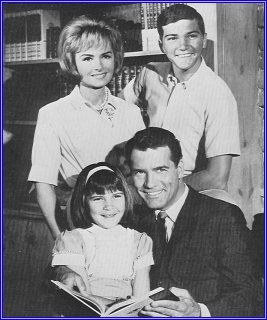
Another aspect of my mother’s expertise in punishment was her almost atomic sense of timing.  She would never chastise us when there was company.  This was because she wished to convey the impression that we were the family from “Father Knows Best” or “The Donna Reed Show.”  If one of us did something wrong while company was there, she might smile, and through clenched teeth, say, “Darling, Mother doesn’t want you to do that right now.  Can you wait awhile, sweetheart?”
We used to get cold chills when she called us honey, darling, or sweetheart.  To us, they were not terms of endearment, but preludes to punishment upon the departure of our guests.  In this way it was possible for Mom to maintain a certain aura of order.  Few people were privy to the reality that there was actually yelling and disorder at our house.  Intimate friends and family were the only ones who knew that we drank our milk from jelly glasses, mayonnaise jars, and aluminum tumblers that had once been cottage cheese containers.  Of course, to a kid there is no difference between Kool Aide in Waterford crystal and a test tube.
The only time I recall my mother actually losing her cool in front of company was the evening she gave a dinner party for my Aunt Augusta upon whom she wanted to make a good impression.  During dessert, my brother, who was four at the time, stood up on his chair and complained that his wool tweed pants were scratching him.
“Wait until after dessert, precious” was Mom’s reply, whereupon David removed the woolen pants and tossed them smack into the middle of the big strawberry shortcake at the center of the table.  No one moved, except Aunt Gus, who had a half smile by this time and Mom, who whacked David’s posterior with a bare hand.  Before he was whisked from the dining room, his bare butt cheek displayed a hand mark that looked like a little red map of the Greek Isles.
Posted in Uncategorized | 1 Comment

A Question of Technology


I envy those who are organized enough to keep their passwords, code numbers, and user ID’s in order.  The irony for me is that though computers are supposed to make life easier, they end up, at least for me, making life more unnecessarily complicated.  Of course, this is due in part to my having too many accounts and therefore too many codes and passwords of which to keep track, since I don’t even use some of them for months at a time.  The result is that I often end up having to start over in registering accounts and keeping my records separate one from another.

Also, I have less and less patience for accounts with banks and firms that are so automated, that it takes much too long through pushing one button after another to reach an actual human being.  The highly impersonal nature of the steps to making human contact (if there is any at all) is dehumanizing to me and makes me feel I’ve reached a new level of the unpleasant “future” realities described so frighteningly in books by Isaac Asimov, Robert Heinlein, Aldous Huxley, and George Orwell.  Numbers are efficient, but they are much less pleasant than dealing with polite people, who can be asked questions in ways that make us feel we are not just dealing with robots or other machines.  I much prefer the personal, special, and particular way I’m treated by a person with a real voice than by technological beings that make me feel like just another number or machine.  I’m not sure if this is another sign that I’m becoming an old codger, of if I’m simply part of another era, now passed, that was more gracious in human terms and made me feel as though I mattered when trying to get information.  Being on line or on the phone with automated gadgets is often workable, but it can also make me feel like just another microchip with a code number instead of a name.  JB

Posted in Uncategorized | Leave a comment

PATIENCE

I believe that when I was teaching, I had the patience of Job in terms of my having the emotional fortitude to wait for results, especially when a student was trying but just not getting the lesson.  It was a precept that kept my temper in check for all the years that I taught high school.  Something happened, however, after I left the classroom and retired.

In retirement it’s easy to become spoiled very quickly, because there are so few occasions when you have to wait for something anymore. The goals of teaching are necessarily long-term in the sense that enjoying the result of your work can take weeks or even months, especially with a recalcitrant kid, whose understanding comes only gradually before his enlightenment becomes the cherished prize for you and for him. In my dotage, I’m becoming more and more like the students I taught all those years.  My goals are becoming short-term in a world that is once again about immediate gratification.  I admire the patience of nature itself, which creates great beauty so slowly.


Even my cable TV reinforces an environment of getting what I want instantly. The remote allows me to pause whenever I wish and for as long as I wish, while I go to the kitchen for a snack.  I can even take programming back for a minute or for many minutes to replay something I missed or something I want to see and hear again.  The power to do this has brought about a slow deterioration of forbearance in terms of my ability to wait as calmly as I used to.  While listening to my radio, I have several times reached for the remote to back up a comment to hear it again before remembering that there is no such control on my radio.  The scary thing, though, is that I have found myself thinking, even if for just a second, that in conversation with friends or with people at the supermarket or post office, I can back up the talk, pause it, or simply delete it altogether.  Sitting on the deck the other night, I was watching a beautiful Colorado sunset, and for just a split second, I actually thought that I could pause it as I reached for a remote that wasn’t even there.


I have come to the conclusion that I need practice once again in the art of waiting.  In a time of life when I should be lingering over things with an equanimity I never had as a young person, I seem to be going in the other direction.  Technology is not really to blame, however. Everything from my microwave to my short-cycle washing machine and a GPS that talks to me  politely, even recalculating routes when I goof up while driving, makes life so much easier, but I shouldn’t allow my sense of tolerance and my ability to wait to be compromised, especially in my dealings with other people.  It is something of which I am well aware.  My partner, Jim, is the essence of patience, and I have never seen him lose his cool about anything (well, OK, just once).  He is the model of what I would like to acquire again, that ability to take things as they come, while working to change things I can change, over time with a cheerful spirit.  I want again to be able to say, “I can wait.”  I need to recall what it’s like to be able to wait quietly for things to evolve and complete themselves, and that perhaps the most beautiful things in this life come from not having control over them, but just enjoying them as long as we can before they disappear, and other beautiful things take their place.   Life is good that way.   JB
Posted in Uncategorized | Leave a comment

Aphorisms

THE AMERICAN HERITAGE DICTIONARY  says that an aphorism is “a tersely phrased statement of a truth or opinion.”  An aphorism is also called an “adage” if used often enough.  Authors from ancient times to the present have distilled words down to their sharpest edge. These authors include Socrates, La Rochefoucauld, Benjamin Franklin, Mark Twain and Dorothy Parker.  I am struck by the frequency of the possibility of political interpretation in aphorisms, especially just before an election.  JB


There are many humorous things in the world, among them the white man`s notion that he is less savage than the other savages.
Mark Twain
Excessive liberty leads both nations and individuals into excessive slavery.
Marcus Tullius Cicero

Three things are ever silent – thought, destiny and the grave.
Edward George Bulwer-Lytton
Are there any vegetarians among cannibals?
Stanislaw Jerzy Lec
In a country well governed poverty is something to be ashamed of. In a country badly governed wealth is something to be ashamed of.
Confucius
Perfume: any smell that is used to drown a worse one.
Elbert Hubbard
To be vain of one`s rank or place is to show that one is below it.
Stanislaus Leszczynski
Man`s chief merit consists in resisting the impulses of his nature.
Samuel Johnson
I have remarked very clearly that I am often of one opinion when I am lying down and of another when I am standing up.
Georg Christoph Lichtenberg
The destiny of any nation at any given time depends on the opinions of its young men under five and twenty.
Johann Wolfgang von Goethe
Nature does nothing without purpose or uselessly.
Aristotle
If language is not correct, then what is said is not what is meant; if what is said is not what is meant, then what must be done remains undone; if this remains undone, morals and art will deteriorate; if justice goes astray, the people will stand about in helpless confusion. Hence there must be no arbitrariness in what is said. This matters above everything.
Confucius
A dog is the only thing on earth that loves you more than he loves himself.
Henry Wheeler Shaw
The idea that the sole aim of punishment is to prevent crime is obviously grounded upon the theory that crime can be prevented, which is almost as dubious as the notion that poverty can be prevented.
Henry Louis Mencken
Rich women need not fear old age; their gold can always create about them any feelings necessary to their happiness.
Honore de Balzac
Where the speech is corrupted, the mind is also.
Lucius Annaeus Seneca
The greatest good you can do for another is not just to share your riches, but to reveal to him his own.
Benjamin Disraeli
It is one of the most beautiful compensations of this life that no man can sincerely try to help another without helping himself.
Ralph Waldo Emerson
A man`s heart may have a secret sanctuary where only one woman may enter, but it is full of little anterooms, which are seldom vacant.
Helen Rowland
Women love men for their defects; if men have enough of them, women will forgive them anything, even their gigantic intellects.
Oscar Wilde
Posted in Uncategorized | Leave a comment

Four video book promos

These little video promos were created by my cousin Cathy Weber and her husband Felix for my first two books.  They did a splendid job.

From ALL MY LAZY RIVERS, an Indiana Childhood:

http://www.youtube.com/watch?v=itzqxJxM9-E Chapter 12

http://www.youtube.com/watch?v=S31W0tU0mPs     Chapter 18

From COME ON, FLUFFY, THIS AIN’T NO BALLET;

http://www.youtube.com/watch?v=kG-X8b2z0o8   Chapter 2

From COME ON, FLUFFY… Chapter 5

http://www.youtube.com/watch?v=ls6p8etKGG4

JB

Posted in Uncategorized | Leave a comment