Dog Skin Problem That Can Be Cured…

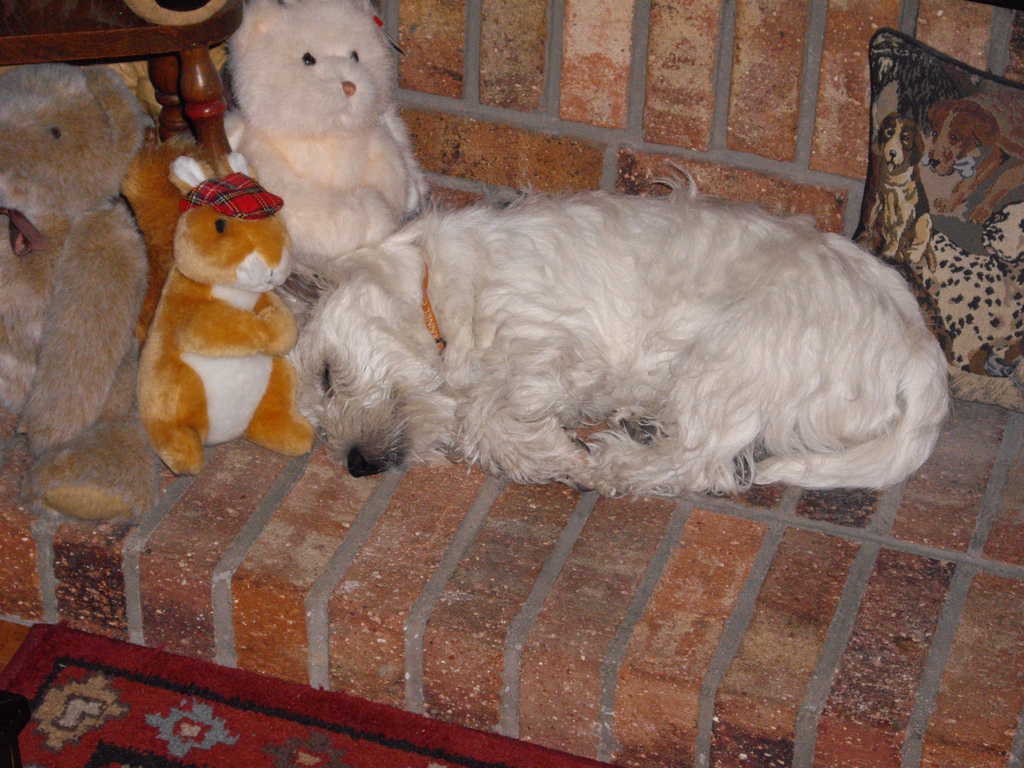
Since our visit to the vet last week, Dudley is doing splendidly. He hasn’t scratched once. He’s taking two different internal meds, and I have to bathe him three times a week with special shampoo and rinse. The problem is a combination of certain malicious bacteria and fungus that are found on all dogs and cats but which are dangerous on certain canine skin like that of many Westies. The germs eat away at the epidermis creating deep redness, and the need to scratch almost endlessly until the fur actually falls out, and the skin becomes tough and wrinkled as a body defense. Those areas look and feel like elephant skin. Healing has begun, but there is much more treatment necessary to keep the bugs at bay.

I knew that Dr. Parker was good when she walked into the room, where Duds and I were. Her manner won over Dudley immediately. Also, it’s obvious that she knows her stuff. She addressed every issue and possible treatment from top to bottom. At LAST I have found somebody, who really knows what she’s doing! Dudley is going to be all right in six to eight weeks and is already a much happier dog. The dark, scaly, irritated skin where he was scratching so fiercely is already turning a healthy pink again. I’m sleeping better and enjoying my dog once again.

It turns out that his allergies weren’t even food-based. I’m able to hide his pills in pieces of Swiss cheese now. Another issues was that I was using organic, special oatmeal shampoos and rinses, which weren’t killing any of the microbes. Dr. Parker said it might have been better just to use Dawn Dishwashing Liquid! His shampoo is now a medicated one I must leave on him for ten minutes before the rinse. At any rate, everything seems to be working. Hooray! I need to publicize this, as many people with Westies give up and have their dogs taken to shelters or even put down. My point is that there is hope for dogs suffering from this affliction, the medical term for which is Malassezia Dermatitis. There are medications and treatments that can relieve and eliminate this problem, making your pets happy again.  JB

Posted in Uncategorized | 2 Comments

An Easy But Delicious Appetizer

Baked Crab Rangoon

1/8 tsp garlic salt
1/8 tsp Worcestershire sauce…
1 small green onion
4 oz. imitation crab
3 oz. cream cheese
14 wonton wrappers

Cut up the crab and mix it in with garlic salt, Worcestershire sauce, green onion and cream cheese (I would microwave the cream cheese for about 40 seconds to soften)
Spoon into wontons.

Bake at 425 °F for 8-10 minutes or until golden brown.

Posted in Uncategorized | Leave a comment

What’s Important?

Priorities

Yesterday I saw something appalling on the news. An 85-year-old woman drove her car through the window of a shop, knocking over a younger lady in the process. All of this was caught on a security camera, but the worst part was that several people gathered, like sharks in a feeding frenzy, around the car, not to see if the driver was all right or to check on the fallen young lady, but rather to take pictures with their cell phones. As it turned out, no one was seriously hurt, but at the time, the cell phone gawkers didn’t know that. My question was immediately about where their humanity had gone. The sideshow aspects of the scene were of more interest to them than the safety of those directly involved in the accident. It was like something from a future shock piece of science fiction in which people have become automatons, devoid of compassion. Scary stuff.  JB

Posted in Uncategorized | 2 Comments

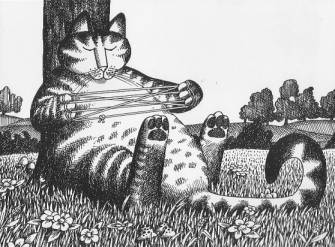
Cat’s Cradle

Posted in Uncategorized | Leave a comment

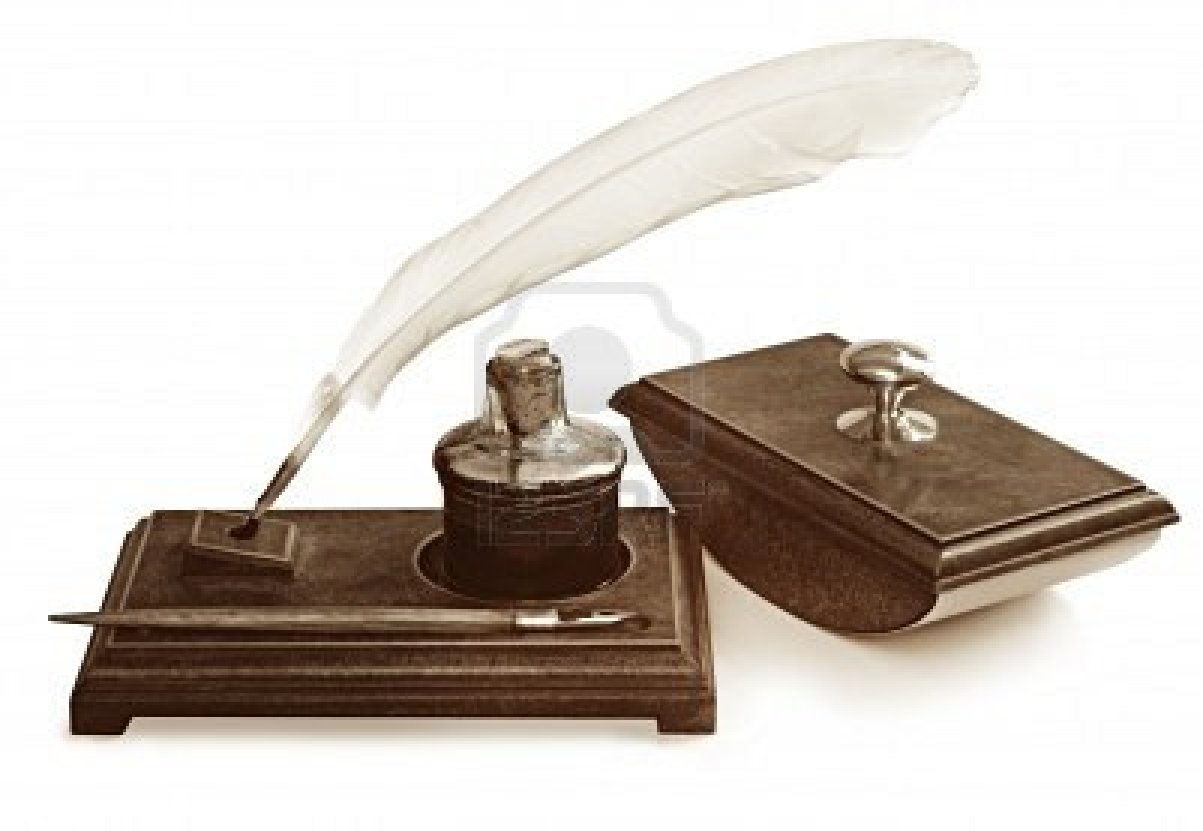
Publishing One’s Best Work

The Process of Publishing One’s Work

 In some ways, I should be the last one to be giving advice to other writers on publishing anything. My qualifications on the subject of writing come mostly from my having taught English for thirty-five years and a creative writing class that I designed and taught for twenty-five years. Each spring my students published a sixty-page anthology of their best writing for which the school twice received recognition for the book’s high quality by The American Association of Teachers of English. Those books are still the results of which I remain most proud from my career in the classroom.

My own first book, ALL MY LAZY RIVERS, an Indiana Childhood, was published in January of 2010 in Baltimore. It is still available in paperback and on Kindle at Amazon.com and as paperback and NookBook at Barnes & Noble, but most of the profits go to the publisher, as I receive only 7% for the first seven years. My second book, COME ON, FLUFFY, THIS AIN’T NO BALLET, a Novel on Coming of Age, is a Kindle book on Amazon and yield’s 70% profit for me, far more generous than the contract with my first publisher, but the limitation is that the work is an eBook, which can exclude readers of traditional hard copies of books. This may be a conundrum for a writer, who wants his or her friends and family, who are uninitiated into the world of eBooks, to read the work. There is also the choice of self-publishing, but that is another story, one that somehow lacks the luster and dignity of having a traditional publisher seek one’s work with monetary compensation (however small) and a willingness to market one’s book.

My third book, COME SEPTEMBER, Journey of a High School Teacher was published in 2012 as a Kindle read and as a paperback. For better or worse, most of the serious publishers are still in New York City, that bastion of companies like Random House. Of course, sending unsolicited manuscripts to those places is simply not done, unless you happen to be John Grisham, Anne Rice, or Stephen King, so it is necessary to procure an agent, who will represent your work and help to create a pitch to interest a publisher in buying the book through some kind of contract. Most of the respected literary agencies receive at least a thousand queries per month from all over the country and overseas. At times it seems that unknown writers now need an agent in order to find an agent, even to begin communication on any level with a publishing house.

I suspect that some of those large literary agencies have staffs of weary readers, highly trained in the art of spotting just the right hook in a query letter in order for further info to be requested from the author. I often wonder how many queries with great potential are placed on the proverbial conveyor belt, racing thousands of letters and even manuscripts toward some great figurative incinerator. The very hugeness of agencies and their efforts to hurry through all those e-mails and snail mails from hopeful authors is a bit staggering, and I also imagine that agents and their underlings grow jaded by the end of each day in dealing with what must be quite a lot of garbage with which they are expected to deal politely, if at all. “Oh, no! Not another of these.” is a message, perhaps not even spoken aloud, that may dominate life in a literary agency, but sheer volume must be the single greatest annoyance and enemy of those poor readers, and ultimately of writers, who want so much to be appreciated.

Realistic determination on the part of the author is a prerequisite. He must believe deeply in his own work and be willing to do his homework in finding comparable work by already “successful” writers. Freshness is certainly important, but agents seem to be most interested in what will sell. It is very important to know the agencies and their criteria and to know what they’re looking for. Read carefully the bio of each agent to find his or her special interest, like thriller, memoir, cookbook, historical fiction, etc.

I’ve read about successful writers, who knew they had something special in their own work but something not necessarily recognized by literary agents. One example is Kathryn Stockett, author of the wildly popular book, THE HELP, which soon also became a popular film. Ms. Stockett counted forty-five rejections in a row after which she didn’t keep careful track any more, but estimates that there were at least sixty rejection letters in a row for her book. Think of all those incinerators containing the ashes of her query letters and sample chapters. This has inspired me in the sense that so far, as of May 8, 2012, I had sent fifty-four query letters and in some cases with sample chapters, when requested and received fourteen rejection letters, all very polite but mostly very impersonal notes sent also to zillions of other hungry writers. Only one of those actually named my book and gave me encouragement to keep going with it. Such is the experience any unknown author without entree can expect in attempting to find an agent, let alone a publisher. Some agents tell you to expect a response in six months, so it is necessary to send simultaneous queries to many agencies, especially if you’re my age (almost sixty-eight) and want to get through the actual publication process of your book some time before your eightieth birthday. In June of 2012 CreateSpace and Kindle of Amazon published Come September, Journey of a High School Teacher. My best advice to writers, who want to be published, is to explore the possibilities of CreateSpace and Kindle through Amazon,  now the largest book distributor in the world. Also, authors should copyright their work before submitting it for publication or even for mere perusal. I have copyrights on all of my books, which are sold in Europe now and in places like India.

There are also people who simply must write, not for money or fame, but for the joy of expression for its own sake and perhaps for the satisfaction of sharing their thoughts, and sentiments. Blogs are perfect venues for that kind of writing, and in essence, if you’re writing a blog, you’re “published,” because you’ve a readership, even if only one other person.

My two most recent books, Hodgepodge, a Feast for Mind and Spirit, and Mum’s the Word: Secrets of a Family were both published in 2013 by Kindle and CreateSpace Publishing. These have been more successful financially, because I’m paying neither an agent, nor a publishing house for materials for the paperback versions. The books are placed in libraries and bookstores, but there is no expense to me. I receive royalty checks according to sales. Because I believe in the quality of the books, I don’t mind tooting my own horn about them once in a while.

JB

Posted in Uncategorized | Leave a comment

Excerpt from All My Lazy Rivers…My First Book

Tippsy
Chapter 17… HERE COMES GERTIE…THERE GOES POODY     My father’s mother was something of a nomad. After she divorced my grandfather, she spent much of her time visiting her four children and her grandchildren. The four worked it out in shifts of up to three months at a stretch, allowing each family the joy of hosting Grandma. I use the word, “joy” advisedly, as the frame of reference was apt to change so that it became most significant as we waved goodbye to Grandma at the end of her visit. I want to be fair about this and look carefully at recollections we share as a family of those visits to our house during the 1950’s and 1960’s.      First, it might be well to explain the circumstances under which Grandma Bolinger divorced her husband 
Frank, our grandfather. Grandpa Bolinger had a farm with sheep, cows, horses, chickens and pigs. He also raised prize Chow Chow dogs that had blue tongues, making them worth at least twelve hundred dollars apiece, even in the late 1950’s. A no-nonsense man who had survived a difficult childhood with his immigrant German parents, he had also endured The Great Depression, and thirty years of marriage to Gertie (Gertrude Alice), our grandmother.      After World War II, Grandpa had a mynah bird named Tippsy who could not only repeat words and phrases 
Poody
but also imitate the actual tone quality of human voices. My grandfather was a man of rich and colorful speech with a repertoire of profanities that defined his character for over half a century. Grandma would lecture him and warn him about using such language, especially when there were guests, but nothing stopped his raspy banter. Tippsy would imitate my grandmother’s voice saying, “Don’t talk like that, Frank!” This would only infuriate her further, and the bird would be delighted to repeat other often used phrases that flew from Grandma’s mouth until one day, the family minister stopped by to pay a call. When Tippsy called Reverend Donaldson a “dirty son of a bitch,” (impersonating Grandpa’s voice with frightening accuracy), grandma dropped her favorite Royal Doulton tea pot, shattering it beyond repair. Screaming, “That’s the end! That’s the end!” she ran from the room and upstairs, and the minister politely excused himself, trying to smooth things over with some platitudes like, “Things like that happen.” I can imagine that my grandfather only smiled, knowing perfectly well that no such thing had ever happened before in the clergyman’s lifetime or ever  would again. The two men shook hands, and Reverend Donaldson left the house to Tippsy’s screams of “That’s the end! That’s the end!” Divorce papers were filed the next day.    
My brother and sister and I enjoyed Grandma’s visits, because on weekends when my parents would go out, she would be our baby-sitter and allow us to stay up later on Saturday nights to watch CREATURE FEATURES, a show that allowed us to see such classic films as PLAN 9 FROM OUTER SPACE, THE GIANT GILA MONSTER, REVENGE OF THE CREATURE and INVADERS FROM MARS. We would make a barrel of popcorn and curl up on the living room sofa in our pajamas to be scared out of our wits. One of our props during these sessions was a fox stole that Grandma took everywhere with her, even in the summer. It had glass eyes, disturbing because, of course, they never blinked. Its mouth, frozen into a perpetually menacing grin, revealed the original canine teeth. Old and matted, the stole made a terrific hand puppet that we used to spook each other during scary portions of the movies we were watching. We named him Phil and fed him kernels of popcorn. One of my most vivid childhood memories is that of sitting in church, singing hymns and gazing at the malevolent face of that fox draped over Grandma Bolinger’s shoulders, bits of popcorn still between its teeth.    
Our big cat Poody was rust-colored and had the temperament of a pit-bull on crack. If he were outside with us in the yard, no one else could enter the property without danger of being attacked by this psychotic feline. Every kid in the neighborhood knew about Poody, the evil and possessed cat that thought he was a dog and that he would fling himself, hissing and spitting at anyone who dared enter his property. I guess we never needed a watch dog. No one else we knew had a guard cat, something that later on might have proved to be one of those GUINNESS BOOK things. The Bruce Lee of neighborhood cats, Poody remained a regional anomaly until his death the summer of 1954 from a passing car that was not intimidated by our cat’s karate moves. We knew that with Poody’s death an era had passed and that a solemn ceremony was required for burying him in our garden. An old Philco radio cardboard box lined with pink satin from one of Mother’s old evening dresses served as the casket, and our entire neighborhood of kids came to the funeral, perhaps more from a combination of morbid curiosity and celebration than from sentiment.
The following summer, as soon as school was out and Grandma came for a visit, my brother David was seized by a morbid inspiration to take her fox stole out of its box and chase other kids in the neighborhood with it, telling them that he had dug up Poody, who was still alive. He accompanied these threats with hissing and spitting noises that sent children fleeing for their lives. It must be understood that the stole retained its teeth and that its flat face suggested strongly that it had probably been run over by a car, and from a distance, its rusty color and bushy tail were the image of our deceased Poody. That night my brother hid in the guest closet near the front door as neighbor after neighbor rang the bell to ask our parents why David had dug up a dead cat to terrify innocent and impressionable children. The most popular suggestion was to seek psychiatric care for David, but Mrs. Mihalic’s advice was my favorite, that David should be forced to write apologies to every child on the block for his heinous behavior. That, in fact, was what our parents made David do. The letters were all printed in crayon and delivered personally by him to the homes of all the plaintiffs on Parrish Avenue and beyond. This time Poody was declared officially dead. Again.
Posted in Uncategorized | Leave a comment

Five Books

Here is the Kindle link to five of my books. Paperbacks are also available on Amazon and at Barnes & Noble. I’m working now on a sixth book, which should be published in June of this year. The title will be Growing Old in America…or One Codger’s Perspective .

http://www.amazon.com/s?ie=UTF8&field-author=John%20Bolinger&page=1&rh=n%3A133140011%2Cp_27%3AJohn%20Bolinger

JB


Posted in Uncategorized | 1 Comment

A Changing World…

25 Things Babies Born in 2014 May Never Know

By Stacy Johnson

Here’s a list of things kids born in 2014 might never experience, or at least will see a whole lot less of as they reach their formative years.

Things kids born in 2014 may never know:

1. The post office. Instead of email, someone used to come all the way to your house just to drop a bunch of ads into a box on the front porch. This service was a big money loser.

2. Parking meters. There was a time when you had to pay for parking by putting coins into a little steel box on a pole.

3. Bank tellers. People used to visit a bank branch to make deposits and withdrawals. What a lot of effort expended on something that can be done digitally in mere seconds with no travel involved.

4. Paper statements. Trees used to give their lives so that those who refused to go digital could get bills and other statements in the mail. (See No. 1.)

5. Paper checks. While it was illegal to make your own paper money, it was OK to write an amount of money on a piece of ordinary paper. Once you signed it, it somehow magically became the same as money.

6. Cable TV. Before universal Wi-Fi, there used to be a wire running all the way from downtown to bring entertainment into the house. Judging by the price, you’d have thought it contained a cure for cancer.

7. Toll booths. Before they started charging tolls by taking a picture of your license plate, you had to stop at a booth and either throw money in a basket or hand it to someone. They were kind of like phone booths on the turnpike.

8. Phone booths. Before everyone had wireless phones, there used to be little glass rooms on street corners where you’d go in and use coins to make a call. For some people, they also doubled as bathrooms.

9. Newspapers. In days before everyone had computers at home and in their pockets, printing presses made paper versions of websites. People would then drive around and throw them on your lawn.

10. Car keys. Cars had keys you’d insert into a keyhole in the doors and dashboard to unlock and start the car. Sometimes you’d lock them in, then try to retrieve them with a coat hanger. Other people would stop and try to help.

11. Bookstores. A retail store where you’d go to buy books.

12. Books. There used to be a physical version of e-books made out of paper.

13. DVDs. Before movies were delivered online, they came on discs you’d stick into your computer or a player attached to your TV.

14. Incandescent lighting. This kind of light bulb didn’t last as long or cost as much as LED lighting, but it had a nice glow to it.

15. Fax machines. These devices transmitted a piece of paper to another fax machine anywhere in the world. It worked over phone lines.

16. Phone lines. Before wireless, calls were carried on wires. Like power wires, they were strung everywhere and stopped working during snow and ice storms.

17. Non-digital picture frames. There was a time when a picture frame could only display one picture at a time, so you needed a frame for every picture. Some were better looking than the picture they contained.

18. Cursive handwriting. You’d pick up a pen or pencil and actually write things by hand. Not only that, but the letters of each word were all connected in such a way that it was often impossible to decipher.

19. Camcorders. Before HD video cameras became standard in phones, you had to buy a separate device if you wanted video selfies.

20. Blind dates. In the days before dating websites, people were forced to meet one another any way they could, including being introduced to friends of friends. It was awkward, because there was no way to IM, text, exchange pics or otherwise communicate before actually meeting. The people you met this way usually weren’t as good looking as you.

21. Talking to one person at a time. Before pocket computers, you weren’t required to stay in constant communication via text. Nor was it customary to let everyone you’d ever met know where you were and what you were doing via Facebook. As a result, you’d often find yourself forced to communicate solely with the people in front of you.

22. Driving a car. Before self-driving cars, you had to do it all: gas, brakes, mirrors, turn signals, talk on the phone, text, put on makeup and eat, all at the same time.

23. Setting a thermostat. Before “The Internet of Things,” you had to manually set the temperature in your house.

24. Forgetting someone’s name. Before Google Glass came along, we had to recognize faces all by ourselves, and remember their personal information.

25. Buying music. With Pandora, Spotify, Rdio, iTunes Radio, etc., we have unlimited music libraries that we pay for by the month. Before that, we bought our music one song or album at a time and built collections.

Posted in Uncategorized | Leave a comment

Some of the Best Advice…from People 100 Years Old

SINCE THE AGE OF 92, RUTH HAS COMMITTED TO WEEKLY PILATES CLASSES. SHE ALSO HAS A MEAN SENSE OF STYLE.

1. “Don’t look at the calendar. Just keep celebrating every day.”

2. “Invest in quality pieces, they never go out of style.”

3. “I make myself go out every day, even if it’s only to walk around the block. The key to staying young is to keep moving.”

NBC TALKED TO A 100-YEAR-OLD DOCTOR WHO STILL RAN HIS OWN PRACTICE. HE HAD A FEW UNTRADITIONAL PIECES OF MEDICAL WISDOMTO SHARE.

4. “Exercise, to me, is totally unnecessary. I think it’s mostly overrated.”

5. “The use of vitamins? Forget it. And I don’t encourage going to a lot of doctors, either.”

6. “Fall in love, get married. Sex is to be encouraged.”

THIS CENTENARIAN SHARED ADVICE ABOUT LOVE, FORGIVENESS, AND PASSION:

7. “Even if you feel hatred, keep it to yourself. Don’t hurt other people for any reason.”

8. “Don’t ever give up on love.”

9. “Nobody else controls you.”

10. “Make time to cry.”

11. “Travel while you’re young and able. Don’t worry about the money, just make it work. Experience is far more valuable than money will ever be.”

12. “Don’t compare. You’ll never be happy with your life. The grass is always greener.”

13. “If you are embarrassed to be dating someone, you should not be dating them.”

14. “Do one thing each day that is just for you.”

15. “Don’t be a cheapskate.”

16. “Forgive.”

17. “Find your passion and live it.”

18. “Most time things will figure themselves out.”

19. “Choose the right parents.”

20. “Have a pet. Life gets lonely sometimes. Pets are reminders of how we’re all living things.”

21. “I’m not saying you have to practice one religion or another, or not practice one religion or another… I’m just saying that you should figure out what you believe in and live it completely.”

22. “Learn to adapt.”

23. “Take time to mourn what you’ve lost.”

FOR ADRINE LEE, THE KEY TO LONGEVITY LIES IN FOUR SIMPLE STEPS:

24. “Keep going and never give up.”

25. “Make yourself walk.”

26. “I drink the faucet water.”

27. “Don’t just die all because you want to.”

AND THEN THERE’S ADVICE ABOUT HOW TO FIND HAPPINESS.

28. “Life is fun. It’s all up to the person. Be satisfied. You don’t have to be ‘happy’ all the time, you need to be satisfied.”

29. “Love people. Find something to like about the person—it’s there—because we’re all just people.”

FOR OTHERS, THE KEY IS IN EDUCATION.

30. “Get a great education. That is something that no one can take away from you.”

ONE CENTENARIAN WAS INTERVIEWED BY JAY LENO. SHE GAVE THE FOLLOWING ADVICE:

31. “Think positive.”

32. “Exercise every morning… I have a machine… it’s a cross between a rowing machine and a bicycle… [I do] 150, 200 [rows] every morning. I won’t leave my bedroom until I’ve done that.”

AND THEN THERE ARE THE 100-YEAR-OLDS WHO ARE EVEN MORE ACTIVE THAN THE AVERAGE 20-YEAR-OLD COUCH POTATO. THIS CENTENARIAN, AN AVID SKIER, HAD THIS TO SHARE WITH YOUNGER GENERATIONS:

33. “Be active. I do things my way, like skiing when I’m 100. Nobody else does that even if they have energy. And I try to eat pretty correctly and get exercise and fresh air and sunshine.”

34. “If you’re positive you can get through it OK. When you think negatively, you’re putting poison on your body. Just smile. They say laughter is the best medicine there is.”

SARDINIA, AN ISLAND IN EUROPE, IS WELL KNOWN FOR ITS HIGH PROPORTION OF CENTENARIANS. THEY OFFERED THEIR OWN ADVICEABOUT HEALTH AND MEDICINE.

35. “For years I would not take any medicines at all. I don’t think they do much, and lots of times the doctor is using you as a guinea pig.”

36. “Don’t die too early.”

A COMMON TREND AMONG ADVICE FROM 100-YEAR-OLDS? KEEP ON TRUCKIN’.

37. “Just go ahead and do your thing no matter what.”

38. “You can involve yourself in local problems. There are all sorts of things that have to be tended to in the world.”

39. “Have lots of people in the house and lots of different kinds of people—young, old, black, white, people from all over the world. People have always energized me.”

40. “Just keep going.”

MANY CENTENARIANS SWEAR BY EXERCISE.

41. “I attribute my longevity to a great extent to walking, not being in the back of the car strapped down.”

42. “I’ve done almost everything that I know of: ballet, I’ve done tai chi. I’ve done yoga. I walked 4 miles a day. I stretched and flexed. I wrote the book.”

OTHER 100-YEAR-OLDS BELIEVE IN ROCK AND ROLL LIFESTYLES.

43. “I put my health down to whiskey and cigarettes. I only drink when I’m out, but my doctor said I wouldn’t be alive without them. I’m still alive, and I can lift my elbows—it’s great.”

THIS 100-YEAR-OLD DOCTOR HAD A TREASURE TROVE OF ADVICE FOR YOUNGER PEOPLE.

44. “We all remember how as children, when we were having fun, we often forgot to eat or sleep. I believe that we can keep that attitude as adults, too. It’s best not to tire the body with too many rules such as lunchtime and bedtime.”

45. “For breakfast I drink coffee, a glass of milk, and some orange juice with a tablespoon of olive oil in it. Olive oil is great for the arteries and keeps my skin healthy. Lunch is milk and a few cookies, or nothing when I am too busy to eat. I never get hungry because I focus on my work. Dinner is veggies, a bit of fish and rice, and, twice a week, 100 grams of lean meat.”

46. “There is no need to ever retire, but if one must, it should be a lot later than 65.”

47. “When a doctor recommends you take a test or have some surgery, ask whether the doctor would suggest that his or her spouse or children go through such a procedure. Contrary to popular belief, doctors can’t cure everyone. So why cause unnecessary pain with surgery? I think music and animal therapy can help more than most doctors imagine.”

48. “To stay healthy always, take the stairs and carry your own stuff. I take two stairs at a time, to get my muscles moving.”

49. “My inspiration is Robert Browning’s poem ‘Abt Vogler.’ My father used to read it to me. It encourages us to make big art, not small scribbles. It says to try to draw a circle so huge that there is no way we can finish it while we are alive. All we see is an arch; the rest is beyond our vision but it is there in the distance.”

50. “Pain is mysterious, and having fun is the best way to forget it.”

51. “Don’t be crazy about amassing material things. Remember: you don’t know when your number is up, and you can’t take it with you to the next place.”

52. “Science alone can’t help or cure people.”

53. “Find a role model and aim to achieve even more than they could ever do.”

54. “It’s wonderful to live long. Until one is 60 years old, it is easy to work for one’s family and to achieve one’s goals. But in our later years, we should strive to contribute to society. Since the age of 65, I have worked as a volunteer. I still put in 18 hours seven days a week and love every minute of it.”

OTHER CENTENARIANS OFFERED RELATIONSHIP ADVICE.

55. “This is some advice for the ladies. Don’t marry an older man, marry a younger one.”

WHAT ELSE? JUST LIVE.

56. “I try not to worry. I just try to live.”

57. “I try to have enough trust and confidence in myself to deal with things as they come.”

FOR OTHERS, OLD AGE COMES BY KEEPING A SIMPLE LIFESTYLE.

58. “I don’t eat very much, but I always eat a fruit, a vegetable, and a little meat, and always make sure that I get sardine and salmon at least once or twice a week.”

59. “For less than seven years I had a mortgage. I paid everything outright, and I’ve lived that way until today. That is the secret to longevity right there.”

60. “Keep busy doing what you like.”

OR IS OLD AGE JUST ABOUT LUCK?

61. “You gotta have good genes.”

62. “You gotta be… lucky for 100 years.”

63. “Try not to eat anything that’s healthy. It’s true. I eat whatever I want. The secret to longevity is ice cream.”

64. “Quit while you’re ahead.”

65. “It’s just as important to take care of your mind. I take two classes… and I’ve studied everything from anti-Semitism to current events.”

THE MODERN DAY FOUNTAIN OF YOUTH? HUMOR.

66. “[Humor is] a life force, a way of surviving the difficulties of living.”

67. “When you laugh at yourself, you prevent others from laughing at you.”

68. “I think [people] have to be curious. They have to be interested in life outside their little aches and pains. They have to be excited about seeing new things, meeting new people, watching a new play—just passionate about life.”

69. “I don’t care what you’re passionate about: maybe saving Dixie cup covers. But if you do it passionately, you’re alive.”

70. “Age is not a disease.”

OTHER 100-YEAR-OLDS OFFER ADVICE ABOUT HOW TO PROTECT YOURSELF.

71. “Don’t get hurt.”

ON REDDIT, A GRANDSON CREATED A THREAD WHERE HE ALLOWED PEOPLE TO ASK HIS 101-YEAR-OLD GRANDMOTHER FOR ADVICE. THIS IS WHAT HAPPENED:

72. “Be honest. I’ve rarely lied. And when you are honest with people, it comes back to you, and they are honest with you. It’s too much work keeping up with a lie. You don’t need the extra stress.”

73. “Keep an open mind, and things seem less strange.”

74. “Always listen to the other person. You’ll learn something. Try to sit back, because you will learn a lot more listening to others than telling them what you know.”

75. “You have to love what you do. if you find a job you love, you will never have to work a day in your life.”

76. “Take naps every day.”

77. “You get one family, so stick with them. But it depends if these hardships are financial or emotional or other types. Stick it out. Some days are worse than others, and you have to be ok with that. The night is darkest before dawn.”

78. “I try to take the time to look at and appreciate the smaller things that make this life beautiful. When I do that, time slows.”

OTHER CENTENARIANS HAD THIS TO SAY:

79. “Do something interesting every day; otherwise you disintegrate.”

80. “Learning new things makes you happy and keeps your mind active.”

81. “Sleep well, try not to worry, and enjoy good dreams.”

82. “I participate in lots of activities. I play Bingo, do meditation and crafts, and attend fitness classes, like Zumba Gold for seniors, chair yoga, and sittercise… I don’t miss happy hour either! I drop in three times a week.”

83. “Be lovable. I’ve lived a long life because there are so many people who love me.”

84. “I take a drink of Scotch every day. And I feel great afterward.”

85. “Keep kosher.”

IN AN INTERVIEW FOR THE WASHINGTON POST, THIS 100-YEAR-OLD TOOK A REPORTER FOR A SPIN AROUND THE CITY IN HER CAR. SHE HAD THIS TO SAY TO HIM:

86. “I never drank, smoked, or fooled with the weeds, you know, that stuff. And I don’t let anything upset me, especially traffic.”

87. “I don’t like stress. I can’t stand arguing. If anybody is fussing, I’m gone. I like to be around positive people, people who lift you up not bring you down.”

WHAT ELSE? IN THE END, MOST ADVICE SEEMS TO BOIL DOWN TO A COMMON CORE: LIVE YOUR LIFE TO THE FULLEST.

88. “Mind your own business, and don’t eat junk food.”

89. “Laughter keeps you healthy. You can survive by seeing the humor in everything. Thumb your nose at sadness; turn the tables on tragedy. You can’t laugh and be angry, you can’t laugh and feel sad, you can’t laugh and feel envious.”

90. “Look inside your soul and find your tools. We all have tools and have to live with the help of them. I have two tools: my words and my images. I used my typewriter, computer, and my cameras to fight injustice. Whenever I see a possibility of helping people who are in danger, I want to help them.”

91. “Have a good appetite, lots of friends, and keep busy.”

92. “Have a good wife, two scotches a night, and be easygoing.”

93. “Never run out of responsibility; if you don’t have one, find one. Find a cause and knock yourself out for it. It will enhance your brainpower, interest in life, and keep you alive longer. I’m alert because I work. Virtue is its own reward.”

94. “It is very important to have a widespread curiosity about life.”

95. “Keep yourself alert, active, and educated. Beat to your own drum.”

96. “Don’t smoke, don’t drink, and don’t retire.”

97. “Take one day at a time, and go along with the tide.”

98. “You have to be lucky, but I made the best of things when bad things happened. I also ate prunes every single day.”

99. “Do what you have to do. Don’t analyze it, just do it.”

100. “Take it easy, enjoy life, what will be will be. Sleep well, have a Bailey’s Irish Cream before bed if you have a cold—you will wake up fine the next morning.”
Posted in Uncategorized | Leave a comment

Cusp of the Old Year…

The Cusp of the Old Year

Today is Christmas Eve. In some ways, I still feel the way I did as a child in the 1950’s, in awe of this season of transformation, and in other ways I have learned to savor this time in terms of looking at the past, enjoying its recollections, and then letting go too.    It is certainly a time for personal and family traditions that help to anchor us in an ever-changing, increasingly impersonal world of electronics that promises us speed and human connection but which at last gives us still more distance between us and others, and a shallow, abbreviated text message of what we once loved, like a sumptuous meal condensed into some flavorless capsule.  All the more reason to cherish a time of year when, for reasons that transcend both religion and commercialism, we confront an emotional reality based upon everything we have been and everything we would like to become.
****************************************
Think of that holiday card you have received from an old friend from whom you haven’t heard in a long time, the signature alone summoning happy memories of times gone by.  That occurrence is most common at this time of year, because we have almost a collective acceptance of genuine sentiment, which many are too embarrassed to allow during any other season.  There is still something childlike and innocent about this time of year that takes us back to a naive but heartfelt joy in being with those we love and remembering those who are gone.  Zuzu’s petals (IT’S A WONDERFUL LIFE), And Rosebud (Citizen Kane) are such powerful symbols of what we once saw and valued so clearly as children.  Maybe that’s why children are still at the hub of all that is Christmas, from the Christ child in his manger crib, to the face of a child on Christmas morning opening his first gift.  Everything about this season says, “Hey!  It’s OK.  Go ahead and feel deeply.  Forgive those who have treated you badly and don’t be afraid to show unbridled kindness and generosity to those you love.”  We, like Ebenezer Scrooge, can be transformed as at no other time of the year.  We can become more appreciative of what we have and of what we can give.  It’s a miraculous time.
**********************************

For us adults at this time of year there is a strong feeling of time passing, as the clock ticks toward January first, when we let go of our sentimental views of past days (at least for a while) and replace our memories with hopes of better and more productive days that lie ahead, doing better at work, losing a few pounds through sheer will power, cleaning that hall closet, writing to those old friends we haven’t heard from for a long time.  We find a new chance to do well and to accomplish goals, however small.

Don’t be afraid or embarrassed to let the season enfold you or to allow yourself to enfold it.  The rewards are incalculable.

 
JB

Posted in Uncategorized | Leave a comment