Excerpt from my second novel…

This is an excerpt from my second novel, Come on, Fluffy, This Ain’t No Ballet (published in 2011), available as a paperback or Kindle at Amazon or as a paperback at Barnes & Noble.


                            Chapter 10   Politics, Algebra, and Gossip

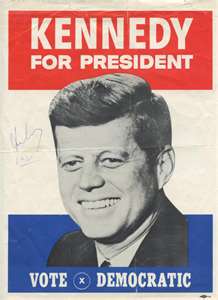
     The presidential election of 1960 was the first of which I had much awareness.  When Eisenhower was elected in the early 1950’s, I was only six years old. At home in 1960 my family and I watched the Kennedy/Nixon debates on our black and white television set, and I remember only that something about Richard Nixon didn’t ring true to me, because everything he said sounded prepared or even memorized.  My Aunt Hazel and Uncle Walter, staunch Republicans, paid me five dollars to wear a Nixon campaign button to school for a whole week, and as a fourteen-year-old, I thought five bucks was a huge amount of money.  However, I wore the button to school only once, as it seemed every other kid wearing a button wore one for JFK.  When cute Shirley Bodner offered to give me a JFK button, I immediately put the Nixon one into my back pocket in order to fit in better with my peers.  None of this had anything to do with actual politics.  Once again it was all about image.  Jack Kennedy seemed younger, more confident ,and more articulate than Richard Nixon, who appeared to represent more of the same old thing from Ike’s eight years as President.  Change meant some excitement, and to us fourteen-year-olds, that was a good thing.  Not wanting to disappoint Aunt Hazel and Uncle Walter by revealing my betrayal of the Republicans, I continued to wear my Nixon button whenever I was around them.  Despite feeling two-faced about the whole thing, I never returned the five dollars.  That decision was based upon the rationalization that if my aunt and uncle were prepared to bribe a future voter or attempt to buy votes for Nixon, they were as guilty of political graft and corruption as I was of being a freshman hypocrite.  As it turned out, I spent all five dollars over a period of two weeks on sodas at the Walgreens on Hohman Avenue in downtown Hammond.  Guilt did follow me, however.  When Nixon lost the election, I felt personally responsible, as though my not wearing his stupid campaign button had made him lose. Sodas after that election never again tasted as good.
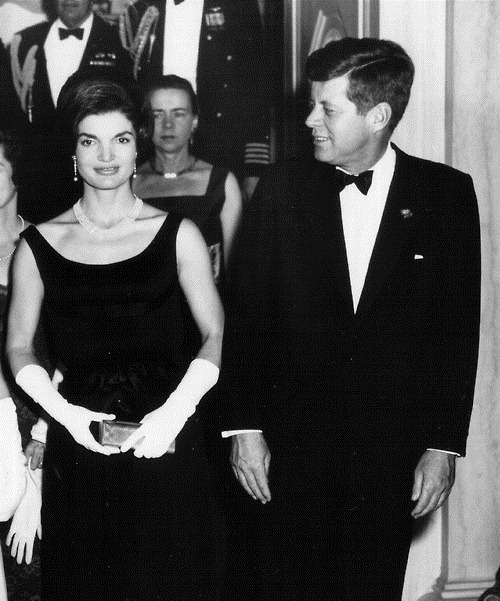
     The Kennedys made me feel proud to be an American.  Their taste, style, elegance, eloquence, and beauty were lavish in the media, and no one could ever forget January, 1961 on that very sunny but bone-cracking, cold day watching the inaugural speech in black and white and hearing those immortal words, “Ask not what your country can do for you.  Ask what you can do for your country.”  Despite the cold day and the cold war with the Soviet Union, I felt happy that the President and his beautiful and accomplished wife, Jacqueline, represented us on the world stage where, by contrast, Premier and Mrs. Khrushchev looked like Mr. and Mrs. Potato Head.  By the spring of 1961 even the Sears catalog had pill-box hats, Chanel-like suits for women, and sheath dresses. Girls at school were already copying Jackie’s daytime bouffant hairstyle. The problem was that some girls copied Jackie’s evening formal do with hair piled high in elegant but inappropriate swirls that didn’t really go with pleated plaid wool skirts the girls wore to school or the white tennis shoes with white anklets. The result over the next two years was that hairdos for girls became quite large, so that some, like Wanda Jenkins and Judy Sabo looked top-heavy, and wearing those tiny bows in front made it look as though the whole giant wad of hair was being held in place by the miniscule piece of ribbon, which might give way at any moment so that all that hair might just give way to fill the room with the ratted thatch.

     I also felt proud, because of the Kennedys, to be of Irish descent on my mother’s side. Despite Joseph Kennedy’s shady amorous and business dealings going back to the 1920’s, the Kennedy family did become the closest thing America had to royalty. My Irish connection, remote as it may have been, somehow made me and my Irish friends and relatives feel a little closer to Hyannis Port and Martha’s Vineyard, and even the White House.  I knew nothing yet of Vietnam, and the Cuban Missile Crisis was a year down the road.  Life was good.
     As an aging baby boomer, if I ever feel elderly and begin to regret my lost youth, all I need do is to remember algebra class. It all looked like Egyptian hieroglyphs to me. Everything about algebra mystified me, and I never cared a rat’s behind what the unknown was. In fact, algebra itself was for me the great unknown, a vast and incomprehensible experience that no painting by Hieronymous Bosch could ever capture.  Nightmares came to me often of a big black, masked “X” pursuing me to demand I correctly identify it.  Being in algebra class was like being the victim in Poe’s story, “The Pit and the Pendulum.” I lived in absolute terror of being called on in class for fear of my blithering answers becoming new fodder for class gossip. I never actually cut class in terms of going to Dairy Queen instead, but I did fake illness a couple of times to avoid quizzes. Factoring, graphs, bell curves, and all those unknowns chewed my brain cells to nothing. Mr. Graham, our teacher, was sympathetic only in his complete lack of awareness that anyone could not see how easy and full of fun algebra was. Almost everything he said seemed an absolutely foreign language to me. The meaningless squawks of teachers in Charlie Brown cartoons express perfectly the way I felt in that classroom.  Poor Mr. Graham wanted so much for me to understand, and he tried everything short of sign language to help make things clear to me. Even his tutoring me after school came pretty much to nothing, due partly to the distractions of his very thick eyeglasses, which any boy scout would have coveted for starting fires in the wild, and his herringbone tweed jacket, which contained more chalk dust than the White Cliffs of Dover. Whenever he moved his arm to make a gesture or write on the black board, white clouds would billow up from previous months of chalk usage that somehow became stored in the fibers of that frightening sport coat. It seemed hopeless that either of us would ever enjoy any success on the conveying or absorbing end of algebra. I was his Helen Keller, and he was my Annie Sullivan, except that in our case, I remained deaf, blind, and mute without anything ever clicking in my head to help open my brain to what he saw as the vast and endless joys of algebra.

     There were, in fact, only two things that helped to make algebra class endurable. I sat in the back of the room, and Brenda Sanders was to my right.  Algebra was child’s play to her, which for a while made me suspect that she was some kind of extraterrestrial creature merely posing as a freshman at Gavit High.  She was, however, lots of fun and would often try to explain to me our algebra homework.  Some days Brenda would bring a candy bar to class and split it with me on condition that I play “Camptown Races” on the rubber band of my retainer, which when plucked, made a sound like a Jew’s harp so that changing the shape of my lips in larger or smaller circles, I could use a real musical scale.  On a really good day I could even manage “Oh, Susanna.”  In spite of my efforts to play the songs “pianissimo,” Mr. Graham would sometimes hear me or hear Brenda, who regardless of her terrifying skill at solving algebraic equations, had no control when it came to keeping her laughter inaudible. Mr. Graham had already warned me twice and used his favorite classroom expression, “Three strikes, and you’re out.”  I mean, we did make an effort to keep things as quiet as we could.  Brenda had even stopped bringing PayDay candy bars, because the crunch of the peanuts made too much noise.  She switched to the silent alternative of Three Muskateers bars. The double-edged sword of having Brenda there was that she was certainly entertaining, but she made the experience of algebra worse by making me feel like a dunce in math class sitting next to Isaac Newton.

     My final performance of “Camptown Races” was given in the spring of 1961, when only several notes into my rendition of the song, Mr. Graham broke a piece of chalk in anger as he was attempting to write a new equation on the board.  There was a long line drawn hysterically that stopped right where the chalk had broken when he heard the music, whirled around, and confronted me about the rude interruption.  Brenda was of no help whatsoever. She actually fell out of her seat laughing uncontrollably, but as usual, she was not a suspect in this behavioral breach.  She was brilliant and would eventually be the class valedictorian, so any possibility that she could be the instigator in this travesty of manners was never even considered.  She was also smart enough to wipe the smears of chocolate from her lips.  I was not.  The result was that I was caught playing a song on my braces with a piece of melting chocolate candy bar in my hand, for which I was sent to the principal’s office and assigned two early-morning detentions.  The candy bars continued, but I never played my “Jew’s harp” retainer again.

     The only other thing that brought life and interest to algebra class was the gossip about amorous adventures and misadventures of classmates.  Though I myself never had any such news to contribute, I was an enthusiastic listener, who drank in every sensational, even if fictitious detail.  There was, for example, always some juicy tidbit about Barbara Fredericks, who was distinguished by her enormous ratted hairdo that was consistently punctuated by a tiny black silk bow dropped in the front center of the great hammock of hair, where eagles were said to have nested.  Barb was further set apart by her very ruddy complexion, which displayed what could have been skin made raw from being dragged over chenille bed spreads all night long.  She had, in fact, a panting sexual energy that made it impossible for anyone talking to her not to wonder what Barb had been doing the night before.  And don’t think that these little gossip sessions were only for the girls.  Boys leaned over desk tops like veteran contortionists to get their share of the “news.” Every item seemed to have earth-shattering significance to us, worthy at least of front-page coverage by THE NEW YORK TIMES. Boys gossiped too, especially about girls in our class and how it was possible, according to Bruce Mason, to tell which girls had buns in the oven by the way they walked, and that walks could also reveal who was actually still a virgin. Stud status seemed excessively important to some guys, who in the locker room would brag about conquests that even I knew were as likely to have happened as my getting an “A+” in algebra, but I never contradicted their stories, because refuting the sexual exploit stories of a teenage guy with a frail ego is very dangerous business.

     Then there was Barney Blue, a sixteen-year-old kid who looked twenty-five and was in our freshman class with his muscular physique, five-o’clock shadow, and deep tan, as though he had just returned from some tropical island.  He had one of those severe crew cuts with a perfectly flat top that anyone could easily have used as a tea tray or a desk.  In addition to his height of well over six feet, Barney had straight, black eyebrows that merged over the bridge of his ample nose to make them look like a single menacing eyebrow, unyielding and very angry. I honestly don’t know anyone who ever heard Barney speak, but his total silence only added to the mystery of his personality (if he had one) and his dark, mysterious past.  There was almost always a new story about how he had made another girl pregnant, and according to class legend, he had populated little towns in the Midwest with the many bastards he had already fathered.  OK, THE NATIONAL ENQUIRER had nothing on us for stories that could not really be substantiated, but Barney Blue became the great enigma of our class, even though he never graduated.

     He sat next to me in English class, and the only time I ever saw him smile was the day our teacher, Mr. Warren, asked me, during a vocabulary lesson to use the word “feat” in a sentence.  My naive and incomplete response was, “Jimmy was very proud of his feat.” Others in the class laughed as I realized the ineptitude of my answer, but Barney just smiled broadly as he continued to look down at the top of his desk. No teacher I know of ever pressed Barney into an actual oral response in class.  One day Mr. Warren asked Barney a question, but Barney merely shrugged his shoulders, his face showing no expression at all, and that was that.  He was just scary to observe.  In gym class one day, before our teacher, Mr. Smith walked in, we were all shooting baskets, and a little pip-squeak of a kid named Gordon called Blue Barney Fife after which Barney picked up Gordon by the throat and held him in mid-air until the little jerk’s eyes crossed, and then dropped him into an embarrassed and shapeless heap on the gym floor right under the basket.  Of course, that incident only increased Barney’s legendary status as a possible psychopath.  After that I was much more attentive to evening newscasts, always watching for images of Barney Blue, serial killer, still at large.  Years later I heard that Barney had married and was raising a family.  Go figure.  At any rate on those news programs where I expected any moment to see Barney’s picture for some heinous crime, I was instead delighted to see more and more news about the Kennedys at the White House, where concerts and state dinners continued to be given, and Jacqueline would speak French, Italian, and Spanish when the need arose.  Then there was that wonderful TV special of Jacqueline giving a tour of the White House, which she was working so hard to restore.  It was then that I decided that I had to visit the White House someday. JB

Posted in Uncategorized | Leave a comment

A Remembrance…

Winter Comes: Reflections on Winter Years of Life

My sister, Connie Lynn Bolinger, died May 22, 2011, and I have been going through many things she wrote about caring for our mother during the years 1986 until Mother’s death in 2008. I think that many will identify with Connie’s emotions at remembering the good and bad times with our mother, watching her slip slowly away into another world that Connie and I were able only infrequently to enter. Remembering the old house, I was touched by the recollection of Mom standing in the doorway on winter mornings even when my brother David and I were in high school until we turned the corner waving to her. Something my sister wrote I found in one of the boxes of her papers, and those images came back to me.

                                                              Mom in 1980    

                                                                Winter Comes

Mother would always stand at the opened door of our house in Indiana, and watch me as I walked to school. Rounding the corner, I would turn and wave to her. Smiling, she would wave back, blow a kiss, and signal me to keep my coat buttoned. When I was seven years old, it was reassuring to know she would always be there. Years earlier Mom had defied all medical odds against her when, at the age of 32, she had the largest neurofibroma in Mayo Clinic history removed. Surgery left her with paralysis and a convulsive disorder. She was diagnosed as terminal, was given about 18 months to live, and told she would never walk again. Fierce independence, fueled by an unparalleled determination, motivated her to dismiss the surgeon’s pessimistic prognosis. She bellowed that she had three children to raise, and dying  just was not in her scheduled plans.

With grueling therapy, and otherworldly strength given by God, Mother was able to walk again. Despite severely reduced usage of her right side, she never missed a day cleaning house and preparing meals. She was grateful to be alive, and never ceased thanking God for the provision of His strength in that season of her life. When Dad died in 1986, I knew Mom could not live alone. She came to live with me in Nashville, and thus began my journey of caring for and ministering to her. In 1994, Mother was diagnosed with Chronic Dementia, but it did not rear its ugly head until 1997, when she began to exhibit paranoia and skewed judgment. She would place favorite knick-knacks and family photos in hefty bags and hide them under her bed, behind her dresser – any place that would throw off imagined “intruders” whom she believed were absconding with her treasures. As Mother’s symptoms worsened, I realized her needs were beyond what I could provide. The winter of my Mother’s life has come, and as of this year, she resides in a nursing facility.

I visit her each evening, engaging her in conversation, and making her feel that what she says still has meaning. Too many times I have witnessed the elderly being invalidated. People can debate all they want over “personhood theories” and quality of life issues. But, when my mother relives a memory, replete with bright-eyed animation, I remember that she is still there under all her medications – under the tangled mess of invasive brain tentacles, and medical terminologies. Mother still sees me as being seven years old. And every night from her bed she watches me as I leave her room. Each time I round the corner, I turn and wave to her, and she still smiles, saying “You button your coat – it’s a cold Winter.” It is difficult to see her so frail now, for I will always think of Mother as strong and determined in the summer of her life, and carry in my heart tender memories of rounding corners with smiles, waves, and blowing kisses.

God bless you, Mom.

Love,
Connie

November, 2007

Posted in Uncategorized | Leave a comment

Our Political Climate

I often wonder how truly accurate or savvy any of us can be about issues flying around our political arena in the United States. There is no other period in my lifetime when such polarized bastions of social values were aimed at each other from the ramparts of our two principal parties. As a nation we seem to be all at once the envy, target, and laughingstock of the rest of the world.

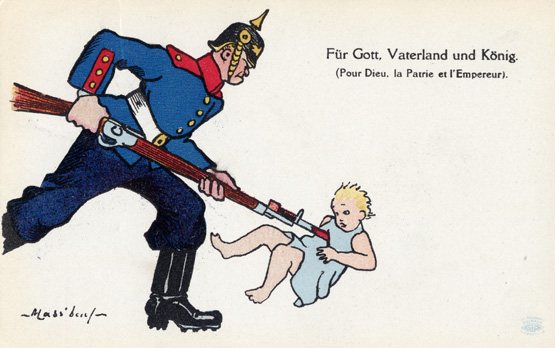
It’s interesting to me, for example, to observe the often self-righteous extremes of social and political vitriol between Fox News and MSNBC. There are certainly other forms of media, but these two television networks distill down to their purest forms the convictions of Republicans and Democrats. Tweaking issues and facts by leaving out important details has become an art form on both sides. It reminds me of the British cartoon posters displayed during World War I of German soldiers wearing spiked helmets and stabbing infants with swords before holding them up in triumph. Both our political parties are guilty of such unapologetic hyperbole to the point at which it becomes almost comic. There’s no better way to get an ally than to make someone angry in a shared cause against a monstrous enemy, real or imagined. Even an abstraction will do.

What bothers me most is the blind hatred of one side for the other, often funneling itself down to mere name calling and pure meanness of spirit through altered photographs and other caricatures. There is nothing new about such deliberate exaggeration. That sort of furious rivalry goes back more than two centuries of our political landscape, but such rage can have a powerful effect on our figurative and collective vision of whatever and wherever the truth may be.


I’ve always been suspicious of people who have no doubts, second thoughts, or reservations about their apparently clear-cut answers to spiritual questions regarding God and our “only” ways of seeking and achieving salvation (whatever that may mean) and eternal bliss. If such a person has no questions or no gray areas of thought, I usually run in the opposite direction. By the same token, if someone is so satisfied that he is completely correct and omniscient about the political arena in this country (especially if he or she foams at the mouth), I know the person is emotionally or sentimentally reduced to a simple and puerile black and white view of whatever the truth may turn out to be.

No matter how staunch a Democrat may be, if he can’t examine calmly Republican values and try to see the sense of at least some of them, his grasp on reason is impaired by tunnel vision. This works the other way around as well for Republicans. Members of both political parties wear blinders, whether they are the most naïve and fantasy-prone Democrats or the most rigid, gun-toting Tea Party Republicans. On FaceBook almost daily, I see deliberately isolated and trimmed issues posted, creating false impressions and faulty conclusions among readers, who often express indignation and white-hot anger before knowing all the details, which have been cleverly omitted. The result is unjustified anger, simply because people have not done their homework to see important details that help provide an entire picture. This type of vigilante publicity is only half-information, which can sometimes be worse than total ignorance.

I suppose we need both extremes to arrive at some sane kind of middle ground, where we can look at enough sensible details (dispassionately if need be) from both sides and understand them without having brain aneurisms.

Finally, I would love to see literal boxing matches on Television with the political opponents paired off in this way:

Chris Hayes versus Ted Cruz

Chris Matthews versus Mike Huckabee

Ed Schultz versus Rush Limbaugh

Al Sharpton versus Bill O’Reilly

Rachel Maddow versus Sean Hannity

What a great TV special this would make! The sponsor would be Ovaltine.  JB

Posted in Uncategorized | Leave a comment

Notes from a Codger about Electronics…

One day during the 1980’s I was in my dad’s study, and he was showing me his new Commodore computer. He said to me then that the wave of the future was going to be electronic devices for communication that in twenty years would make the world as we knew it unrecognizable. Little did I know at that time how accurate Dad’s prediction was.

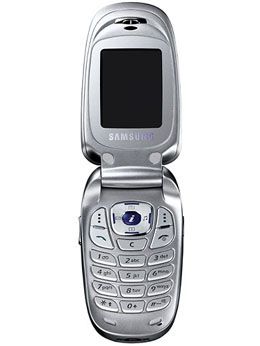
I seem to live in a perpetual struggle between my appreciation of and my aversion to technology. Electronic strides in computers and cellphones are being made so fast that I have hardly enough time to turn around before the next upgrade, update, or replacement is required. I use the word “required” in this instance only in the sense that we are all made to feel out of date if something is not brand new. For example, my cellphone is an old flip phone, small, uncomplicated, and unencumbered by a catalog of “apps” I would never use anyway. It doesn’t play music, show movies, make coffee, or toast muffins. It sends and receives calls efficiently with a long battery life. That’s all. Other features for the newest phones seem as silly as those on a future electric razor that might include apps for doing yard work too. There’s a limit to my sense of humor about these things.

There have been times recently when while I was using my cellphone in public,  people stared at me as though I were wearing a powdered wig and buckled shoes. I like my 1997 car, my 1968 electric coffee pot, and my 1965 toaster, all in perfect condition, and the money I might otherwise have spent on newer versions (to impress the world around me?) is in my bank account instead. Almost any replacements would probably have been made in China, so it’s not as though I’m personally stifling the American economy by not feeling obligated to “keep up.”

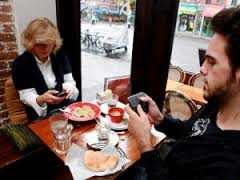
The phenomenon that continues to fascinate and repulse me at once is our national obsession with texting, that abbreviation of what we used to call communication and even conversation. What is there about this technical sensation that can turn people into robots, keeping them chained to the beep or other signal that the next message has arrived? Egotism? Texting has fostered a kind of modern rudeness that Robert Heinlein and Isaac Asimov would have loved to satirize. I’ve been in homes where family members in the same room were texting each other, and I’ve been in restaurants where people with their dates were texting during dinner (not necessarily to each other), or talking on cellphones as though the person with whom he or she was having dinner weren’t even there. It seems obvious to me that this is not being “connected.” In fact, it is being separated, distanced, and disengaged in such subtle ways that many people haven’t even noticed how utterly outrageous such scenes can really be.

At the dealership where I had my car serviced this morning I was reading my Kindle to pass the time. Others in the same waiting room were on cellphones, texting, or playing games on their phones. We were all like electronic mannequins in a big box, wired to be activated by the push of some remote button. There was no conversation or interaction among us. I was as guilty as everyone else. The most human among us was a man who was snoring while fast asleep in a corner chair. I used to feel free to look at people to make simple comments or ask questions in public places. Now there is often the fear of interrupting a phone game or texting, even though the message often turns out to be nothing more than, “Hey…what’s up? Nothing here.”

Maybe as we become more crowded on our planet, especially in public gathering places, we begin to feel more protective of our immediate space. What better means to keep other people away from our physical areas than with cellphones or texting devices? People used to use newspapers similarly on trains and buses to close themselves off, as though in separate paper cubicles to avoid any possible conversation or other invasion of their solitude.

With all our new ways of “communicating” electronically, we are more isolated than ever. I don’t know if it’s the comforting illusion of being “connected” constantly, or the sheer terror of being out of the network of modernity, but the world to me over the past few years has begun to resemble a kind of science fiction story in which individuals believe that the cure for loneliness is simply an electronic device in one’s pocket or purse, the buttons of which will keep everyone from ever feeling quarantined again so that finally, battery chargers will become more important to supporting this grand illusion than human beings themselves.   JB

Posted in Uncategorized | 1 Comment

Partly Cloudy with Possible Showers…

I’m generally a fairly optimistic person, basking in the glow of what I believe is the goodness of most other people and the customary beauty of the world around me. Because I tend to focus on the brighter side of things, I suppose it’s possible that my view of the world is impaired from time to time by a naively sunny outlook behind which there are issues I’m not used to observing. This is the point where someone might easily bring out a pair of rose-colored eyeglasses and ask, “Are these yours, John?”

In fact, I do feel indignation, even rage, at what goes on (or what doesn’t) in Washington, I despair at the suffering of the poor, the indigent, and the children and animals who seem to have no voice of their own. I’m not Pollyanna, and I could never have been an Eagle Scout without a special act of Congress, but I do try to be of use whenever I can. Today was one of those days when my hopefulness about things was bruised by a sequence of minor events that perhaps to other people might have seemed comically inconsequential.

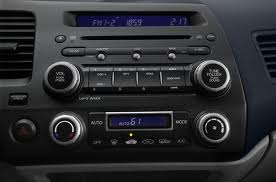
When I started my car this morning, the radio was dead, which meant that I had to entertain myself by repeated singing of the only three songs to which I actually know the lyrics, Moon River (from Breakfast at Tiffany’s), There is Nothin’ Like a Dame (from South Pacific),and I’ve Been Workin’ on the Railroad from the first record I ever received as a kid, singing it around the house until my parents threatened to put me up for adoption. However, these songs get very old after about fifteen minutes, and even though I know the words to the most famous of all time-passing songs, I’ve been on too many buses for field trips even to consider singing or even listening to One Hundred Bottles of Beer on the Wall, unless I’ve drunk a few first, which works only if someone else is driving anyway, so I phoned the Honda dealer to make an appointment for my radio to be checked.

During my haircut this morning my barber pontificated about the Donald Sterling NBA scandal, blaming the whole thing on his ”vindictive mistress,” who, “set him up.” I reduced my take on the issue by saying that both Sterling and his girlfriend were idiots, who probably deserved each other, which seemed to shock Frank, who seems to worship anyone with enough disposable income to spend even a weekend in Atlantic City or Las Vegas. Nothing else I said dissuaded him from his certainty that it was “all the bimbo’s fault,” even if Sterling had really made the racist remarks he was accused of making. Our tiff didn’t seem that serious until I got home and noticed with a hand mirror and the bathroom mirror that my haircut was uneven in back, where the hairline appeared to have been done by a four-year-old child. When I drove back, Frank apologized and changed the line as best he could, with the result that I looked strangely like a mannequin whose painted hairline appeared not to have been quite finished. Nevertheless, Frank refused to recant his defense of Sterling, whom I had called a “moron,” much to Frank’s dismay.

When I got home, it was time for lunch, but I was already feeling sorry for myself and too lazy to prepare a meal, so I grabbed a jar from the pantry, opened it, and got a fork, going next to the den, where I sat watching absentmindedly the first program that popped up when I turned on the TV. Sitting on the sofa, eating Aunt Nellie’s Pickled Beets right from the jar and listening to a mindless episode of Gilligan’s Island, I began to realize I had to pull myself together to get through the rest of the day. Before turning off the TV, I rolled my eyes at the commercial that promised to deliver catheters discretely to my front door.

Then the phone rang, so I turned off the television, only to discover that the call was a salesman trying to persuade me to take advantage of a “once-in-a-lifetime offer” for discounts at hotels in Hawaii. The guy’s enthusiasm was impressive for a while, so energetic and filled with passion that I thought it might really be one of my friends playing a joke. Despite my saying three times that I had no interest in making a commitment to the offer, the man rambled on so poetically that I thought at last he should be playing Hamlet on a stage somewhere instead of doing this phone gig. Finally, not wanting to be overtly rude by hanging up suddenly, I told him that I was allergic to coconuts and pineapple, and that I was deathly afraid of Macadamia nuts. While he continued as though I weren’t there, I said, “Thanks anyway” before simply hanging up. I suspect he continued his speech to the end before noticing that he was onstage alone, the audience having left the theater.

Then the doorbell rang, causing my dog Dudley to begin barking. It was my next-door neighbor Mrs. Benson, who wanted to borrow some waxed paper for some maple fudge she was making. When I asked her to come in while I went for the paper, she shrieked, “Oh, my God, John! What happened to your shirt? Did you cut yourself shaving?”

Looking down at my shirt, I saw the large and violent streaks of beet juice that must have made me look like something from the ten o’clock news. Of course, I blamed it all on Aunt Nellie. Mrs. B thanked me for the waxed paper, promising before she left to bring me some of the fudge when it was done. As I closed the door and turned around, Dudley was staring up at me the way dogs often do when they are filled with understanding and deep sympathy for our pathetic behavior. He knew I was having a less-than-stellar day, so he went, as usual, into the den and onto the sofa, where I joined him, and he put his head on my lap, looking up at me as only dogs can, with all the wisdom of the ages, as though he were saying, “Yes, John, Donald Sterling is a big jerk, I don’t want to go to Hawaii, and I never really liked that shirt anyway.”      JB

Posted in Uncategorized | Leave a comment

Hello Dali…

Most people have seen work by the Spanish, Surrealist painter, Salvador Dali, whose dreamlike depictions are hauntingly realistic in terms of the physical world but seem to contradict that same reality through visual oxymorons. Perhaps his most famous painting is the one called “The Persistence of Memory,” also sometimes called “The Limp Watches.”

Yesterday I ran across a kind of visual parody of the piece, based upon the TV animated show, The Simpsons:

I prefer the original but like to think of this one as “Dali on Crack,” though I’m not certain anyone could tell the difference between Dali’s work on or off crack or any other substance. He was just off the wall in terms of his views of the universe. One of my friends has an original Dali, which is valuable, but my friend thinks the painting too bizarre to display anywhere in her house except the laundry room, where it has been for years over the counter of a storage cabinet. Frankly, if it were in my house, I’d probably keep it in my laundry room too or maybe in a bathroom in order to startle guests out of any sort of mental constipation.   JB

Posted in Uncategorized | Leave a comment

Life in My Condo…

My second winter at my Pompano Beach condo in Florida has been even more enjoyable than the first, though soon my dog and I will return to Colorado for the summer.

I continue to enjoy watching (with binoculars) the golfers on the green across the little lake outside my sun room. Part of that entertaining spectacle comes from the varied and sometimes eccentric attire of the players. Some of the more elderly males seem to prefer Bermuda shorts, narrow-brimmed, feathered, straw hats, and wing-tipped black shoes with dark knee socks. No cartoonist could hope to capture the side-splitting humor of this stereotypical clothing, but more entertaining still are the occasional tantrums of golfers, who throw their clubs, or become even more enraged falling into the lake while trying to retrieve errant golf balls before disappearing among the banyans and palms in their little golf carts. Honestly, it’s better than anything on cable, with the bonus that voyeurism is absolutely free of charge.

Then there are my neighbors among whom is Molly, two doors down from me. In her late seventies, she is someone who spends most of her time watching TV soap operas and drinking prodigious amounts of wine, which rumor suggests she actually puts instead of milk on her morning corn flakes. Molly had to give up the daily gallon glass jugs of wine she had been purchasing before last fall. The sound of each empty bottle being hurled down the trash chute on our second floor sounded like a bomb going off in the steel receptacle on the first floor. Molly would often choose to dispose of those big glass jugs late at night, perhaps with the flimsy hope that the rest of us would never suspect that she was drinking enough to keep a hockey team permanently drunk. Nevertheless, more than once I peeked out my window blinds after these incidents, believing at first our complex had been invaded by terrorists, but seeing Molly instead wearing her chenille robe and weaving back to her apartment, twice leaving behind one of her pink fuzzy slippers, like some impossible, aging Cinderella on crack.

Another neighbor caught Molly discarding one of those massive jugs one night and awakening the whole building again. The neighbor’s only comment to her was, “Molly, if you ever toss one of those jugs down that chute again, I’m seriously going to hurt you.” After that, Molly bought only Franzia boxed wines, ensuring (thanks to the angry neighbor) that the rest of us in the building would get an uninterrupted night of sleep without having to phone 911 to report an alleged, lunatic bomber.

There is a neighbor in the apartment on the first floor just under mine. Mrs. Felding is a widow from Canada who, like me, lives here only during the winter. Her dog is a Boston Terrier with the nastiest disposition I have ever witnessed in a canine. Since Mrs. Felding uses a walker for her mobility, she is unable to walk her fifteen-pound dog, named Cujo (and for good reason). Cujo spits, snarls, barks and lunges at every living creature he encounters. Mrs. Felding’s son Warren, who lives elsewhere in Pompano Beach, visits daily to walk the dog at least three times, and my introduction to Warren included a menacing explanation about the terrifying Boston Terrier.

“Be sure never to come near Cujo! Only Mother and I can be around him without danger of bodily harm.”

“Thanks for the tip, jackass,” I thought. Then I asked myself what could possibly turn a household pet into such a psychotic, vicious creature that should under any normal circumstances be cuddled comfortably in a plaid, flannel dog bed surrounded by adoring family with ruddy-faced children before a blazing fire. It seems they can’t even buy any toys for Cujo, because he simply eats them, I mean completely! They have never found Warren’s bowling ball, which disappeared last year and sends my imagination reeling.

Everyone else in the building is aware of Cujo and his violent nature. Window blinds can often be seen cracking open before residents venture outside, as though they need to make sure Cujo is nowhere in sight first. At times it appears that this fifteen-pound dog is holding our building hostage and that the world’s fear of Pit Bulls is entirely misplaced, when indeed, all the Pit Bulls I’ve met have been sweet-natured, playful dogs, totally unlike the unfair and inaccurate stereotype created because a few morons have bred them for fighting. As a dog lover, I feel awful that in rare cases like that of Cujo the Boston Terrorist, the dog cannot be peacefully and lovingly approached. Cujo has made me perhaps unnecessarily wary around new dogs, for the first time in my life. In any case, maybe I can blame his unsociable behavior on a Napoleon Complex. I mean, have you ever met a mean St. Bernard or Great Dane?    JB

Posted in Uncategorized | Leave a comment

Dear Everybody: Thoughts on E-mail versus Traditional Letters

Every once in a while I can feel myself aging, not just by looking in the mirror to see more silver hair, but also because I feel a lag in my attempts to keep up, even remotely, with technology and what the rest of the world delights in calling “progress.”

We live in a time that increasingly stresses speed and instant gratification. Though I’m for whatever makes life easier, I know that such strides inevitably encourage us to become lazier and to leave behind certain intangibles, like thoughtfulness, patience, and graciousness.

I still have letters written to me by my maternal grandmother in her own hand. The first of these was sent to me on my ninth birthday, but all her letters, right through my years at college were written with a pen and bottled ink upon stationery, a gold border around each page. Reading them again is like delving into history, or like seeing light that left stars eons ago and is just now arriving to illuminate the night sky. I can count on one hand the people I know personally, who still mail hand-written letters, which for me have become something of an archaic luxury in a world where technology seems to be reducing language to an efficient but artificial Esperanto of what it once was. It saddens me at times to remember the books on language usage, grammar, and composition I used as a student and then as a teacher and to see so much eloquence and grace of the mother tongue often funneled down to the polyester communication of a text message.

I can’t remember any e-mails or text messages that would stay in my head for more than an hour. They can be lauded for their spontaneity and the fact that postage stamps are not required (though such communication is certainly not free of charge). The internet seems at times to be a huge conveyor belt of gang mail sent indiscriminately by some people, piles of it forwarded, faceless, impersonal messages that senders believe somehow will inspire or entertain the recipients. The sheer volume of these e-mails reduces their value, as they all melt together at last into a mind-numbing flow of messages that begin to resemble TV commercials.

Letters used to be mailed on folded sheets of paper, sealed with hot wax until around 1840 in England, when envelopes came into vogue. Time was taken to compose messages that cost money and that would take days or even weeks to arrive at their destinations. Contemplation was more evident in communications that could not be shot back and forth with great speed, as in conversation. I remember in the 1950’s through the 1970’s the anticipation of waiting for the postman to deliver responses to letters I’d written and mailed. There was a sense of waiting and reward in writing that was not quite as casual as it is in e-mails today. I must add, however, that computers and e-mail are not responsible for the “death” of letter writing. It was, I believe, the telephone that was responsible for that if, indeed, letter writing is dead.

So much of what is forwarded in e-mails is undocumented drivel or just plain propaganda for one political cause or another, with absolutely shameless disregard for facts or any sort of certification. Of course, this was undoubtedly part of handwritten communication too, but it’s so easy now to send libelous or fact-free messages fluttering by the hundreds or thousands into cyberspace, that one wonders what is true and what has been twisted to fit whatever ideology the sender has embraced. I see this sort of thing daily on FaceBook, when people grandstand for their political views on the extreme left or right. Just because it’s on the internet, doesn’t mean it’s true or hasn’t been modified to fit a sender’s personal agenda, no matter how outrageous.

As anachronistic as they seem, I still miss personal, handwritten thank-you notes and carefully crafted letters. That nostalgia is just one of the things that may render me a fuddy-duddy, who still uses a fountain pen and stationery which, to many, will seem as outmoded as horse-drawn carriages, outhouses, and library paste.

When President Ronald Reagan announced that he had Alzheimer’s, he did it with ink on paper himself. I doubt that the impact of that note in its quivering script would have had the same power as a fax or a letter typed on White House stationery by an aide. I think too about heartbreaking, handwritten notes by dying soldiers during the American Civil War, final letters, stained with blood of the writers, letters held dear for generations by families of those courageous young men. There is something about holding a letter that was physically touched by the writer and written with some care by hand. I have an old hat box of over a hundred letters written by my father between 1941 and 1945 to my mother while he was stationed in London and then in the South Pacific during World War II. Holding those letters in my hand more than seventy years after their composition is indescribable. My mother, when she was dating my father in the late 1930’s and early 1940’s, would mail him letters scented with lilac or lavender. Such letters, even unscented ones, are sensory experiences. E-mails are not. Such an argument is used also by people, who prefer reading traditional leather-bound or paperback books over eBooks. As a true techno-civilization, we haven’t yet gone over completely to “the dark side.” There are still ink pens, pencils, and stationery in most stores, obviously because there are still enough people using them to make sales lucrative enough to continue. In that case, maybe I need not panic until I’m a centenarian, who might appear on the evening news as an ancient reminder of a time when people actually wrote letters by hand, even saving in hat boxes and desk drawers the ones that were important or dear enough not to be deleted.

Finally, it may be that I long for the polite salutations and closings of letters we used to write by hand. Maybe my ego simply enjoyed seeing my name as the principal recipient of communication, not just one of fifty other names in or out of blind copy. The next generation will be different at least in the sense that they will be the first in many centuries not even to need cursive writing, which is now being eliminated in many American schools. Future power outages and dead batteries may mean at least temporary cancelations of even printed communication.   JB

Posted in Uncategorized | 6 Comments

The IRS and Me….

Since last December the IRS has been tormenting me about my federal income taxes for 2011 over my claiming the mortgage interest deduction for the house in Colorado. I spent a morning at H&R Block here in Florida, and more than five hours at the IRS office near Pompano Beach. I then had to gather necessary papers as documentation to prove that my taxes for 2011 had been in order without my having cheated the government out of anything.  I sent all my materials as certified mail in early January and received word much later that the packet had been received on March 12. It was a nightmare! Then last week I received another letter that said my case would be decided within the next sixty days. More time for me to experience anxiety, I suppose.

Yesterday I received an official letter at last from the IRS stating that the case was closed, because I had sent them all the required proof that my taxes were indeed in order and that I owed the government $0.00. I may have to frame their letter, because it represents to me a triumph over a vast and impersonal foe. To me it’s been from the beginning a David and Goliath story of good against evil. Honestly, I slept better last night than many nights since December when I first received the IRS accusation. I was also told that IRS computers are sometimes responsible for false red flags that go up over people’s taxes. I was warned in December that I should pay right away to avoid the monthly interest charges on what the IRS claimed I would owe from 2011. I knew I was right and paid nothing. Had I paid that money (around $1200 plus interest), I would now be waiting six weeks for a refund.

I feel the need to celebrate my triumph over this reviled institution only because it seems they are always going after the little guys like me, while corporations and billionaires get away with vast and corrupted deceptions that would make most of us gag in horror. Well, at least none of my friends will have to bake cakes with files in them or visit me in prison, smuggling in real coffee for me. I’m a good, tax-paying citizen, who now feels free again.

My advice to other tax payers is to keep good records and not to let the IRS intimidate you. Fight them tooth and nail when you know you’re in the right.   JB

Posted in Uncategorized | Leave a comment

A Different America…

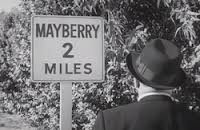
The other night I watched an old episode of The Andy Griffith Show, which was first aired January 14, 1963. Fans of the series voted that particular episode their favorite, and for good reason.

It’s a story about redemption and appreciation of life’s simplest but best gifts. The title is Man in a Hurry, a story about a city fellow whose car breaks down in Mayberry en route to an important business meeting in Raleigh. Though the episode is fifty-one years old, it shows a man who has become in our own time a universal character of brusque, impatient, insensitive, and assertive behavior. He can’t appreciate the simple tranquility of a rocking chair on the front porch, peeling an apple, or even conversation with other people about anything but business and making money. He has become a classic symbol of break-neck speed in getting nowhere, a man whose blood pressure could probably make him explode at any moment.

However, when confronted by sincere kindness, generosity, and good will from the people of Mayberry, the man changes in a way that still moistens my eyes at every viewing of that episode. At the end of the story, he is a different person, one, who perhaps for the first time since his childhood encounters the value of kindness for its own sake and the sincerity of people of compassion. The power of the story hasn’t been dulled by the years but has instead only intensified for us in a time when the world seems to be in love with speed and instant gratification, even over human relationships and charity. The episode lasts only about twenty-five minutes and is well worth seeing again, even if you’ve seen it many times. It’s beautifully done in every way…right to the final moment of the story on the front porch of Andy’s house. Here is the YouTube link:

www.youtube.com/watch?v=X9eYPvdL4AE

Posted in Uncategorized | 1 Comment