Sacrifices Made for Our Beliefs…

I respect a person who stands up for his or her deepest beliefs, even if I don’t always agree with those beliefs. My respect intensifies if that person is willing to make a personal sacrifice for that conviction without harming other folks.

Kim Davis

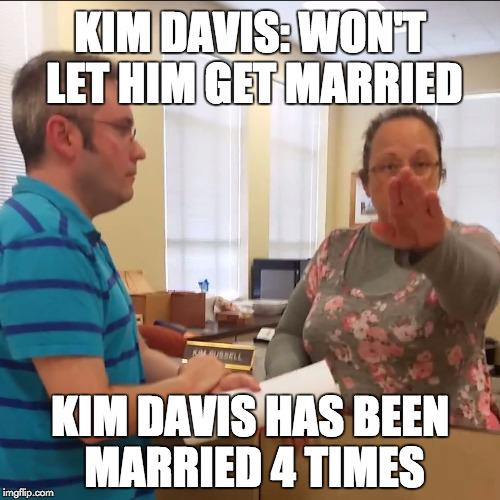
There has been much controversy over Kim Davis, the Ashland, Kentucky county clerk from Rowan, who has staunchly and consistently refused to grant same-sex marriage licenses, despite the Supreme Court ruling from earlier this summer. Seeing her unyielding stance from behind that office counter on multiple pieces of TV news coverage has made me think carefully about what it all signifies, on both sides of the issue.
untitledKim Davis divorces

To my knowledge, all of the Christian saints died for their religious beliefs, and rather horribly at that. I can’t think of an example of a saint who sacrificed someone else to satisfy his or her own individual credo. Personal sacrifice, for whatever cause, means that the individual gives up something prominent or momentous that brings about his own suffering. The problem I have with Kim Davis and her very self-righteous and self-inflicted maltreatment (if indeed it may even be called that) is that in her grandstanding as what some may call a heroine, she has really not given up anything, but rather has gained publicity and kudos from her fundamentalist Christian friends. Note I didn’t say the word Christian by itself. That word has much broader and more compassionate significance than the manufactured meaning given it by the far right, which often seems to be using the word as a mask for personal prejudices and ignorant accusations based upon whatever may be lifted out of context from The Bible, in which Christ himself never said a word about homosexuality.

American flag

The problem for me is that if Kim Davis were really an honorable woman with sincere purpose founded in Christian love, she would have said, “My religious beliefs are simply too strong, and I need to resign. This job places me in too much compromise with my convictions.” Instead, she was willing to use the media for personal attention and to sacrifice the happiness and wellbeing of others by refusing them their legal rights. How dare she use God’s name as a threat for her personal biases! The noblest way she could have addressed this problem was to quit her job, thereby not being responsible for any “sin” she thought was being committed but without hurting anyone but herself for her own cause. She is not God and had no right to be His temporal voice in a matter already decided by the Supreme Court.

preacher

A considerable segment of our society is flummoxed by the tremendous changes in our culture over the past several decades through the civil rights movement, equality for women, child protection laws, gay rights, etc. all of which at one time had very dark interpretations by Bible thumping preachers, who believed things should stay “traditional,” even if those things were obviously unjust. The changes have been fast and furious, leaving many folks confused and lost. Those are the people outraged that some of the beliefs they held for so long have been modified or deleted altogether. This has created anger and indignation for those who feel that the only anchor for them is the religious credence they’ve held, often since childhood. I understand this terror of change and the feeling of being left behind, but we have to remember that during the American Civil War, people were outraged, because their lifelong interpretation of the Bible had been that slaves were God’s will and that those slaves being freed was an assault upon God’s will and grand design for the universe. Outlooks change over time, because they have to. There are many “religious” beliefs that often coincide with ideas of right versus wrong, but they change as we learn more and become more aware and compassionate. Our understanding bends with enlightenment, as well it should and as well it must.

angry religion

What scares me more and more in a complex and legally secular society such as ours is that religious zealots think that they can use the “religious belief “ card to trump anything standing in the way of judging others as inferior just because they have other convictions, peaceful or not, convictions that don’t necessarily coincide with very specific religious doctrine. We are not yet a theocracy, but we are moving in some parts of the country back to a time that was. The year is 2105, not 1692. People are no longer lashed in the public square or put into the stocks because they missed a prayer meeting or disagree with the powers that be in the canonical beliefs of just one group. People should be able to keep their religious beliefs, but when those beliefs destroy the lives of other people, the believers need to accommodate themselves to the prevailing law that protects those other people. Just one religious doctrine can no longer prevail and bully the rest of the population with its mean-spirited accusations, and persecution however “holy” the believers claim they may be. Look at Muslim fundamentalists to see where this can lead. The Christianity that makes sense to me is that which goes back to Christ himself and his almost constant messages of compassion, inclusion, love, and kindness toward our fellow beings. None of this has appeared in any way or on any level in the diatribes from people like Kim Davis.   JB

Jesus welcome

Posted in Uncategorized | 2 Comments

The Story of a Cap

It was a remarkable day in late September. Every day is remarkable in its own way, but I was touched by something unexpected during my last class of the day. Because it was Friday afternoon and the end of the school day with my most difficult class (the leather-jacket, juvenile delinquent crowd), I was feeling sorry for myself, thinking as I watched them taking their Friday vocabulary test that I was not really reaching them as I had hoped to do. I saw my reflection in a big mirror that I used to keep tabs on everything that went on in the room even when my back was turned. My face looked sad. Though the rest of the day had been very successful and most enjoyable in my other classes, I was focusing once again on what I felt was a failure on my part to inspire everyone in the room and have them excited about what we were going to be doing after the test.

Then there was a knock on the door, and a messenger from the main office delivered a package to me that had just arrived. My students were distracted by the interruption (always an arduous task to get them back on track after ANY distraction, even a sneeze). One bold kid in the front row (the one who was proud that his brother was in prison for armed robbery) asked who it was from and what it was. I read the return address and said that the package was from a former Morton student, Jim Davis, from many years ago (thirty-four to be exact). One kid joked that it might be a bomb, but I replied that I was going to open it anyway and that we would all go up together…like bottle rockets.

Their curiosity was aroused by now, and excuses for distraction aside, they were genuinely interested to know the contents. I opened the box to find a five-page letter from that former student, who was a trucker for twenty-five years before opening his own mortuary in California. He had been in a “problem” class just like the one I was teaching that hour…a “basic skills” English class. We corresponded over all those intervening years, and he continued to send me news about his life, including, at last, pictures of his grandchildren.

He worked for several months after 9/11 at Ground Zero clearing debris and corpses. He worked with the New York City Fire Department and Police Department as head coroner. In the box was the cap he wore during his work there. It was covered with dirt and badges for his valor. It was the thing of which he was most proud. The letter said that I had always been his favorite teacher and that he still thought of the ways I had inspired him to be his best even though he was now fifty-one years old. He wanted me to have the cap, because he was proud of it, and I was his hero in a time when the world was calling him a hero.

Jim's_cap

My eyes filled up as I looked at it and explained to the class what it was. They were absolutely silent (perhaps the first time they had ever seen a teacher cry). The bell rang and they left quietly (as they had never done before). Maybe they too were touched by what had occurred. I don’t know. It may be that they were simply shocked by my reaction. It didn’t matter. I had not been so moved in a long time by a gesture like that gift. It came at just the right time to let me know that teaching had indeed made a difference and that there were influences that continued long after students were gone. I felt quite blessed.     

Jim had heart surgery two weeks after he sent me the cap and died October 23, 2003. I’ll include the final letter I sent to him before his death. I retired the following spring.

September 19, 2003

Dear Jim,     

Your package arrived today during my most difficult class (the leather- jacketed delinquent set). They all have learning disabilities and I often feel that I am not reaching them and that my work is of no use. Just keeping order in the class is a constant and draining job.  So much for my whining.

One student in the front row asked what the package was and how had sent it. When I answered that it had come from a former student, someone said, “Look out! It might be a bomb.” I replied that I was going to open it anyway and that we would all go up together like bottle rockets. I read only part of your letter before my eyes filled up. When I came to the cap, I lost my composure and sobbed. The students were absolutely silent. They saw how very moved I was and I believe they understood what I was feeling. I don’t think I have ever been so proud or touched by any other gift in my whole life as I was that cap and that letter. It suddenly made my whole career make sense. It helped me to know that what I do is not in vain and that positive influences continue even after my students have moved on to other things and other places.

I can’t tell you, Jim, how much it meant to me to receive what you sent. I shared it with some people in the main office downstairs before I left school today, and they cried too. What a beautiful gesture you made!     

Please know that you will be in my thoughts and prayers. I will want to know how the surgery went and that everything is going well for you again. You are an extraordinary man of great courage and gallantry. In spiritual terms there is nothing wrong with your heart. It is the best and biggest one I know.     

Of all the students I have taught over the past thirty-five years, you will remain one of the ones for whom I keep the fondest regard. That cap will be on my bookshelf always to remind me of the valor and compassion you have shown your fellow-beings. You have taught me at least as much as I have taught you.

Your friend,

John Bolinger

Wherever I am, I still think often of Morton High School, a building I entered for the first time in my early twenties, a place that for me will always echo the voices of thousands of students, who have passed through its halls, the sounds of chalk on blackboards, the turning of millions of pages in books, the bounce of basketballs on the gym floor, the roar of crowds cheering at touchdowns on the football field, the crack of the ball and bat, the music of choirs, orchestras, and bands slightly out of tune, a place where so many young people became men and women.

Clusters of powerful recollections flooded my mind that afternoon of June 9, 2004 as I finished putting final grades on scan sheets. For lunch my friend Logan Clark had taken me to a favorite Chinese restaurant, where we also polished off a large pitcher of Mai Tai before going back to school, where I said my goodbyes to custodians, office staff, and some teachers, who were still grading papers and putting final grades on the scan sheets. Then I gathered up my electric box fan, and old Zenith mahogany radio from 1955.

At the door to my classroom, I turned to look once more at where I had taught for so many years, a room uncharacteristically silent that afternoon, as I turned out the lights and closed the door for the last time. I went down the same stairway I had climbed and descended so many thousands of times. The parking lot was almost empty, as I loaded my car trunk. Driving from the lot, I saw the school building grow smaller in my rear-view mirror, a shrinking image that became almost a mirage as I sped off into the warmth of approaching summer. It was over.     JB

Posted in Uncategorized | 2 Comments

Sample Chapter from Growing Old in America…Notes from a Codger


book cover 1

Chapter 13: Eluding Molly

I live in a little gated community of condominiums on a small lake in Pompano Beach, Florida.  I like my neighbors, but I’m having a problem with one of them, a seventy-five-year-old woman named Molly, who uses a walker to navigate her way around the second floor, where my apartment is.

Molly with hairnet

Molly is a spry lady, despite her dependence upon the walker, and she has the booming voice of a Teamster union rep. She can be heard all over the complex without the benefit of a megaphone, but a bizarre set of circumstances came about to help me realize why people scattered when they heard Molly’s less than mellifluous voice coming down the walk.  For me, it began when she knocked on my door to ask me to change her air conditioner filter. Then she wanted me to open a jar of pickles, followed by other requests to check this or that in her apartment. I realized finally that there was something terribly amiss, when she knocked on my door to ask me to put a hairnet over her new permanent in order to protect a do for which she had paid fifty dollars.  She said that I should not mention to Steve, Harvey, Pearl, Donna, or Marilyn, the other residents on our floor, that I had helped her.  When I asked why, Molly’s reply was simply, “Oh, they were nasty about it and refused to help.”  At the time, I took her answer at face value, not putting the puzzle pieces together until later.  I simply put the hairnet on her head and continued fixing my lunch.  Minutes later there was another knock on the door. “John, my phone isn’t working.  Can you come over and look at it?”  My first thought was, “Do I look like a telephone repairman to you?” but I held back actually saying it aloud.  I followed Molly to her apartment, where her cell phone was charging.  The illuminated screen read, “Battery charging,” so I told her to leave it alone for at least an hour to allow the battery to be strengthened. With no land line phone, she needed the cell. I understood that.  I returned to my apartment, where only fifteen minutes later there was another knock at my door to say that her phone wasn’t working yet.  I sent her back saying that I would go to her place after the hour was up.  After the phone was turned on and working again, I believed, perhaps naively, that I had seen the last of Molly for the day.

Molly 2

Three more knocks on my door were to inform me that her toaster wasn’t working, her TV remote was stuck, and that her hair net had come off.  The toaster wasn’t plugged in, the TV remote batteries were loose, and her hair net had snagged on a coat hanger in her closet.  OK, I started to feel that she was simply lonely and looking for any excuse to talk to somebody, anybody.  It was, however, after her sixth knock on my door that I became annoyed enough to ponder the circumstances in order to figure out that the real reason she wasn’t knocking on the doors of other residents was that she had already done that enough times to annoy them too, so that one by one they told her to go jump off the nearest cliff, with or without her walker.  I must have been the only one left who hadn’t rebuffed her requests for help.  I was apparently still fair game.

Today, there were intermittent knocks all afternoon on my door accompanied by Molly’s inimitable voice yelling, “Hey, John.  My phone is on the fritz again. What are we going to do about it?”  I admit it.  I’m a coward in the sense that I don’t want to confront Molly with what I would really like to tell her, which would go something like this:

“Look, Molly.  I’m not your caregiver, and I don’t WANT to be your caregiver.  After your sixth knock on my door yesterday, it occurred to me that you were a lady, who uses people and that you would continue using me as long as I didn’t protest.  Well, my dear, I’m protesting right now.  I don’t know what makes you think that these are my problems, and I certainly don’t get your sense of extreme entitlement in the matter, but you need to begin solving problems yourself.  Your Miss Congeniality trophy is in serious danger of tarnishing.  Honey, if you can’t even put on your own hairnet, you probably can’t make toast or even brush your own teeth and shouldn’t be living alone in an apartment.  Maybe you need to be in assisted living, a nursing facility, or the hush-hush ward at Imperial Point.  You seem to have no sense of borders, limits, or extremes, so I’m telling you now that my door is wired to deliver a high voltage shock if you ever touch the knocker or doorbell again.  Do you understand what I’m saying, Molly?  Is any of this getting through that hairnet?”

molly 3

The worst part of all this is that for the past couple of days I’ve been turning out lights, turning down the sound on the TV or radio whenever I heard the sound of Molly’s walker inching its way down the walkway on the second floor, and not answering the door when she knocked or rang the bell. I admit that hiding from a seventy-five-year-old woman is about as cowardly as one can get, but the alternative is being brutally honest with her, which I’m not yet ready to do, but give me a couple more days. 

man hiding under bed

Posted in Uncategorized | Leave a comment

Will the Real Atticus Finch Please Stand up!

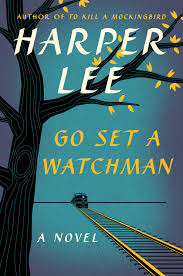
In Harper Lee’s novel Go Set a Watchman there are fewer clear-cut values regarding politics and racial issues than in the subsequent book, To Kill a Mockingbird, at least from the viewpoints of Atticus Finch and his brother Jack. Written in the early 1950’s, To Set a Watchman is a more naked, pre-Civil Rights look at the South, Alabama in particular of that period. To Kill a Mockingbird, though written later, has as its setting Alabama of the early 1930’s when Jean Louise was still a child and civil rights for Negroes (later called Blacks by their choice) seem not even to have been an issue in Alabama (and other places in the South) perhaps because Negroes of that era were so beaten down that rights for them were assumed by many or most to be unattainable.

Mockingbird cover

Jean Louise Finch (Scout) in To Set a Watchman is in her early twenties, having lived for a while in New York City and with a racially color-blind view that she has managed to keep from her childhood, a view she got from her father, Atticus. The clash between her liberal views and the surprisingly more racist views of her relatives provides the principal conflict of the book, which is a story about loss of innocence and the confrontation with the painful reality that parents, who we think are perfect, actually have flaws and weaknesses that can be irreconcilable with our own ideals, even if those ideals are viewed as unrealistic and simplistic by the very parents who taught them to us in the first place.

atticus2

Atticus in this earlier book is not the model of wisdom and perfection he is in To Kill a Mockingbird. He tries to justify and sugarcoat his denigration of Negroes with a supposedly wider view of what Southern whites have lost through cultural shock, including scapegoats like the NAACP. This rather harsh view, which Atticus prefers to think is “reality” shatters Jean Louise’s childhood view of her father as a paragon of virtue and fairness. Superman is revealed as only a myth, a myth with powerful flaws, and Jean Louise is forced to consider finding some level of reality through a middle ground, rather than to be completely separated altogether from Atticus, who in this earlier book is a much more calculating, pragmatic, unsentimental man than the Atticus of To Kill a Mockingbird, and more a figure of his time and environment than the beloved icon he was to the younger Scout. This is probably a familiar dilemma to most of us, who as children didn’t see the flaws in our fathers that we saw when we became prouder and more self-righteous as young adults. I think we need to read both books to see the real Atticus Finch…a childhood view and one from that of the young adult struggling with the harsh realities of the world outside the home town.

to set a watchman cover

Readers may find less clarity of purpose in Watchman and views that are less, dare I use the phrase, “black and white.” We are left to make our own peace with the values and history we have observed and experienced in our country since the more than half a century since these two books were written.   JB

civil rights 1960's

Posted in Uncategorized | Leave a comment

We’re All Connected…

We were born from dust — stardust — yet we have this astounding capacity to stare into the vast universe from whence we came — and search for a place, a world view, to call our own. Even as you read these words, humongous supernovas are shooting billions of fresh born stars across the universe. And trillions of earthly creatures are scrambling across earth, trying to find our way home. We’re all connected; we are all made from the dust of stars.

nebula 2
 Something in us is always curious, always longing to know more truth tomorrow than we know today. So we join the long pilgrimage — the marvelous, inexhaustible human search, for larger meaning and truth. Anonymous

Posted in Uncategorized | Leave a comment

Technology….Warm and Fuzzy? I Think Not.

twitter

We live in an age of “instant” communication through iPhones, computers, texting, Tweeting, and Facebook, among other venues. Some people feel the need to be in constant “communication” with the world through cell phones, which they keep attached to their ears at all times, almost like robotic appendages. It seems ironic to me that in a world that is becoming overpopulated, noisier, and more mechanized on a daily basis, the same world seems to be getting more impersonal and lonelier all the time.

twitter message

We suppose that a simple text message of, “Hi. I’m in frozen foods at the Piggly Wiggly” is worth sending (in whatever version of trimmed spelling) only because there is that opening for some kind of response, albeit as mundane as the message was. I’m not sure if this addiction to messaging creates the illusion of some level of badly needed intimacy, but it can also separate us further from the very world with which we want to feel in touch. Think of all those folks on streets, trains, in restaurants, theaters, even in cars, who are absolutely oblivious to what surrounds them, because they are consumed by those little cellphones, convinced that texting or chatting is of the greatest import. My question is “why?” What kind of emptiness is somehow filled by that prosaic activity that we imagine to be almost as significant as our own heartbeats?

texting

We have, as a society, come to believe that technology is the answer to all our problems. I realize that my assertion makes me look like a hopelessly outdated codger whose idea of fun might be a Saturday night taffy pull and square dance at the old barn and whose idea of advanced technology is a Model T Ford. In fact, I applaud modern advances that in some ways (i.e. in medicine) have made life safer and more enjoyable for most of us. My contention, however, isn’t with machines but rather with the people who have practically become cyborgs using the machines.

texting 2

I love to see people take vacations in nature at lakes, in cabins, in forests, at campgrounds, and at the seashore, where computers and cellphones are not the center of attention. Nature has a miraculous way of helping us to heal and to remember what is truly important beyond electrical devices, through fresh air and being together with other people (in person) without dependency upon the stunted, artificial language of text messaging, or the hypnotic embrace of TV. The problem I see is that we are not really in control of technology as much as technology is in control of us. We are numbed by a constant barrage of television commercials every ten minutes practically begging us to try new drugs and to watch thousands of news items from around the world in quantities and frequency that we can never hope to process emotionally, let alone intellectually. In that way we too are becoming machines with reduced intimate emotions in order to survive the onslaught of messages that bombard us with almost no break.

texting 3

I’m aware too that the comic irony of my essay is that I’m posting it on my blog and on Facebook, media supported by technology. In that way, maybe the final joke’s on me.    JB

quill_engraving

Posted in Uncategorized | Leave a comment

Language

Language is one of the main vehicles for our thoughts, passions, and creativity. As soon you think that this doesn’t matter, and you become lazy and unconcerned about how you communicate verbally, your brain already has a flat tire.   John Bolinger

Antique pen and inkwell

Posted in Uncategorized | Leave a comment

Martyrdom Is Back!

What is there about martyrdom that can at once repel, fascinate, inspire, and terrify us? The lives of the Christian saints are templates in suffering for devout causes, generally in their refusing in one way or another to renounce God in whom they believed completely and literally. Knowing myself as I do, I can’t imagine living during the Middle Ages or any other such period in history, facing an inquisition of any kind that might lead to my agonizing death from being burned at the stake or being broken on the wheel. Even being denied coffee for more than twelve hours would be enough to make me say anything  judges wanted to hear, so it’s very difficult for me to understand sacrificing one’s life for what many might consider an idealistic abstraction with little or no basis in the physical world. Martyr deaths exclude ones from a military standpoint. Such deaths of soldiers from the Allied Forces during World War II, for example, had the immediate and earthly purpose of rescuing civilization itself from possible oblivion. Mind you, my instincts for self-preservation are not hedonistic and might just be considered perfectly normal by many other people. The saints, however, were anything but normal but have left their marks for centuries upon history.

martyr # 1

Isis and other forms of the Taliban glorify suicide bombing for their principal cause, which is slaughtering infidels. Such glorification, along with the promise of carnal delights in the life hereafter (paradise) seems to be enough to puff up egos in the world of extreme Islam and, of late, includes some young American converts, who are devoid of identity or self-worth and for whom such majestic acclaim is so enticing, though it is horrible to think that even mass murder can become something that is lauded and rewarded on some grotesque level of ignorance and mental numbness.

muslim martyrs

People sometimes threaten martyrdom when they haven’t the slightest intention of following through with it. My mother, for example, used guilt as the penalty for the misbehavior of my brother, my sister, and me. Mom would put her right hand thumb and forefinger between her eyes and squeeze the bridge of her nose, tilting her head back slightly, closing her eyes and in a quivering voice utter, “Why do you kids do this to me? Where have I failed? I try so hard to do the right things for you. I cook, I clean, I remember your birthdays, and I make sure you do your homework. I don’t deserve this. It hurts. It really hurts.”

saint

She would then open her left eye the tiniest bit just to make sure the effect of her performance was getting the result she wanted. David and I would look at each other as if to say, “Oh, God! We’ve done it again!” If Mom were in a particularly bad temper, she might increase the voltage of her words by adding, “Yes, I can see it all now…my coffin at Bocken’s Funeral Home. There will be flowers and soft weeping, but in the midst of all the mourning as I lie there, you kids will be wearing Indian headdresses, whooping and hollering at the top of your lungs. Then you’ll punch each other senseless after shaking the casket to plead, ‘Get up, Mom! He hit me again!’ And finally, each of you will scream, ‘I need clean underwear!’ but it will be too late, and you’ll all be terribly sorry.” At last she would take a deep breath, expel a heartrending sigh and leave the room, again looking askance during her exit to see if what she had said was registering in us some level of guilt. Such were many of the sessions with our mother, Saint Bonnie.

martyr # 2

Less amusing today are the histrionics of some on the Christian far right, who whine incessantly that they are under attack by the country in its insidious attempts to destroy Christmas, the sanctity of marriage, prayer, and patriotism itself. Especially annoying have been attempts to arouse public sympathy and action regarding the Supreme Court’s decision to render gay marriage legal everywhere in the nation. For many others on the far right, the most important freedom is having no restriction on owning and using guns. The most outrageous threats over recent events are those claiming self-immolation if gay marriage isn’t repealed. Similar threats have been hurled over the Affordable Care Act. Such mean-spirited and dramatic intimidations make me want to gift wrap boxes of matches to help such people achieve their heinous martyrdoms, but the most astonishing part of such pseudo-martyrdom is the disturbing fact that the true victims of injustice for centuries have suddenly become the supposed oppressors, simply because they have been granted equal rights, also despite there never being any lucid, rational explanation as to how gay marriage can in any way destroy traditional matrimony.

martyr # 3

Thus, many on the far right of these issues have become befuddled in their failing attempts to reverse the roles of the oppressors and the victims. The very thought of “equal” rights for all sends them into a tailspin of terror and rage. Such persecution has nothing whatever to do with God, the Bible, or anything else but personal fear, misunderstanding, ignorance, and incredible vanity based upon “Us versus them.” Like Don Quixote, they aim their lances at windmills and other imaginary enemies. Poor things. So, put your halos back into the drawer with the moth balls. Martyrdom based upon hate is no longer an option. Redirect your hatred against hunger, poverty, spousal abuse, animal cruelty, toxic prejudice, and the wanton, greedy destruction of our planet. That should keep you busy and prevent you from persecuting and wounding more innocent fellow human beings as your principal occupation.    JB

martry # 5

Posted in Uncategorized | Leave a comment

A TV Addiction

HouseHunters logo

I am what some folks might call a junkie for a television show called House Hunters, a program dealing with people looking for homes to purchase.

House-Hunters

Part of my fascination is based upon a bewilderment regarding the clients of this program and how easily they seem to pay for houses and/or the necessary renovations, apparently from inexhaustible monetary resources. I have rather a grisly interest in watching others spend money in so cavalier a manner, while I sit in a reclining chair at home. Maybe there’s also a connection to my loving to watch shows like Hoarders and Cops, much the same experience, I would imagine, as seeing exotic life forms on planets in other galaxies, so remote, they seem at times to be creations of science fiction.

Million-Dollar-Homes-

One of the intriguing things about many of the young couples on House Hunters is their seemingly vast incomes, despite their weeping about having to stay within their budgets, which are often at $750,000 or more. From where do these people, often in their twenties or thirties, get such sums of money? Sipping a glass of chilled pinot grigio yesterday, I watched a married couple (on House Hunters International) in their thirties seeking a “vacation” home in Aruba. They crooned to the realtor about needing an oceanfront property but having a budget of “only” half a million dollars. Let me remind the reader that the quest was for a “vacation home.” At that point, I couldn’t help imagining the couple as drug smugglers or high-end embezzlers. I mean, where do people at that or any other age get that kind of income outside a comfortable trust fund? Beyond that, I was annoyed by the wife’s whining about the necessity of a bidet in her own bathroom. Her husband’s eyes rolled slightly, either in dismay or in a daydream about using the device as a cooler for the beers I was certain were his buffer against her other demands for redoing the house from top to bottom. The lovely quartz countertops in the kitchen and bathrooms, she said, would all have to be replaced by granite, and all appliances would have to be stainless steel, a common requirement that still mystifies me. Kitchens and bathrooms inevitably become “dated” every five years anyway, when the next bully decorator in New York snarls that something has become outmoded enough for hordes of homeowners to rush out to Lowes and Home Depot to purchase whatever is “in” at the moment, replacing whatever has been declared outdated by current decorator gurus of the newest kitchen crap.

man and wife house hunters

 I usually end up talking to or yelling at the TV (depending upon how many glasses of wine I’ve had) that the house they passed up was actually the best bargain for their purposes and that the hen-pecked husband should just leave his shrewish wife.

Heated argument

Heated argument

I suggest that the already popular TV shows, House Hunters and Divorce Court could merge into a fantastic new program called either House Court, or Divorce Hunters, either one of which I would be only too happy to host, as long as there are plenty of beers chilling in the ice-filled bidet.   JB

bidet-beer

Posted in Uncategorized | Leave a comment

Blame It on Count Chocula

kid in cereal

By the 1990’s, whining had become one of America’s chief pastimes. Even while grocery shopping, I was unceasingly annoyed by the more and more familiar sound of childish whimpering in places like the cereal aisle, where a kid would moan demands, like “Awww, Mommy, I want this cereal, pleeease!” “No,” would come the first response. “Chocolate Rasberry Sugar Bombs are not good for you.” “Awwww, that’s not fair, Mommy!” was often the comeback, which would usually only prolong the debate until the mother would at last give in by saying, “Oh, all right, but only for small portions. I don’t want to pay for any dental implants until you’re at least twelve.”

sugarbombs

These collective grocery store experiences became, over time, the basis of my theory that many of our social ills can be traced back to the cereal aisles of grocery stores across the country, among all those hundreds of brands of tooth-rotting breakfast fare, with colorful and humorous logos on the boxes, reinforced on Saturday morning television commercials, mesmerizing children into believing that all that sugar was as vital as the air they breathed. Finally, it was almost as though these children from all across America had banded together at secret meeting sites, when their parents thought their kids were really playing on monkey bars, riding their bikes, or skate boarding. This facade covered the fact that the kids were actually meeting to share their new national message of, “WHINING WORKS!” Playgrounds everywhere became convention centers to spread the word that, not only could grocery store griping and sniveling bring results, but such intense complaining could also bring rewards in other sectors of society.

cereal

Thus, whining made its way into public schools, where its effect on scholastic standards may still be seen in the demands placed upon classes of our public schools, which I believe sometime during the past twenty years managed to merge with the entertainment industry. Another result of this huge bellyaching business has been that certain teachers across the land have banded together in a counter-movement, the crux of which is that homework requirements should remain stringent, and that all teachers for all grades in public schools must join together in building a mass immunity to the lamentations of those students, who have honed complaining down to an art form, which has seeped into factories, courthouses, the auto and garment industries, food production, and to every other conveyor belt, literal and figurative, that produces shoddiness as its chief product, rather than standing up to the laziness of moaning shirkers of duty in living up to higher, albeit more difficult, expectation. The more I encountered the tired old phrase from my students of “That’s not fair,” the more I became resolved to live up to a teacher headline I longed to see on the front pages of newspapers across the country, TEACHERS FIGHT BACK WITH MASS WHINING OF THEIR OWN! Of course, that story never actually hit the news stands, but its significance became my focus in the attempt to help squelch the national whining fest, that had already been going on for years.

grandparents

I began practicing an irritatingly nasal tone of voice in my use of important whining terminology as in, “Awww, you guys can read all twenty pages in one night. Breaking them up into little baby assignments would just be silly, and that’s not fair!” If students persisted, I would plug my ears with my forefingers and walk around the classroom singing, “Alouette.” After a while, perhaps to avoid the torture of my increasingly professional whining skills, they stopped arguing and just did the assignments. This technique was far more successful than my earlier one, which was doubling an assignment (with an attempted straight face) and then cutting it in half to make it seem they were getting away with something. That method was not only devious, but my acting was never quite good enough to pull it off, because apparently, despite my best efforts, there always remained the hint of a smirk on my face and just enough inauthenticity in my voice, that even the slowest kid in the class was on to me.

sugar

So, the next time you want to know what’s wrong with America, in terms of our shrinking standards of quality, go to your nearest super market, get a shopping cart, and mosey on over to the cereal aisle, that wonderland of sugar-impregnated breakfast vittles with about as much nutritional value as bubblegum, and observe the children there and the interaction with their parents, the outcome of which will almost assuredly be a mother caving in to her child’s demand for a marshmallow cereal with soda pop overtones, in order to avoid the screeching, high-pitched and embarrassing hint of abuse that might carry over into the soup and condiments aisle. This, dear friends, is really the source of all irrational and unmerited sense of entitlement in our country, the only remedy to which may be a good dose of homework. If all else fails, then just blame everything on Count Chocula and that awful sugar rush our kids have come to require.   JB

tooth decay

Posted in Uncategorized | Leave a comment