It has been said that every American conscious of events in the autumn of 1963 remembers where he or she was on November 22 of that year. The impact of that afternoon had the power to etch itself forever upon the collective American psyche, perhaps as much as Pearl Harbor on December 7, 1941, or the terrorist attacks of 9/11 in 2001. No one alive at those times can ever forget the percussive shock of those colossal incidents in our history as a nation, incidents that had a way of funneling their way down to our personal lives and personal recollections. I was seventeen years old when JFK was assassinated, and today in his memory and the memory of what we used to be as a country before we lost our innocence, I’d like to share what I recall of that time.
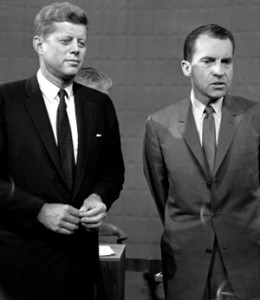
 The presidential election of 1960 was the first of which I had much awareness. When Eisenhower was elected in the early 1950’s, I was only six years old. At home in 1960 my family and I watched the Kennedy/Nixon debates on our black and white television set, and I remember only that something about Richard Nixon didn’t ring true to me, because everything he said sounded prepared or even memorized. My Aunt Hazel and Uncle Walter, staunch Republicans, paid me five dollars to wear a Nixon campaign button to school for a whole week, and as a fourteen-year-old, I thought five bucks was a huge amount of money. However, I wore the button to school only once, as it seemed every other kid wearing a button wore one for JFK. When cute Shirley Bodner offered to give me a JFK button, I immediately put the Nixon one into my back pocket in order to fit in better with my peers. None of this had anything to do with actual politics. Once again it was all about image. Jack Kennedy seemed younger, more confident, and more articulate than Richard Nixon, who appeared to represent more of the same old thing from Ike’s eight years as President. Change meant some excitement, and to us fourteen-year-olds, that was a good thing. Not wanting to disappoint Aunt Hazel and Uncle Walter by revealing my betrayal of the Republicans, I continued to wear my Nixon button whenever I was around them. Despite feeling two-faced about the whole thing, I never returned the five dollars. That decision was based upon the rationalization that if my aunt and uncle were prepared to bribe a future voter or attempt to buy votes for Nixon, they were as guilty of political graft and corruption as I was of being a freshman hypocrite. As it turned out, I spent all five dollars over a period of two weeks on sodas at the Walgreens on Hohman Avenue in downtown Hammond. Guilt did follow me, however. When Nixon lost the election, I felt personally responsible, as though my not wearing his stupid campaign button had made him lose. Sodas after that election never again tasted as good.
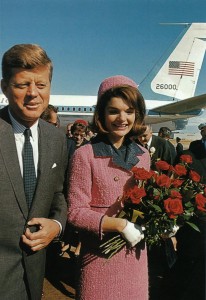
 The Kennedys made me feel proud to be an American. Their taste, style, elegance, eloquence, and beauty were lavish in the media, and no one could ever forget January, 1961 on that very sunny but bone-cracking, cold day watching the inaugural speech in black and white and hearing those immortal words, “Ask not what your country can do for you. Ask what you can do for your country.” Despite the cold day and the cold war with the Soviet Union, I felt happy that the President and his beautiful and accomplished wife, Jacqueline, represented us on the world stage where, by contrast, Premier and Mrs. Khrushchev looked like Mr. and Mrs. Potato Head. By the spring of 1961 even the Sears catalog had pill-box hats, Chanel-like suits for women, and sheath dresses. Girls at school were already copying Jackie’s daytime bouffant hairstyle. The problem was that some girls copied Jackie’s evening formal do with hair piled high in elegant but inappropriate swirls that didn’t really go with pleated plaid wool skirts the girls wore to school or the white tennis shoes with white anklets. The result over the next two years was that hairdos for girls became quite large, so that some, like Wanda Jenkins and Judy Sabo looked top-heavy, and wearing those tiny bows in front made it look as though the whole giant wad of hair was being held in place by the miniscule piece of ribbon, which might give way at any moment so that all that hair might just give way to fill the room with the ratted thatch.
 I also felt proud, because of the Kennedys, to be of Irish descent on my mother’s side. Despite Joseph Kennedy’s shady, amorous, and business dealings going back to the 1920’s, the Kennedy family did become the closest thing America had to royalty. My Irish connection, remote as it may have been, somehow made me and my Irish friends and relatives feel a little closer to Hyannis Port and Martha’s Vineyard, and even the White House. I knew nothing yet of Vietnam, and the Cuban Missile Crisis was a year down the road. Life was good.
 November 22 that year was a windy day of rain and gray skies in Northwest Indiana. At school that day was another cafeteria lunch of macaroni and cheese with sliced hot dogs thrown in for good measure and a dessert consisting of mammoth cubes of chocolate cake and fudge frosting that must have been leftover rations from World War II. Barney Blue was the only one who actually ate his. The rest of us left ours on our plates at the tray return window behind which we imagined all that cake being recycled as future desserts or possible building materials to be sold eventually in hardware stores everywhere.
 French class with the plain, wiry, but effective Madame Rainey was after lunch. She was an intelligent but very emotional woman who gave everything to her teaching, always assigning and later grading carefully the huge amounts of homework, expecting all of us to be consistently prepared, based upon work she had given to us. She would walk up and down the aisles between rows of desks in order to stand over and gaze at (intimidate) whoever was called upon to respond to her questions. Her nemesis was Jerry Nagdaman whose lackadaisical answer was always, “Je ne sais pas” (I don’t know). His total lack of concern for anything we were supposed to be learning in the class seemed to be an enormous blow to Madame’s sense of her own worth as a teacher, and twice that semester Jerry had already slumped down in his seat, falling asleep, not waking even at Madame’s high volume urging. Both those times she became so distraught and ultimately enraged, that her retinas detached, leaving her temporarily blind, so that Sally Patterson in the front row had to push the intercom call button to summon the school secretary to lead Madame downstairs. The principal would then drive her to the eye clinic. After that for a day or two we would have a substitute teacher whose retinas Jerry could not detach by his annoying inertia. Needless to say, Jerry was not in our French class second semester but rather enrolled somewhat embarrassingly in the only other class with room for him, home economics, where Jerry was the only male, which by all accounts turned out to be more of a reward to him finally than a punishment.
 That November 22 as Madame Rainey was talking about French verbs and conditional tenses, the public address system came on. We had all heard the drone of announcements so often during any given day that they generally drifted through our somewhat empty heads like air through whistles. Mr. Witham, our school principal, repeated the words so that more of us tuned in to what he was saying. “The President has been shot in Dallas, Texas.” The numbing, if slow-moving effect of that sentence created silence in that room, broken only by the next announcement just moments later, “The President is dead.” Madame Rainey had to lean back on her desk top, putting her hands over her face in a useless attempt to hide her tears. As though on some kind of electrical circuit, sobs began to move through the rows of students, especially girls, some of whom were weeping openly, others simply crying, “No, No, it can’t be true.” Walter Cronkite’s announcement played again on television that evening as he removed his glasses to wipe away tears, would be repeated many times over the next few days and help to bind us as a nation into a kind of shared grief seen through TV news coverage of so many sad faces of young and old alike. Images of the young widow, Jacqueline Kennedy and her two children would continue to haunt the entire country and the world for decades to come. We would all come to look back on that time as the day we lost our innocence as a nation and as a generation.
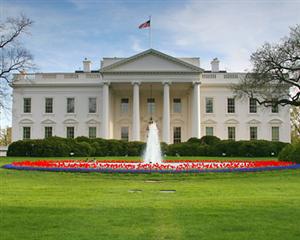
 I can still hear Samuel Barber’s “Adagio for Strings” played many times over the days after JFK’s death and how its deep melancholy summoned all that shared grief on a personal level in my remembering someone I had never met but of whom I somehow felt proud and someone whose very house I had visited on our senior class trip to Washington just a month before. JB





 This morning I was thinking about blogging and why I or anyone else would continue to post information, ideas, hopes, and dreams into what the writer Armistead Maupin called “the void, into the grey ether of faceless strangers.” I suppose that one reason I continue to blog is that it is an incentive to organize and express my thoughts almost on a daily basis. Maybe it’s my way of postponing Alzheimer’s. My friends are always in mind when I’m writing, though I don’t express my views based upon their comfort zones, or anyone else’s. People send prayers based upon faith that those prayers will land somewhere and be heard and in hope that they will be answered in time. In a way blogging for me is like that. Each day I imagine someone reading what I write and either agreeing or being stimulated to disagree. Sometimes I envision people reading what I’ve written and saying things like, “Ah yes, he’s right on the money about that,” or perhaps, “This guy is completely nuts!” Either way, I am heard.